


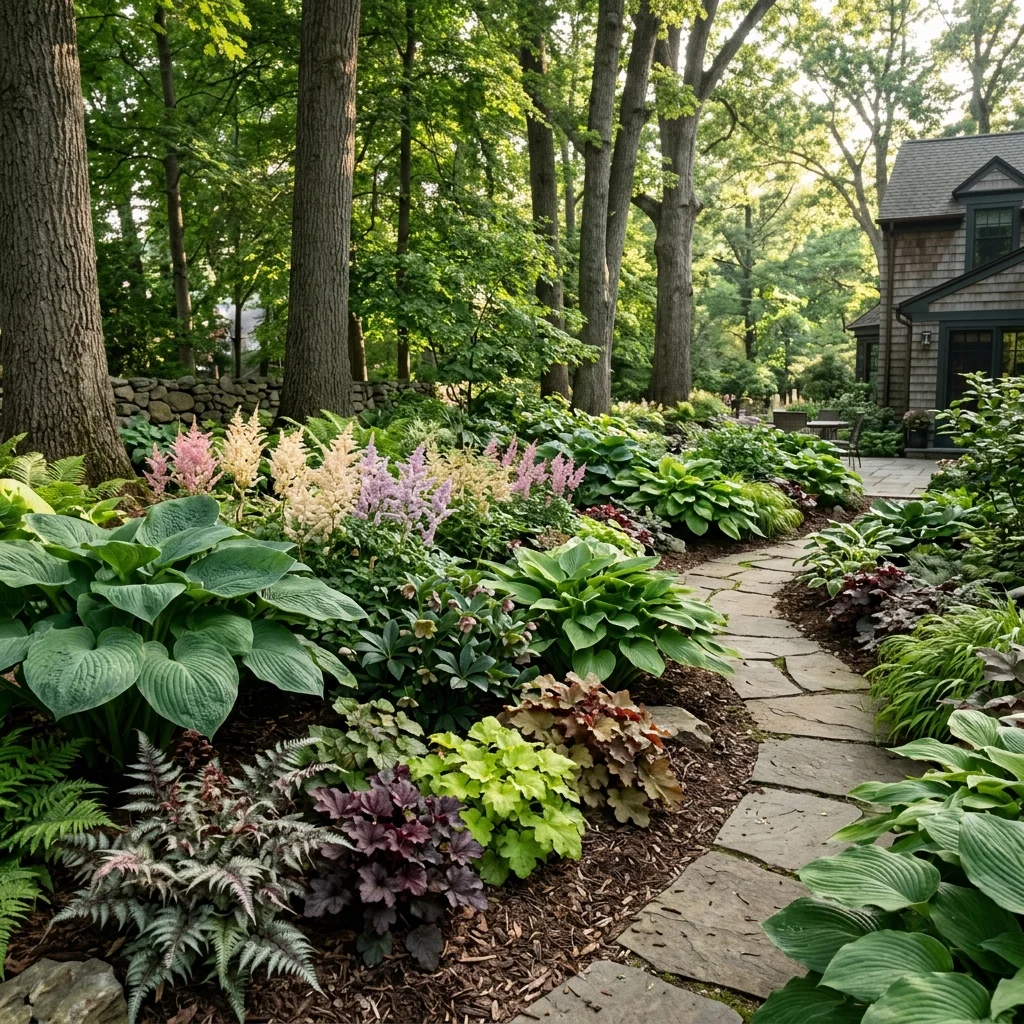
Struggling with a shady yard? These 14 low-maintenance perennials actually thrive in low light and come back reliably year after year.
Shade gets a bad reputation in gardening circles, usually from people who’ve only ever tried planting sun-loving flowers in the wrong spot. The truth is that shady areas can be some of the easiest parts of a yard to maintain once they’re planted with the right perennials — plants that come back on their own, ask very little, and often look better than anything struggling in full sun.
I inherited a heavily shaded backyard a few years ago that the previous owners had basically given up on, just bare dirt and patchy grass under a row of mature trees. A handful of the perennials on this list turned that space into the lowest-maintenance section of the entire yard, and most of them have been thriving with almost no attention ever since.
Why Shade Gardens Are Often Easier Than Sunny Ones
Before getting into the list, it’s worth clearing up a common misconception: shade doesn’t mean difficult, it just means different.
- Shaded soil retains moisture longer, reducing how often watering is needed compared to sun-baked beds.
- Many shade perennials are naturally slower-spreading and lower-maintenance than their sun-loving counterparts.
- Fewer weeds tend to germinate in shaded conditions, since most weed seeds need direct sunlight to sprout.
Foliage-First Perennials for Deep Shade
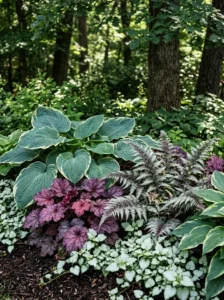
These plants are chosen more for leaf texture and color than flowers, making them ideal for the darkest corners of a yard where blooming plants often struggle.
1. Hostas
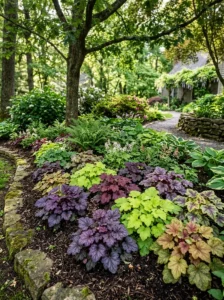
The most reliable deep-shade perennial for a reason — hostas come in dozens of leaf colors and sizes, spread reliably without becoming invasive, and require almost no maintenance beyond occasional dividing every few years.
2. Heuchera (Coral Bells)
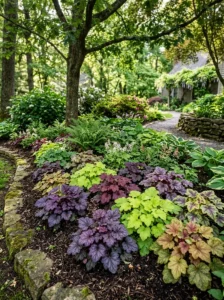
Grown primarily for its striking foliage colors ranging from deep purple to lime green, heuchera adds year-round visual interest even without its delicate summer blooms.
3. Japanese Painted Fern This fern’s silvery-blue and burgundy fronds bring color into deep shade without needing a single flower, and it tolerates a wide range of soil conditions with minimal care.
4. Lamium (Dead Nettle) A fast-spreading groundcover with silver-variegated leaves, lamium fills in bare shaded patches quickly and produces small purple or white flowers as a bonus.
Flowering Perennials That Handle Shade Well
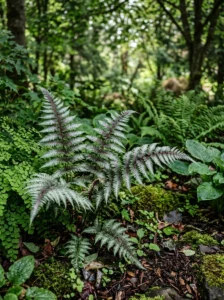
Contrary to popular belief, plenty of perennials bloom reliably in partial to full shade, offering color without demanding full sun exposure.
5. Bleeding Heart Known for its distinctive heart-shaped pink or white blooms, bleeding heart thrives in partial shade and requires very little beyond well-drained soil to come back reliably each spring.
6. Astilbe Its feathery plume-like blooms in shades of pink, red, and white add texture and color to shaded beds, and it tolerates consistently moist soil better than most flowering perennials.
7. Columbine
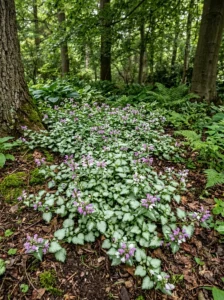
A self-seeding perennial with delicate, uniquely shaped blooms, columbine handles partial shade well and often spreads gently on its own without becoming a maintenance burden.
8. Foxglove
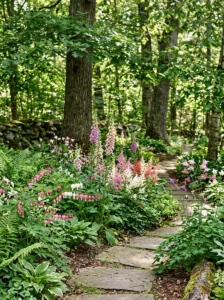
Tall, dramatic spires of tubular flowers make foxglove a striking choice for shaded borders, and it tolerates dappled light better than many taller flowering perennials.
Groundcovers for Shaded Bare Spots
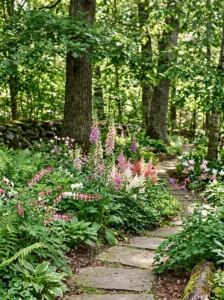
Bare, patchy soil under trees is one of the most common shade-garden frustrations. These groundcovers fill in reliably without the ongoing effort lawn grass requires in low light.
9. Sweet Woodruff A low, spreading groundcover with small white star-shaped flowers, sweet woodruff handles deep shade well and effectively crowds out weeds once established.
10. Wild Ginger
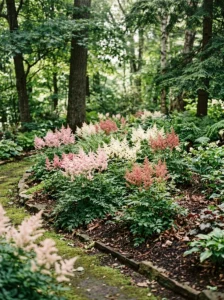
Grown for its glossy, heart-shaped leaves rather than flowers, wild ginger forms a dense, attractive mat in shaded areas and requires almost no ongoing maintenance once established.
11. Creeping Jenny Its trailing chartreuse foliage brightens dark corners and works particularly well spilling over rock borders or container edges in shaded spots.
Perennials for Dry Shade
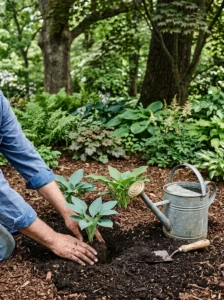
Dry shade — areas under mature trees where roots compete for moisture — is considered one of the toughest planting conditions. These perennials handle it better than most.
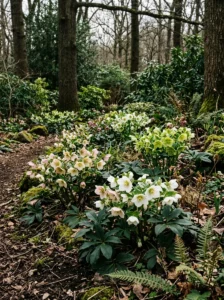
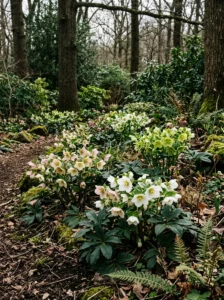
12. Lenten Rose (Hellebore) One of the few perennials that blooms in late winter to early spring, hellebore tolerates dry shade exceptionally well and stays evergreen in many climates, providing year-round structure.
13. Epimedium (Barrenwort)
A tough, drought-tolerant groundcover once established, epimedium handles dry shade under trees better than almost any other flowering perennial, with delicate spring blooms and attractive foliage year-round.
14. Solomon’s Seal Its arching stems with small bell-shaped flowers tolerate both dry shade and root competition from nearby trees, making it a reliable choice for difficult under-tree planting areas.
Tips for Getting Shade Perennials Established
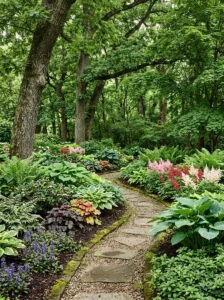
Even low-maintenance perennials need proper setup to thrive long-term, and a few early habits make a significant difference in how well they establish.
- Water consistently during the first growing season, even though most of these perennials become drought-tolerant once mature.
- Amend heavy clay or compacted soil with compost before planting, since shaded areas under trees often have poorer soil structure.
- Space plants slightly further apart than sunny-garden spacing recommendations, since airflow tends to be more limited in shaded areas, which can affect fungal issues.
- Mulch lightly around new plantings to retain moisture, but keep mulch away from crowns and stems to prevent rot.
Key Takeaways
- Shade gardens are often lower-maintenance than sunny ones, thanks to better moisture retention and fewer weeds.
- Foliage-first perennials like hostas and heuchera provide color and texture without relying on blooms.
- Several flowering perennials, including bleeding heart and astilbe, handle shade well despite common assumptions.
- Groundcovers like sweet woodruff and wild ginger solve bare, patchy shaded soil effectively.
- Dry shade under mature trees has its own reliable perennial options, including hellebore and epimedium.
- Proper watering and soil prep during the first season matter more than ongoing maintenance for these plants.
Conclusion
A shaded yard isn’t a limitation — it’s just a different set of plant choices, and often an easier one to maintain long-term than a full-sun garden. From foliage powerhouses like hostas to unexpected bloomers like foxglove, these 14 perennials prove that shade gardens can be just as vibrant and far less demanding than their sunny counterparts. Pick a few that suit the specific light and soil conditions in your space, and let them do the rest.
Frequently Asked Questions
1. What’s the difference between partial shade and full shade for perennials? Partial shade typically means 3–6 hours of direct sun, often filtered or morning-only, while full shade means less than 3 hours, usually dappled light under tree canopies. Checking a plant’s specific shade tolerance before planting helps match it to the right spot in the yard.
2. Can shade perennials survive under mature trees with heavy root competition? Some can, though it’s a tougher condition than typical shade. Hellebore, epimedium, and Solomon’s seal are specifically known for tolerating dry shade and root competition better than most other shade perennials.
3. Do shade perennials need less watering than sun-loving plants? Generally yes, once established, since shaded soil retains moisture longer and experiences less evaporation. However, dry shade under mature trees can be an exception, since tree roots often absorb available moisture quickly.
4. Will shade perennials still produce flowers, or is it mostly foliage plants? Both options exist. While foliage-focused plants like hostas and ferns are popular for deep shade, several reliable flowering perennials — including bleeding heart, astilbe, and foxglove — bloom well in partial to full shade conditions.
5. How long does it take for shade perennials to fill in a bare area? Most perennials on this list take one to two full growing seasons to establish fully and reach their mature spread, though groundcovers like creeping Jenny and sweet woodruff often fill in noticeably faster than clumping perennials like hosta