


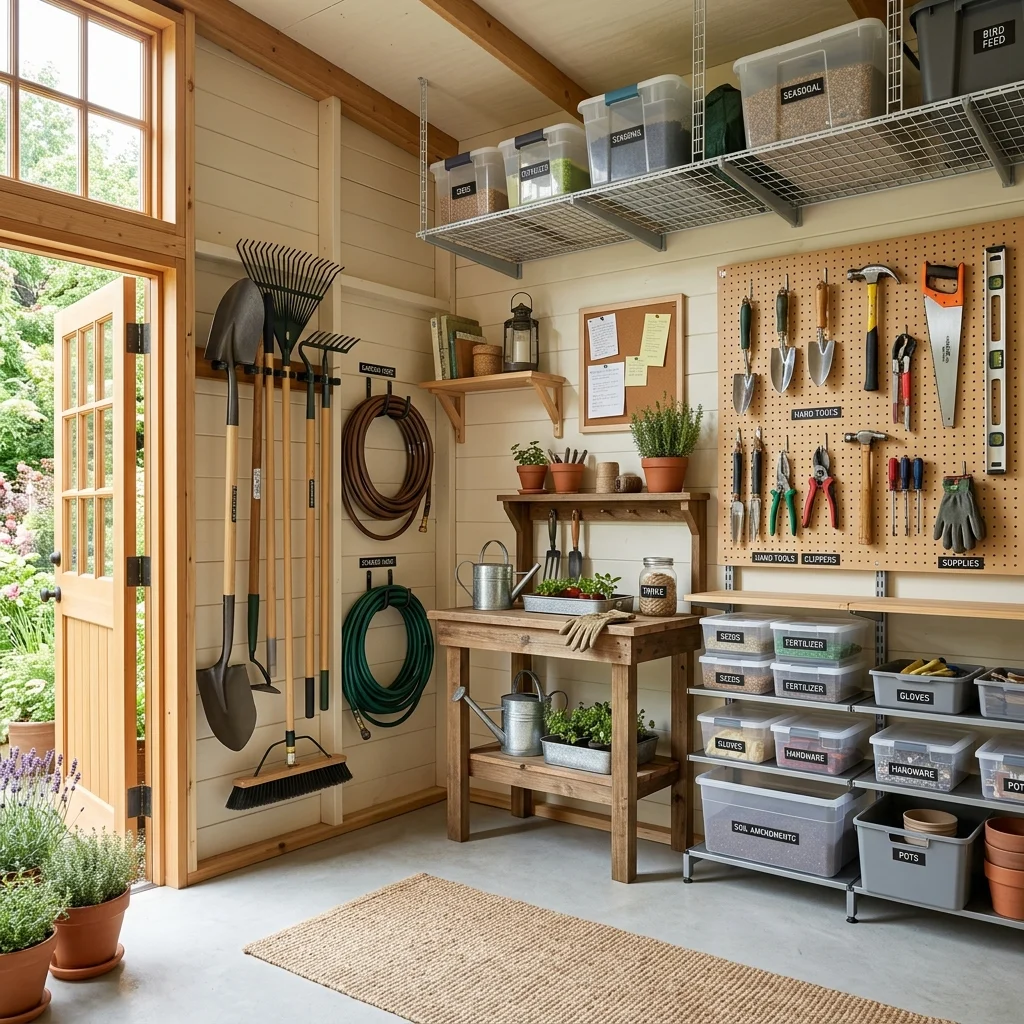
Tired of digging through a cluttered shed? These 17 storage ideas turn chaos into an organized system where everything has its own place.
A shed almost always starts organized and slowly turns into the place where things go to disappear. Six months later, finding a specific tool means moving four other things first, and somehow there’s still no room for anything new. The fix isn’t a bigger shed — it’s a better system for using the space that’s already there.
I helped my father reorganize a shed that had reached full chaos mode, tools buried under bags of mulch, and a lawnmower blocking half the walkway. A weekend of applying a handful of these ideas turned it into a space where every tool has an obvious home, and it’s stayed that way for years since.
Why Sheds Get Disorganized So Quickly
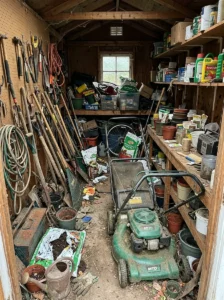
Before diving into specific storage ideas, it helps to understand the pattern behind shed clutter, since most of it comes down to a few repeatable habits.
- Floor space gets used as default storage, since it’s the easiest place to set something down quickly.
- Without designated zones, similar items end up scattered rather than grouped together.
- Vertical space, which usually makes up the majority of a shed’s volume, often goes almost entirely unused.
Wall-Mounted Storage for Tools
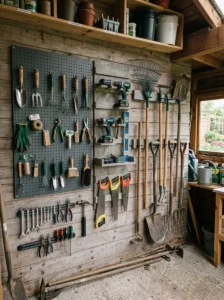
Walls are the single most underused storage resource in most sheds, and tool organization benefits from it more than almost any other category.
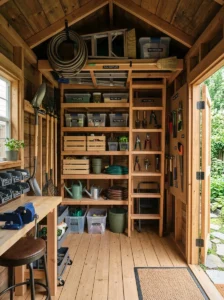
1. Pegboard Panels A pegboard wall lets tools hang individually and stay visible, and it’s flexible enough to rearrange as tool collections change over time, unlike fixed shelving.
2. French Cleat Systems A french cleat setup allows custom-built holders and shelves to be added, removed, or repositioned along a wall without needing new screws each time, offering more long-term flexibility than pegboard alone.
3. Magnetic Tool Strips For metal hand tools, a magnetic strip mounted at eye level keeps frequently used items instantly accessible without taking up shelf or drawer space.
4. Vertical Garden Tool Racks Long-handled tools like rakes, shovels, and hoes take up a surprising amount of floor space when leaned against a wall — a dedicated vertical rack keeps them upright, separated, and off the ground entirely.
Overhead and Ceiling Storage
The space above head height in most sheds sits completely empty, even though it’s often ideal for items that aren’t needed on a daily basis.
5. Ceiling-Mounted Storage Racks Sturdy overhead racks work well for bulky, lightweight items like empty pots, seasonal decorations, or extra hardware that doesn’t need frequent access.
6. Bike or Ladder Hoists Pulley-based hoists lift bikes, ladders, or kayaks up and out of the way, freeing significant floor space for items used more regularly.
7. Hanging Hooks for Hoses and Cords Coiled hoses and extension cords tend to become tangled messes on the floor — hanging them on large ceiling or wall hooks keeps them organized and easy to grab without unwinding a knot first.
Shelving Systems That Maximize Vertical Space
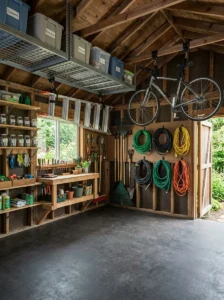
Beyond wall-mounted tool storage, dedicated shelving handles the bulk of general shed storage, and the right type makes a significant difference in usability.
8. Adjustable Wire Shelving Wire shelving units allow shelf height to be reconfigured as storage needs change, and their open design prevents dust buildup compared to solid shelving.
9. Stackable Storage Bins on Open Shelving
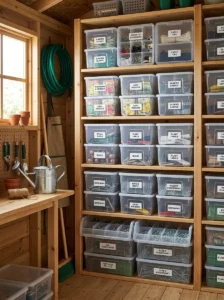
Clear or labeled stackable bins on open shelves keep small items grouped and visible, avoiding the common problem of digging through one large, mixed bin to find a single item.
10. Corner Shelving Units Corners are frequently wasted space in sheds — a dedicated corner shelf unit captures storage capacity that would otherwise go completely unused.
Zoned Organization by Category
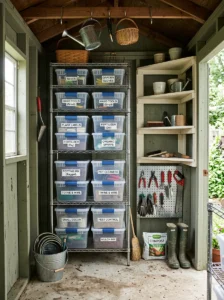
Physical storage solutions only work well when paired with a logical organizational system, grouping similar items together rather than storing by whatever fits wherever.
11. A Dedicated Gardening Zone Grouping all gardening tools, gloves, pots, and soil amendments in one section of the shed means never having to search multiple areas for related items.
12. A Seasonal Rotation Zone
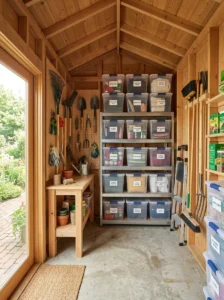
Setting aside one section specifically for seasonal items — holiday decorations, off-season equipment — keeps them accessible without competing for space with year-round essentials.
13. A Small Repair or Workbench Station Even a small dedicated workspace with its own nearby tool storage prevents repair tools from getting mixed in with general storage items, keeping frequently used tools consistently easy to find.
Labeling and Visual Systems That Keep Order Long-Term
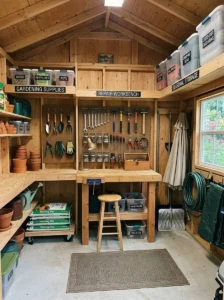
Even a perfectly organized shed slowly falls apart without a system for maintaining it — labeling and visibility are what keep the organization working months and years later.
14. Clear Labels on Every Bin and Shelf Labeling isn’t just for finding items faster; it also reinforces where things belong, making it far more likely everything gets put back in the right spot after use.
15. Painted or Taped Floor Zones
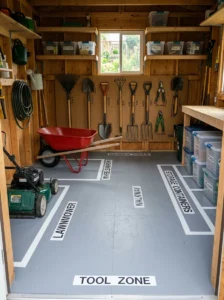
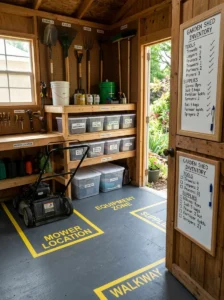
Marking floor areas for specific equipment, like a mower or wheelbarrow, with paint or tape creates an obvious visual cue for where large items belong, discouraging random placement.
16. A Shed Inventory List Near the Door A simple posted list of what’s stored where saves time hunting for less frequently used items, especially useful in sheds shared by multiple family members.
Maximizing Awkward or Leftover Spaces
Every shed has a few oddly shaped spaces that don’t fit standard shelving — these often go unused unless specifically addressed.
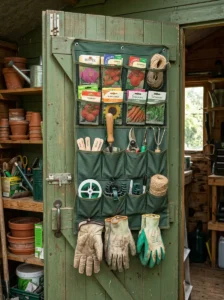
17. Door-Mounted Organizers The back of a shed door is frequently wasted space — a mounted organizer with pockets or small hooks works well for gloves, small tools, or seed packets that need quick access.
Key Takeaways
- Vertical and overhead space is the most underused storage resource in most sheds.
- Wall-mounted systems like pegboard and french cleats offer more flexibility than fixed shelving.
- Zoned organization by category prevents related items from becoming scattered.
- Labeling and visual cues are what keep an organized shed from sliding back into clutter.
- Awkward spaces, like the back of a door, often hold real unused storage potential.
Conclusion
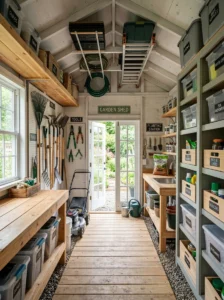
An organized shed isn’t about owning more storage bins — it’s about using the space that’s already there more intentionally, especially the vertical and overhead areas most people ignore. With a mix of wall-mounted systems, zoned categories, and consistent labeling, even a small shed can hold everything it needs without turning into the place tools go to get lost. Pick a few of these seventeen ideas to start, and the rest of the system tends to fall into place naturally.
Frequently Asked Questions
1. What’s the best place to start when organizing a cluttered shed? Start by removing everything and sorting by category, then decide on general zones before putting anything back. Trying to organize around existing clutter usually results in the same disorganized layout repeating itself.
2. Is pegboard or a french cleat system better for tool storage? Pegboard is generally cheaper and easier to install, while french cleat systems offer more flexibility for custom, weight-bearing holders. For a shed with a lot of varied tools, a combination of both often works best.
3. How do I keep a shed organized long-term instead of it becoming cluttered again? Labeling bins and shelves, along with designating a specific spot for every category of item, makes it far more likely things get put back correctly after use. Marking floor zones for large equipment also discourages random placement over time.
4. What should go in overhead or ceiling storage versus regular shelving? Overhead storage works best for bulky, lightweight, or infrequently used items like seasonal decorations or extra hardware, while shelving at eye level or below should hold items used more regularly, since accessibility matters more for those.
5. Can these storage ideas work in a very small shed? Yes, many of them are actually more important in small sheds, since maximizing vertical space and wall storage matters even more when floor space is limited. Wall-mounted and door-mounted solutions in particular make a significant difference in tight spaces.
Suggested internal links:
- 13 tiny hallway ideas that make small spaces look bigger
- Garage organization ideas for maximizing wall space
- How to build a simple DIY pegboard tool wall
- Seasonal storage tips for garden and outdoor equipment