



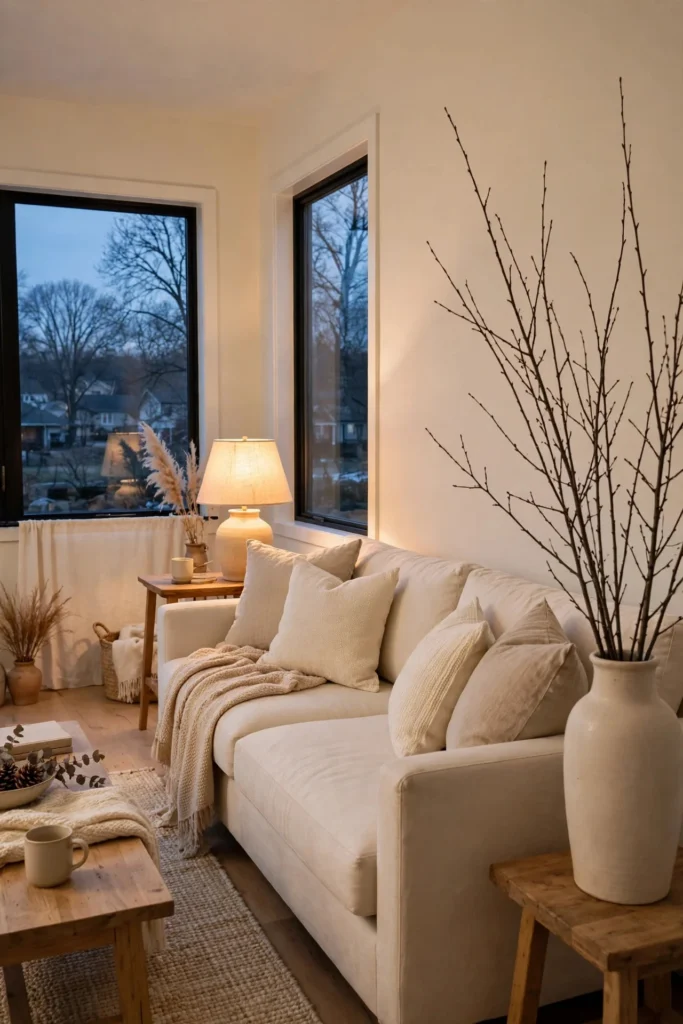
17 January Home Refresh Ideas That Cost Almost Nothing
The tree is down, the fairy lights are boxed, and nobody wants to spend money in January. If you’re hunting for a january home refresh budget plan, good news: the biggest transformations come from rearranging what you already own. I tested these on my own flat — here are 17 ideas that cost almost nothing.
1. Rearrange the Furniture Before You Buy Anything
Walk into your living room and pretend you’re seeing it for the first time. That sofa has probably sat against the same wall since you moved in. Pull it out, angle it, try the armchair where the plant lives. I dragged my bookshelf to the opposite wall one Saturday and my partner genuinely asked if I’d bought new furniture. Take phone photos before and after so you can compare honestly.
- Push everything to the centre of the room and start with the biggest piece.
- Float at least one seat away from the wall — it instantly makes rooms feel layered.
- Live with the new layout for 48 hours before you decide; the first hour always feels wrong.
I tried this in my bedroom too — bed under the window instead of against the shared wall — and I slept noticeably better with the radiator heat not hitting the headboard. Total spend: zero, plus a sore back. For more winter living room styling, see these cozy winter decor ideas for after Christmas.

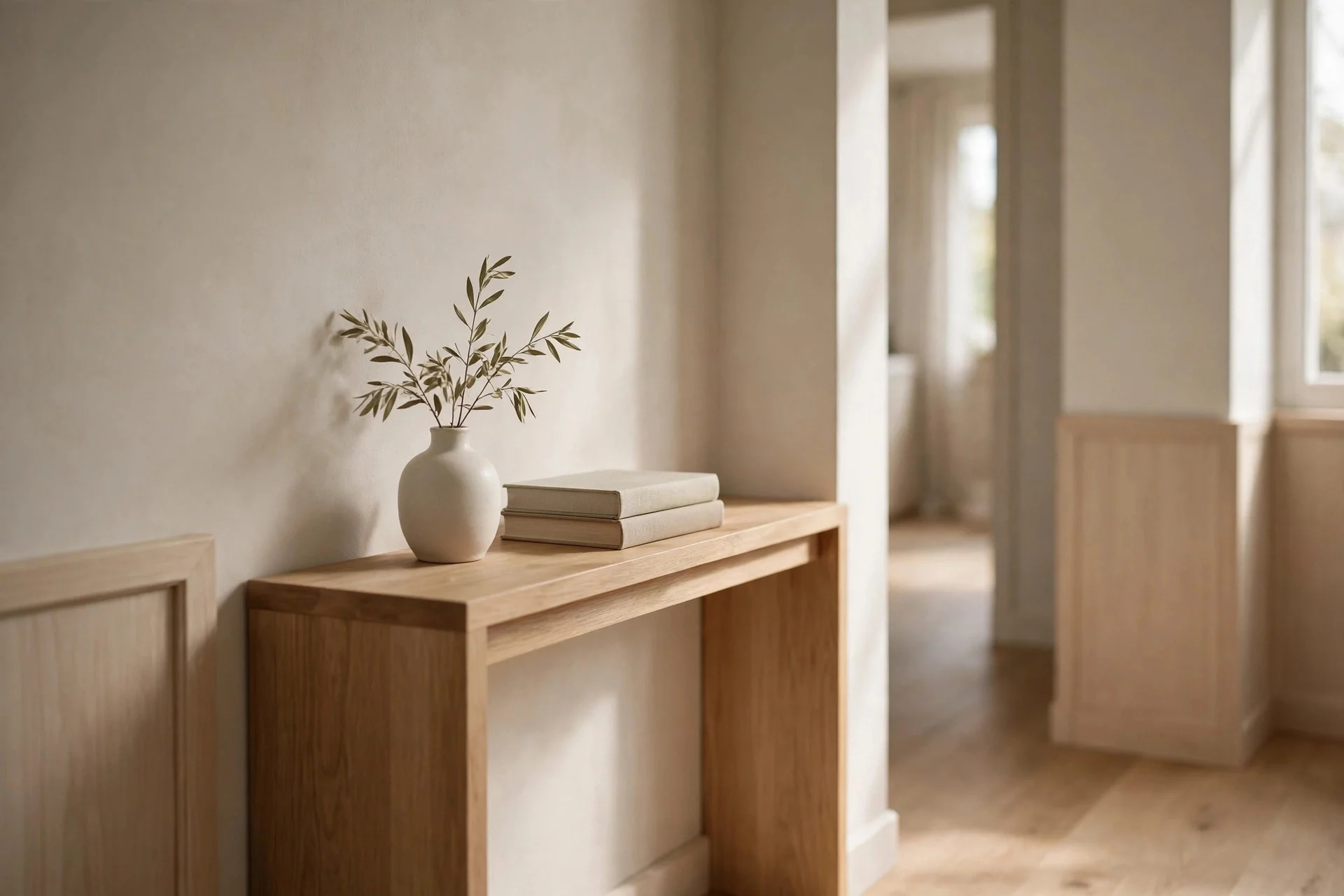
2. Declutter One Visible Surface a Day
Not the whole house. One surface. The hall console on Monday, the coffee table on Tuesday, the kitchen worktop on Wednesday. Give yourself twenty minutes and a bin bag, and finish somewhere you’ll see constantly.
- Remove everything, wipe the surface, then only put back what earns its place.
- Decide on a home for homeless items immediately — no “maybe” piles.
- Keep a small “out” box by the door for charity shop donations all month.
I did my desk on a whim and found I actually sat at it again for the first time in months. Clutter tax is real.
3. Shop Your Own Home for Textiles
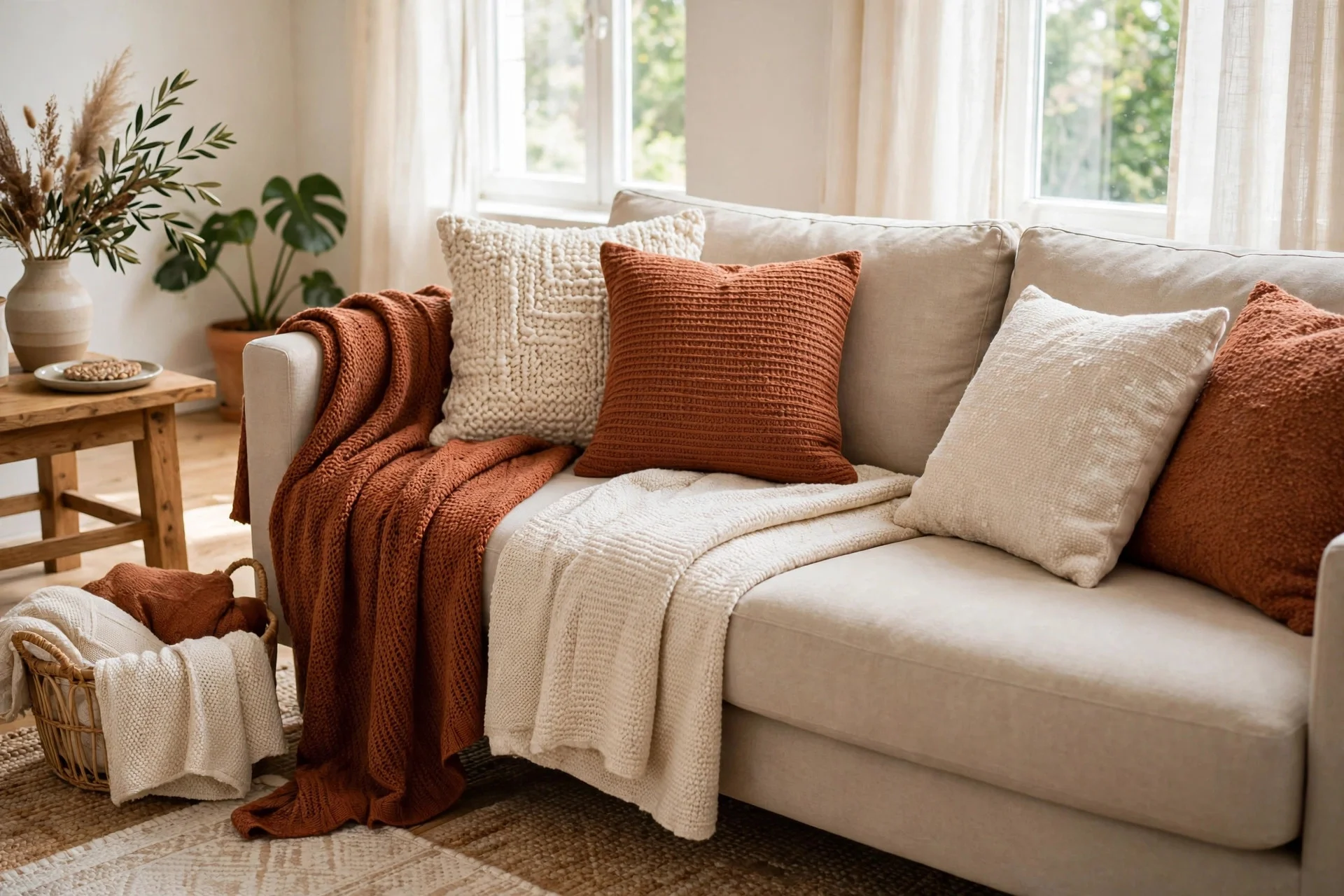
Your bedroom throw would look brilliant on the living room sofa. The spare-room cushions are wasted in there. Before spending a penny, do a textile swap across rooms. Colour stories emerge you never planned.
- Gather every loose textile in the house onto the bed for a full inventory.
- Pick a two-colour palette per room (say, rust and cream) and assign pieces to match.
- Store the leftovers instead of forcing them in — January is about breathing room.
I swapped my charcoal bedroom throw onto a beige sofa and suddenly the whole sitting room looked like a hotel. Nobody believed it cost nothing.
4. Rotate Your Artwork Between Rooms
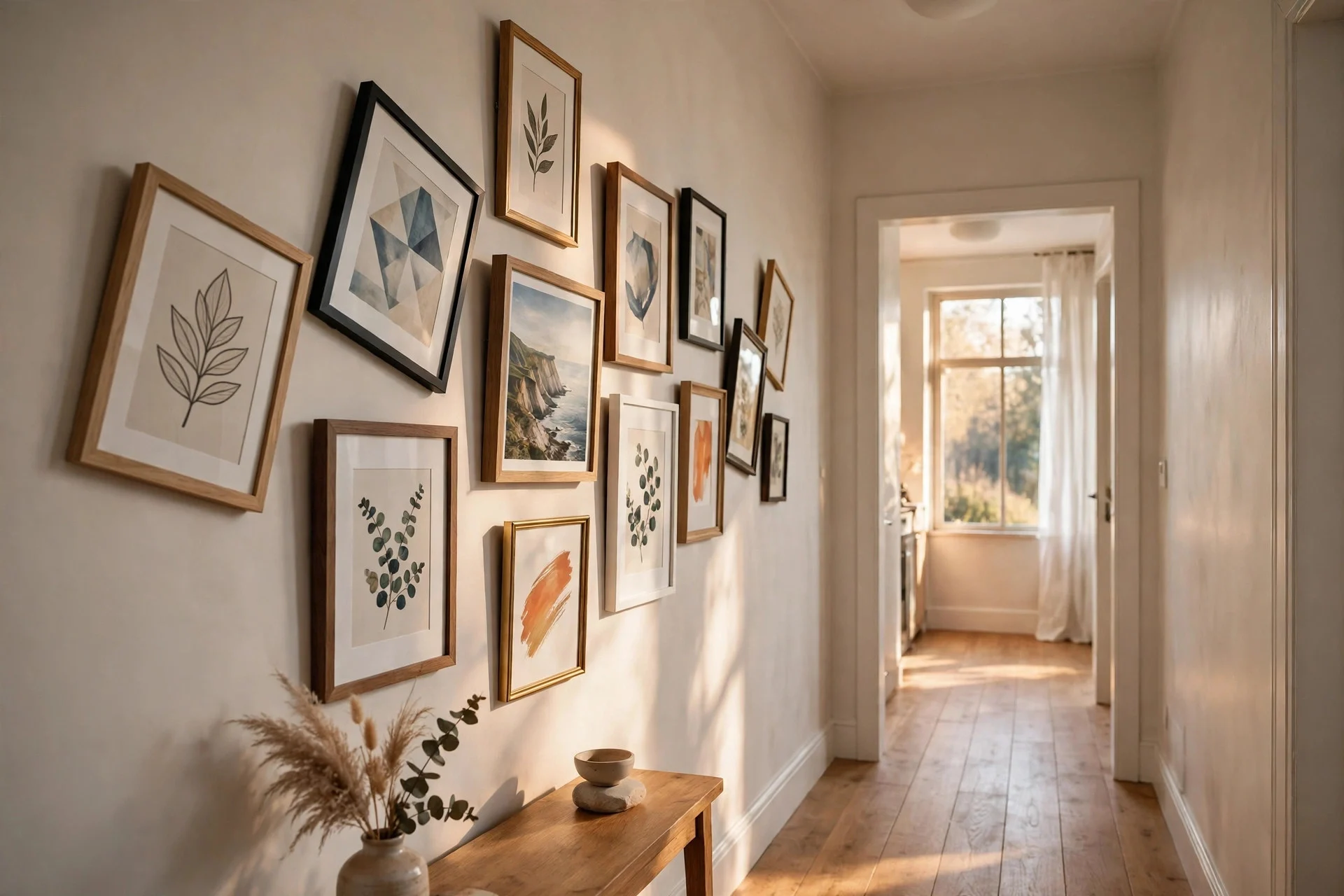
Art goes stale the same way furniture layouts do — you stop seeing it after six months. Take every picture off the walls, lean them in the hallway, and rehang them in completely different rooms. That print you’re blind to in the bedroom becomes the star of the hall.
- Photograph your current hang first, so you’re brave enough to change it.
- Hang art lower than you think — centre it at eye level, around 145cm from the floor.
- Lean large pieces on shelves or the mantel instead of drilling new holes.
When I moved a £12 charity-shop landscape from the spare room to above the telly, three guests asked where I’d “got it”. It’s been in my house for four years.
5. Paint One Thing You Already Own
You probably have half a tin of paint from the last project. Give a tired side table, a set of mismatched picture frames, or a lamp base a single coat. One painted object can anchor a whole corner. Matt black, off-white, or a deep green cover almost everything and hide a multitude of sins.
- Sand lightly and wipe clean so the paint actually sticks.
- Use a small foam roller for a smooth finish — brushes leave streaks on furniture.
- Do two thin coats instead of one thick one; it dries faster and looks better.
I painted a sad brown bedside table in leftover Farrow & Ball off-white and it now looks like it came from a boutique hotel supplier. The tin had been in my shed for two years.

6. Restyle Your Shelves Like You Mean It
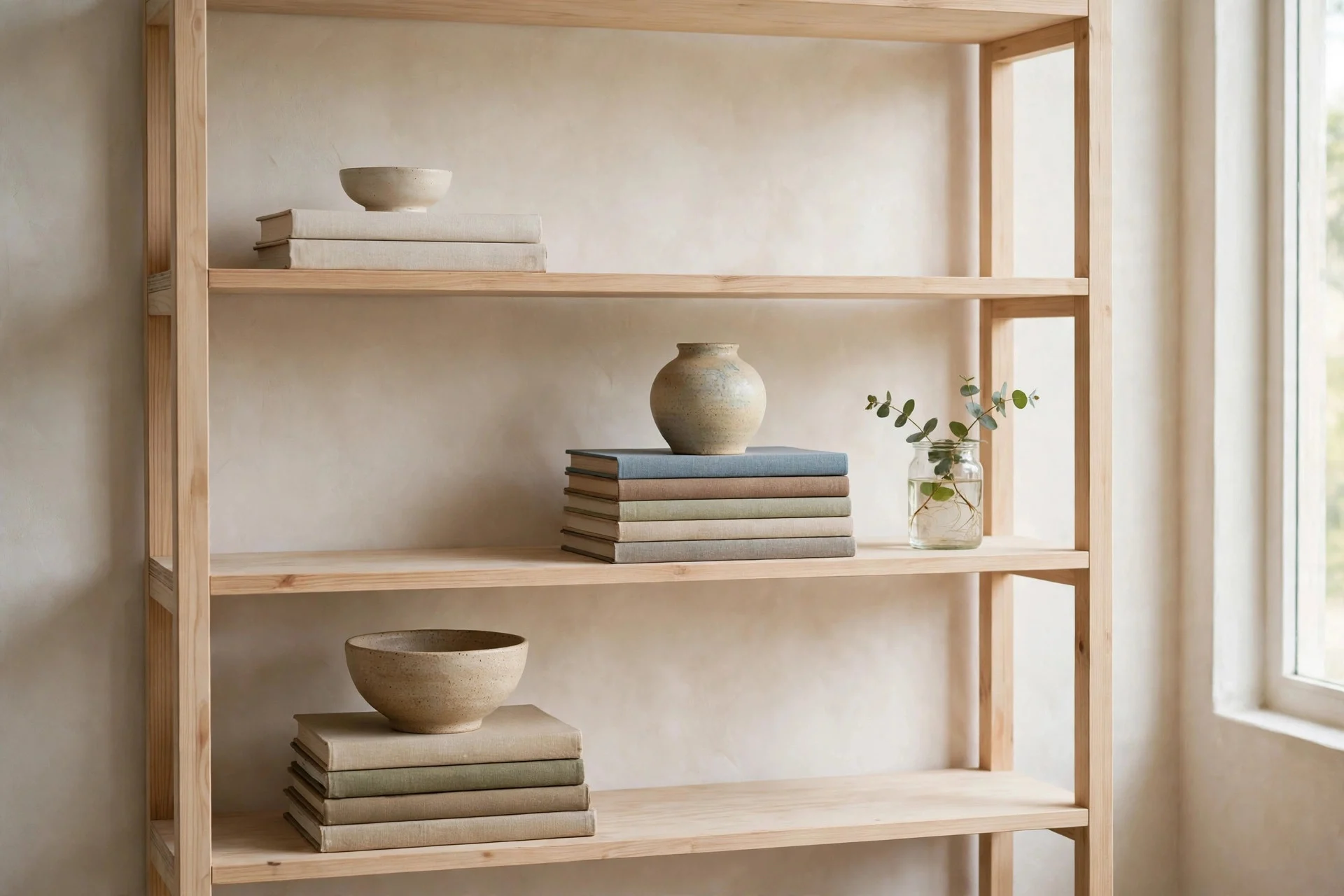
Take everything off the bookshelf and start over. The rule of thirds applies: one third books, one third empty space, one third objects. Stack some books horizontally as plinths, turn a row spines-in for a calm neutral run, and give each object room to breathe. Crowded shelves read as clutter; curated shelves read as design.
- Group by colour for instant cohesion, or by height for a library feel.
- Leave genuine gaps — white space is the cheapest luxury there is.
- Add one living thing per shelf: a cutting, a tiny plant, a sprig in a jar.
I tried the spines-in thing expecting to hate it, but the whole bookcase went from chaotic to serene. My partner restacked them within a week, but I enjoyed it while it lasted. Pair this with our guide to transitioning Christmas decor into winter decor.
7. Cut Branches from the Garden (or the Park)
Bare winter branches are the best free styling material on earth. A tall vase of curly willow, birch twigs, or forsythia stems (which will actually bloom indoors) makes a statement no £40 bouquet can match. Ask a neighbour before you prune theirs — but most people are delighted to have overhanging branches taken.
- Cut stems at an angle and split the base of woody branches for better water uptake.
- Use a heavy-bottomed vase — branches are top-heavy and love to topple.
- Place near a window; backlit branches look twice as dramatic.
I foraged some cherry branches in late January and had blossom on my dining table by mid-February. Free flowers, weeks early.

8. Rework Your Lighting for Winter Evenings
January light is grey and gone by four o’clock. Ditch the overhead “big light” and build pools of warm lamplight instead: move a floor lamp next to your reading chair, add candles to the dinner table, string the fairy lights you almost packed away around a bookshelf. Warm light flatters everything, including your walls.
- Aim for three light sources per room at different heights.
- Swap cool-white bulbs for warm (2700K) ones — the £3 pack changes everything.
- Keep candles at varying heights for depth; a tray corrals them safely.
I moved one lamp from the bedroom to beside the sofa and the sitting room went from interrogation-room to wine-bar. Still can’t believe I lived with just the ceiling light for two years. More ideas: how to make your home feel warm all winter long.

9. Clear the Kitchen Worktops Completely
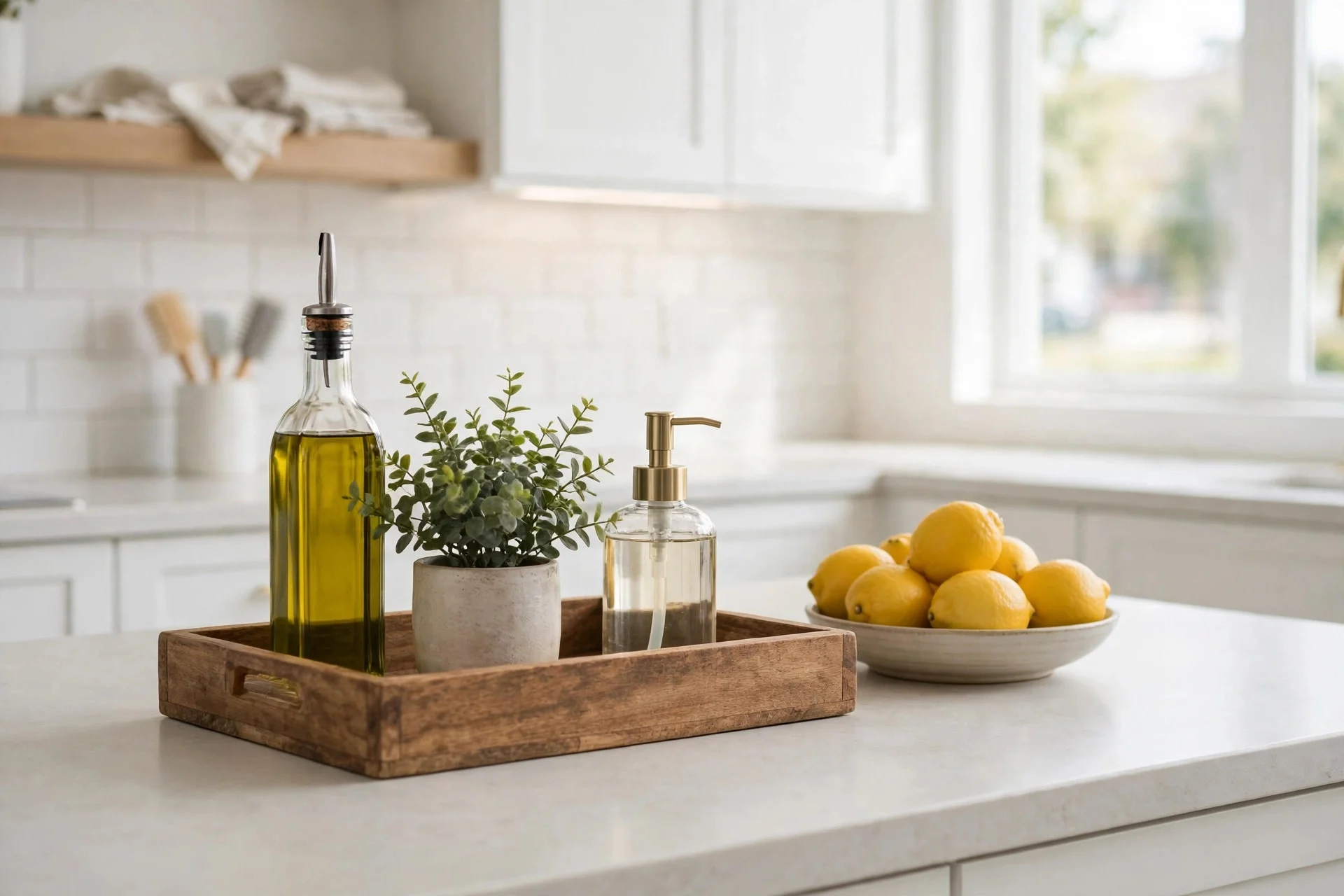
Now rebuild with intention: one beautiful vignette, not seventeen small appliances. Keep out only what you use daily, corralled on a tray, plus one living thing — a pot of herbs, a bowl of lemons, a small cutting in water. The rest goes in cupboards. Kitchens look twice as expensive with clear counters.
- Take everything off and deep-clean the surface first.
- Decide your three daily essentials; everything else gets stored.
- Group what’s left on a tray or board so it reads as styled, not scattered.
I tried this and my kitchen felt like it had been renovated. It hadn’t. I’d just hidden the toaster.
10. Build a Proper Drop Zone by the Front Door
January coats are enormous and boots are wet. You don’t need a fitted unit: a sturdy hook row, a boot tray, and one basket for scarves and gloves transforms the entrance.
- Fix hooks at two heights so kids and tall coats both work.
- Put a boot tray or old towel by the door to contain winter sludge.
- Add one basket per person if you can; shared baskets become black holes.
I screwed four hooks onto a reclaimed plank and it’s the most-used thing in my house. Total cost was under £10 and the “where are my gloves” panic has stopped.

11. Give the Bathroom a Hotel Refresh
You can’t paint or retile for free, but you can reset the textiles. White towels, folded properly, change a bathroom overnight. Roll them like a spa, stack two sets, add a candle and one small plant. Cheap, instant, and guests will comment.
- Wash every towel and bathmat, then keep only the best on display.
- Roll or tri-fold towels instead of draping them.
- Clear the sink rim to one soap dispenser and one small tray.
I tried this before my in-laws visited and my mother-in-law asked if we’d renovated. We had folded towels. That was the renovation.

12. Strip the Bedroom Back to White
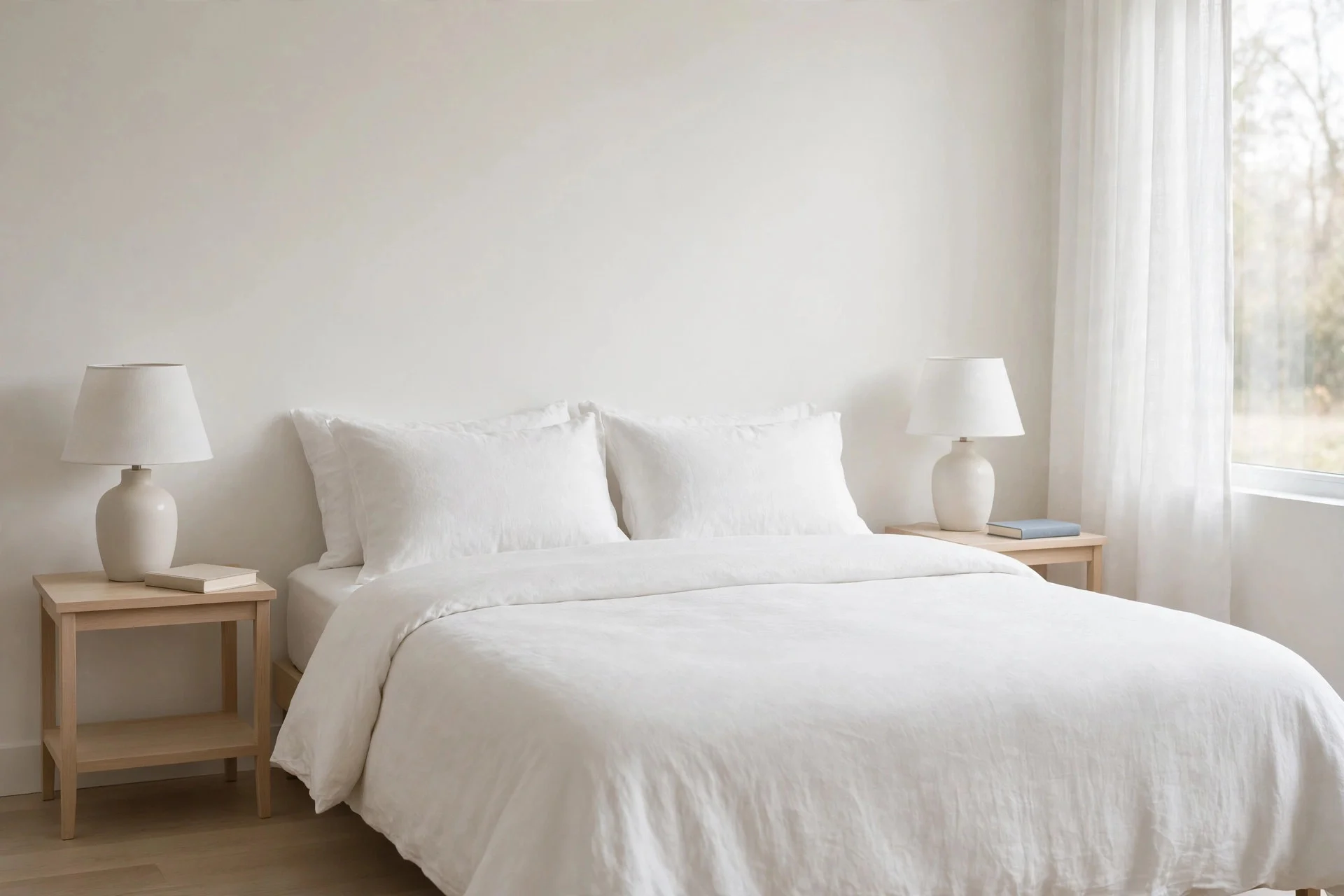
After the colour chaos of December, the calmest thing you can do is go white. Strip the bed to plain white or cream bedding, remove the extras from the nightstands, and let the room breathe. A monochrome bed makes even a small, plain bedroom look considered. Add back one texture — a knit throw, a linen cushion — and stop there.
- Wash everything at once and remake the bed crisply, hospital corners and all.
- Clear each nightstand to lamp plus one book plus water glass.
- Leave the walls alone for a week and notice how much calmer it feels.
When I did this, my bedroom finally felt like a retreat instead of a storage unit with a bed in it. The white bedding was already in my linen cupboard.
13. Style the Coffee Table in Threes
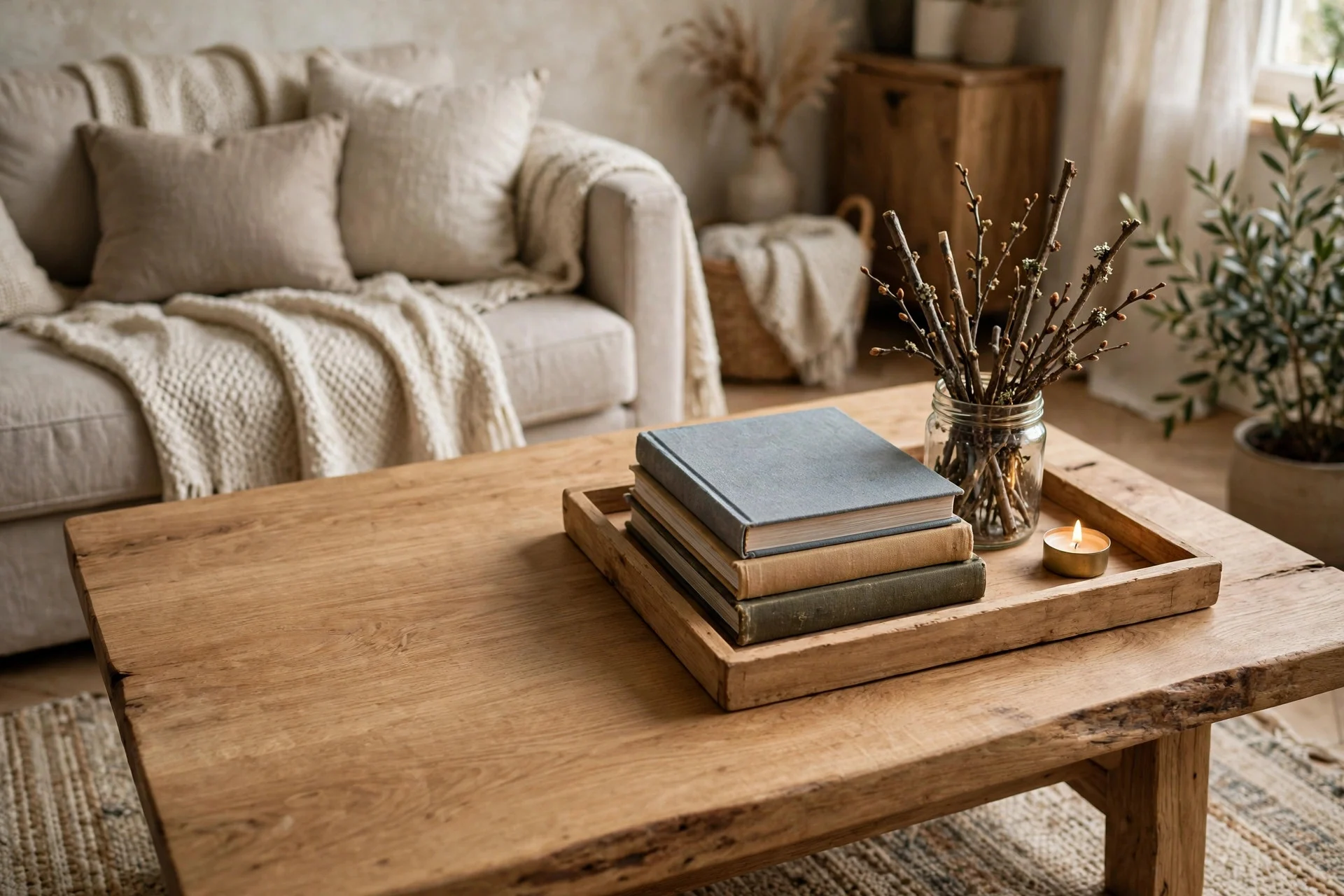
The oldest styling trick in the book works because it always works. Take everything off your coffee table and rebuild with three groups: something tall (a vase with branches), something flat (a stack of books or a tray), and something small (a candle, a bowl). Odd numbers, varied heights, done. It photographs beautifully and costs whatever’s already in your house.
- Start with a tray to ground the arrangement.
- Vary heights: tall, medium, low reads as intentional.
- Leave half the table clear — surface you can actually use.
I used a stack of charity-shop art books, a jam jar of foraged twigs, and a tea light. People have asked for my “stylist’s” number. The stylist is a jam jar.
14. Wash Every Window and Mirror
This sounds like housework, but it’s actually a lighting upgrade. Grimy winter windows steal an astonishing amount of daylight. Clean the glass inside and out, polish every mirror, and January light does the rest — rooms feel brighter, bigger, and cleaner without changing a single object.
- Use warm water with a splash of white vinegar and a squeegee for windows.
- Polish mirrors with a dry microfibre cloth to avoid streaks.
- Do it on a cloudy day — sun dries the glass too fast and leaves marks.
I cleaned the patio doors on a grey Saturday and the living room genuinely felt like it had gained a window. Cost: a splash of vinegar.
15. Keep the Fairy Lights Up — Styled Differently
Nobody says January has to be dark. Instead of packing every light away, keep one string and restyle it for winter rather than Christmas: drape it over a bookshelf, coil it in a glass jar as a “firefly” lamp, or weave it through those bare branches from idea 7. Warm white only — multicolour screams December.
- Remove baubles and tinsel associations; plain warm-white lights read as hygge, not holiday.
- Drape loosely rather than wrapping tightly — casual looks expensive.
- Put them on a timer plug so they glow when you get home from work.
I kept a string on my bookshelf all last winter and it was the single cosiest thing in the house. Took thirty seconds to “restyle” (I just left them there). More winter styling: cozy winter decor after Christmas.

16. Hunt One Statement Piece at the Charity Shop
The one thing on this list that might cost money — but almost none of it. January is prime thrifting season: people declutter their houses and donate the good stuff. Give yourself a £10 budget and hunt for one object with character: a brass candlestick, a heavy ceramic vase, a wooden bowl, a framed print with a great frame. One interesting object beats ten new cheap ones.
- Go mid-week when new stock hits the shelves.
- Check the frame, not the picture — good frames are gold.
- Set a strict budget before you walk in; the hunt is the fun part.
I found a solid brass candlestick for £3 that now sits on my mantel looking like it cost £60. Best money I’ve spent on the house all year.

17. Reset the Smell of Your House
Homes hold December’s scent — candles, cooking, pine — long after the decorations are gone. A fresh scent makes the whole house feel new. Simmer orange peel, cinnamon, and cloves in a pot of water for an hour (the classic), or open every window for ten minutes even in the cold. Smell is the fastest reset there is.
- Simmer citrus peels and spices for an hour before guests arrive.
- Air the house briefly — cold fresh air beats any spray.
- Wash cushion covers and throws; fabric holds odour longest.
I tried the simmer pot trick and my kitchen smelled like a countryside pub. Ten pence worth of old orange peel. Ridiculous return on investment. For more on scenting your home naturally, The Spruce has a solid guide to making your home smell good.

Final Thought
A January refresh on a budget isn’t about deprivation — it’s about seeing your own house with fresh eyes. Start with the free ideas, spend your tenner at the charity shop only if something’s still missing, and by February you won’t remember it ever felt flat.
FAQs: January Home Refresh on a Budget
How can I refresh my home in January without spending money?
Start with the big free wins: rearrange your furniture, declutter one surface at a time, swap textiles between rooms, rotate your artwork, and clean every window and mirror. These five moves cost nothing and transform how your home feels.
What’s the cheapest way to make a room feel new?
Change the layout and the lighting. Moving furniture and switching from overhead lights to warm lamps and candles changes the entire mood of a room for zero cost.
Should I buy anything for a January home refresh?
You don’t have to. But if you do, spend smart: a warm-white bulb pack, one charity-shop find, or leftover paint will take you further than a trolley of new accessories.
How do I make my house feel cosy in January after the decorations come down?
Keep one string of warm-white fairy lights styled as winter decor, layer textiles back onto sofas and beds, and use candles and lamplight in the evenings. It keeps the hygge without the holiday.
How long does a full January refresh take?
A weekend for the big moves — furniture, decluttering, art rotation — plus a surface a day through the month. The slower you go, the more the changes stick.


One Response