


19 Cozy Winter Decor Ideas After Christmas Comes Down
There’s a specific kind of gloom that hits in early January. The tree is gone, the fairy lights are boxed up, and the house suddenly feels… empty. Not peaceful-empty. Bare. Like someone turned the volume down on your own home. If you’re staring at your rooms right now wondering why they feel so flat, these winter decor ideas are for you — warmth, texture, and candlelight that have nothing to do with Christmas and everything to do with making January and February feel like somewhere you actually want to be.
1. Keep the Pinecones, Lose the Christmas

You don’t have to throw out every natural element with the Christmas boxes. Pinecones, bare branches, and dried seed heads aren’t Christmas decorations — they’re winter. The difference is context: a pinecone in a wooden bowl on the coffee table reads as winter; the same pinecone spray-painted gold next to a red candle reads as Christmas. Keep the naturals, strip the holiday colours around them, and you’ve got a free head start on winter styling. When you’re packing the actual Christmas decor away, our guide to storing Christmas decorations without the chaos will save you from next December’s tangled-light misery — and it’s worth a skim of the storage mistakes to avoid before you seal the first box.
2. Switch Every Bulb to Warm White

January light is brutal — grey days, early darkness — and cool-white bulbs make it worse by turning your home into an office at 6pm. Walk through the house and swap every bulb to 2700K warm white. It’s a £30 project that changes how every room feels after sunset. Add one extra light source per main room if you can: a small table lamp in a dark corner, a floor lamp behind the reading chair. More pools of warm light, fewer dark corners, and the house stops feeling like it’s closing in on you. For rooms that still feel dim even with good bulbs, these ways to brighten a dark living room work just as well in winter as any other season.
3. Layer Three Throws: The Simplest of All Winter Decor Ideas

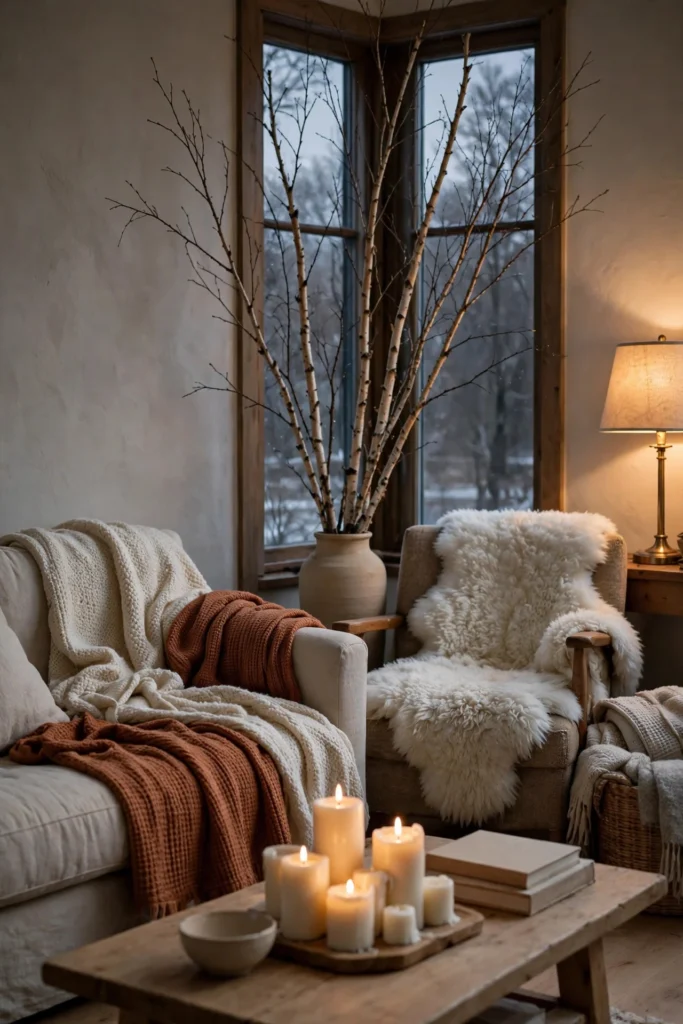
One throw draped on a sofa is decoration. Three throws — different textures, overlapping — is an invitation. Fold a chunky knit across the arm, drape a lighter wool one over the back, and leave a third folded on the seat. Stick to a tight palette (cream, oatmeal, one warm accent like rust or camel) so it looks layered rather than messy. The point isn’t just visual: when someone actually pulls one over their knees during a film, your winter decor is doing its job. Wash them all before you start, because nothing ruins the cosy illusion like a throw that smells of December.
4. Build a Candle Corner That Isn’t Holiday-Themed
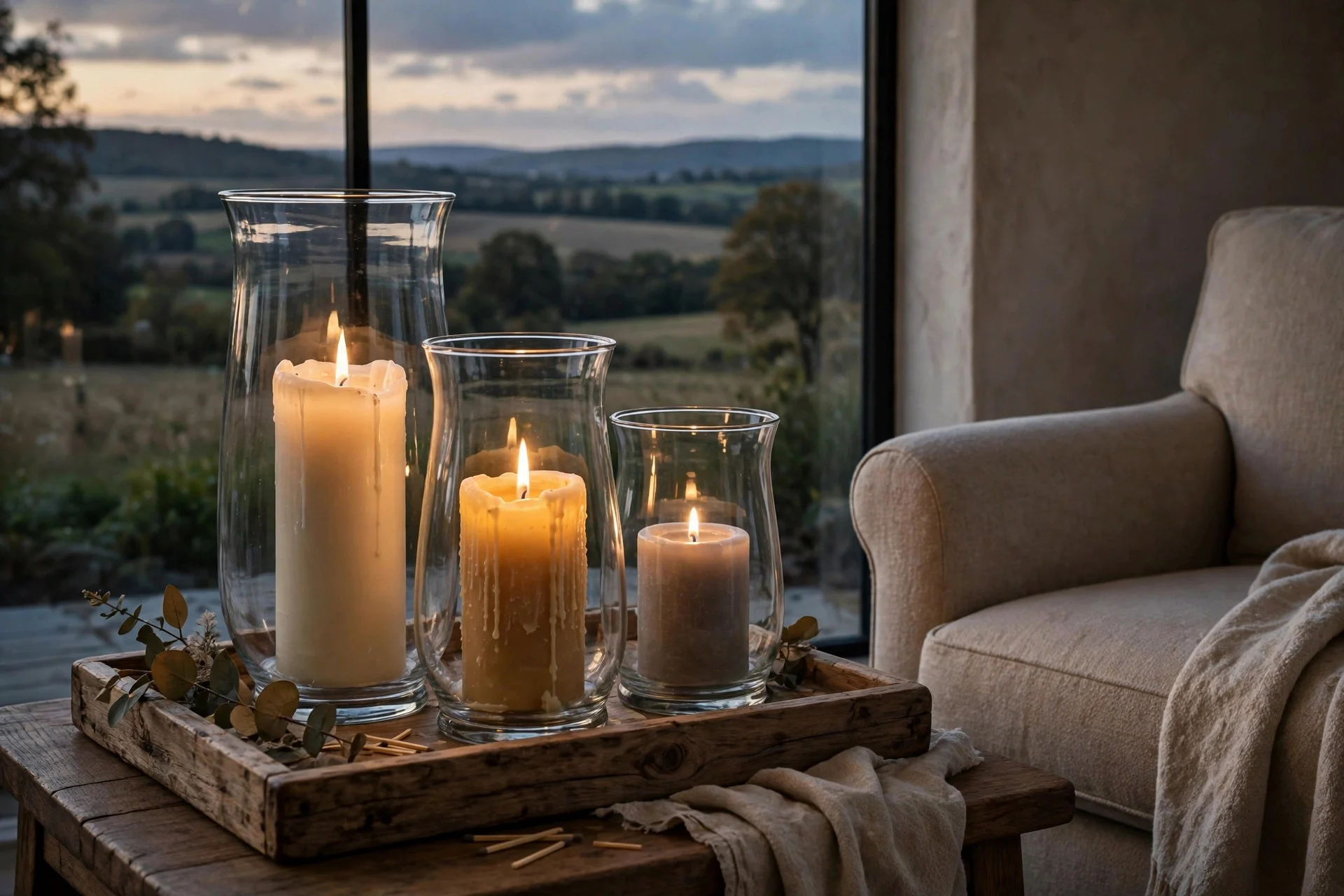
Candles don’t belong to Christmas — they belong to winter. Build a dedicated candle corner on a tray: pillar candles in ivory, beeswax, and warm grey, grouped at different heights in glass hurricanes or simple holders. No red, no green, no pine-scented anything. Place it where you’ll actually sit in the evening, not on a shelf you never look at. Light them at dinner and blow them out at bedtime; the ritual matters as much as the glow. And since you’ll be burning them nightly now, a quick look at the NFPA’s candle safety guidance is genuinely worth two minutes — especially keeping flames clear of those new throws.
5. Put Bare Branches in a Tall Vase

This is the single cheapest winter arrangement that exists. Cut a few bare branches — birch, willow, anything with interesting shape — and stand them in a tall vase with nothing else. No ornaments, no lights, no ribbon. The sculptural lines fill vertical space that feels painfully empty after the tree leaves, and they cost absolutely nothing. Change the water weekly and they’ll last the whole season. If foraging isn’t your thing, dried pampas grass or preserved eucalyptus stems from a craft store give the same effect for under £10.
6. Swap Pillow Covers to Bouclé, Wool, and Faux Fur

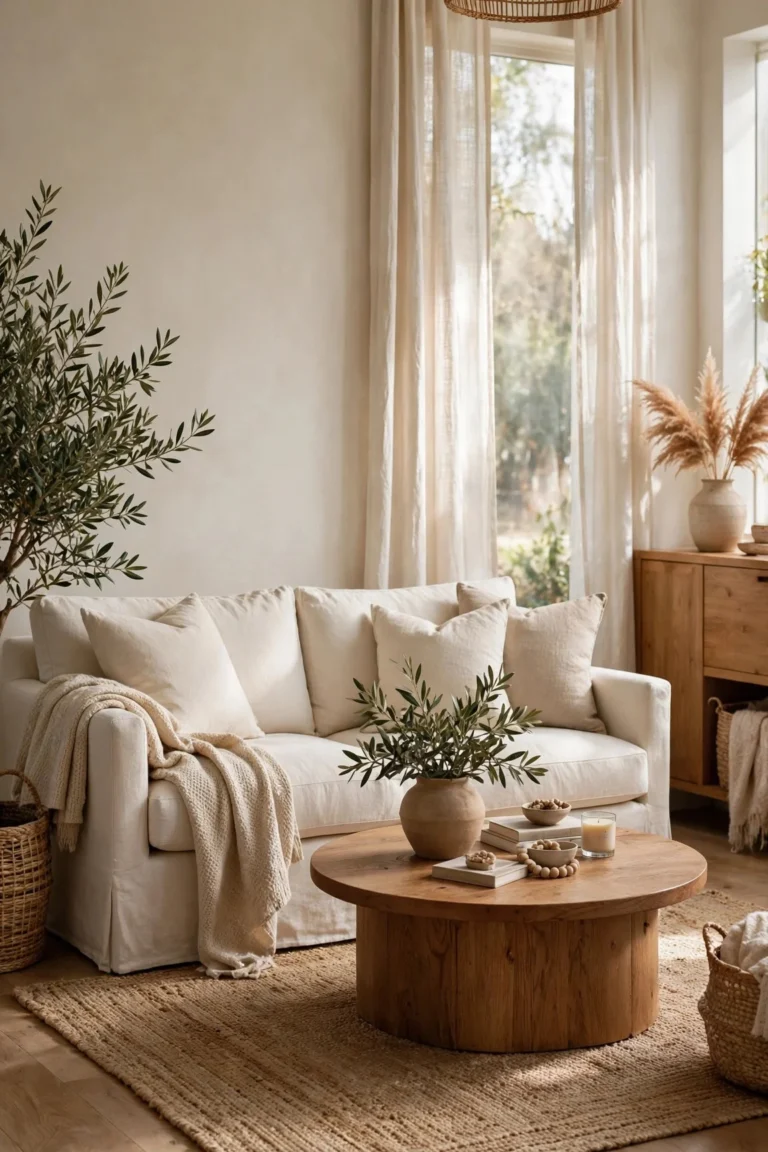
You don’t need new pillows — you need new covers. Swap the smooth cotton and linen covers for bouclé, wool, and faux fur in creams, taupes, and soft browns. The texture change alone makes a sofa feel like a different piece of furniture. Keep two sizes for depth (a 50cm square in front of a 60cm one) and don’t overthink the arrangement; slightly imperfect looks more inviting. Store the old covers with your Christmas textiles and rotate them back in March. A set of four decent covers runs £25–£40, which is the best value-per-pound winter update I know.
7. Style the Coffee Table for Long Dark Evenings

The coffee table is where your eyes land every evening, so style it for the season you’re actually in. Stack two or three books (big art books work best), add a low bowl in stone or wood with those kept pinecones, and finish with one candle. That’s the whole formula: something to read, something natural, something glowing. Clear off everything else — remotes live in a drawer now, coasters in a small stack. A calm, intentional surface makes the whole room feel calmer, which matters more in February than any of us admit.
8. Drape Sheepskin Over Your Reading Chair
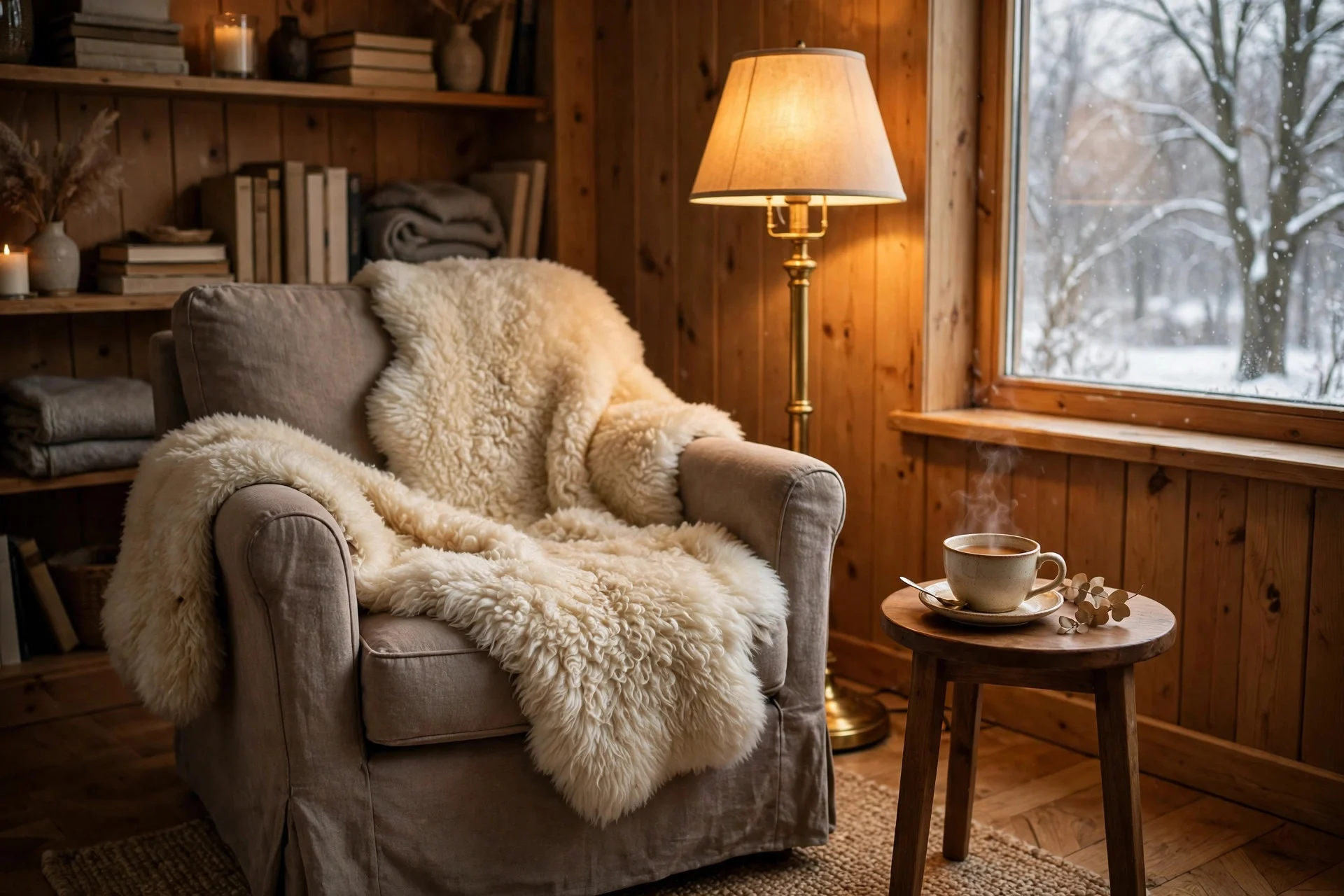
Every house has one chair where someone actually sits to read, scroll, or stare out of the window. Find yours and drape a sheepskin (real or very good faux) over the seat or back. It instantly signals “this is the warm spot” and it genuinely is warmer — sheepskin insulates in a way flat fabric doesn’t. Tuck one end so it doesn’t slide, and add a small side table for tea if there isn’t one. This is a £20–£60 purchase that gets used every single day until spring, which is more than I can say for most decor.
9. Bring In Warm Metals: Brass and Copper
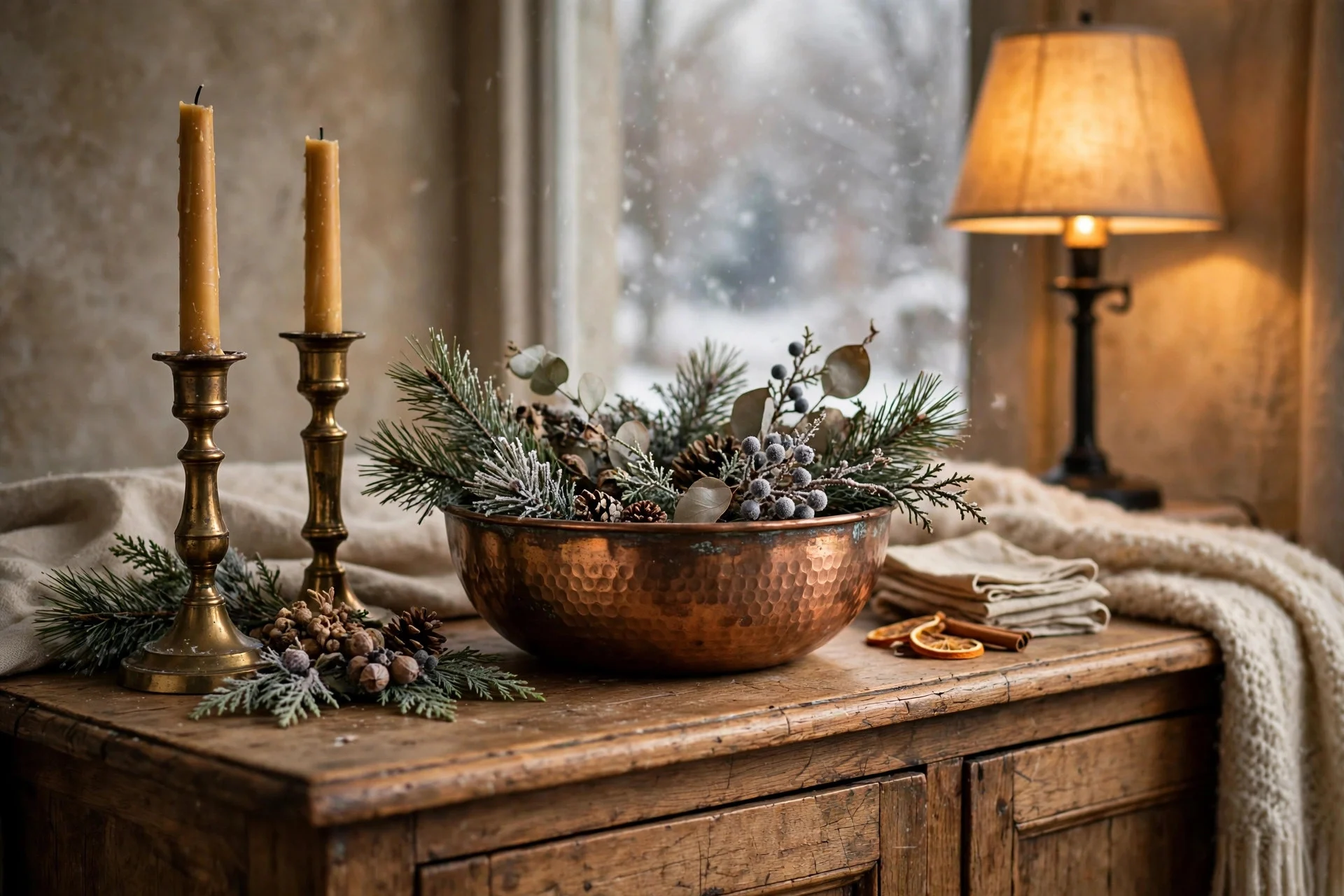
Chrome and nickel feel cold in January light. Warm metals — brass candlesticks, a copper bowl, a bronze-framed mirror — catch lamplight and throw it back as a golden glow. You don’t need to replace fixtures; just add three or four small warm-metal objects at eye level around your main rooms. Thrift stores are full of brass candlesticks for a few pounds each, and a quick polish brings them up beautifully. Group them in odd numbers and let them tarnish slightly — perfect shine reads as formal, gentle patina reads as cosy.
10. Choose Winter Scents Without a Hint of Pine
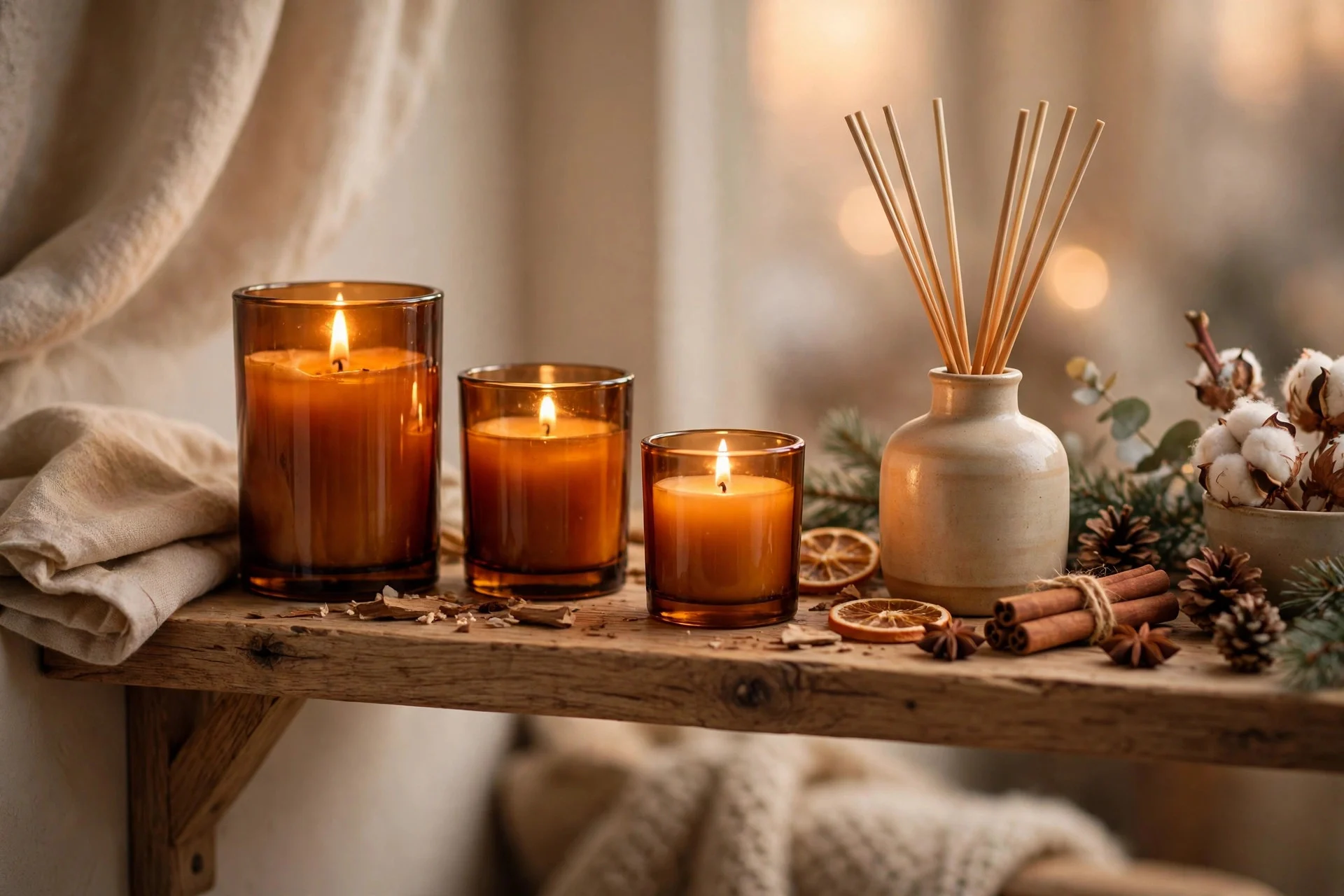
Pine scent in January just reminds you of what you took down. Shift to the warm side of the fragrance world: amber, vanilla, clove, sandalwood, baked apple. A reed diffuser in the hallway and one candle in the living room is plenty — scent should be discovered, not announced. If you’re sensitive to fragrance, simmer orange peel and a cinnamon stick on the stove instead; it’s gentle and it makes the kitchen smell like someone cares. For more on using fragrance deliberately rather than by accident, our piece on what scent does to a room is worth a read.
11. Make the Entryway Work for Real Winter
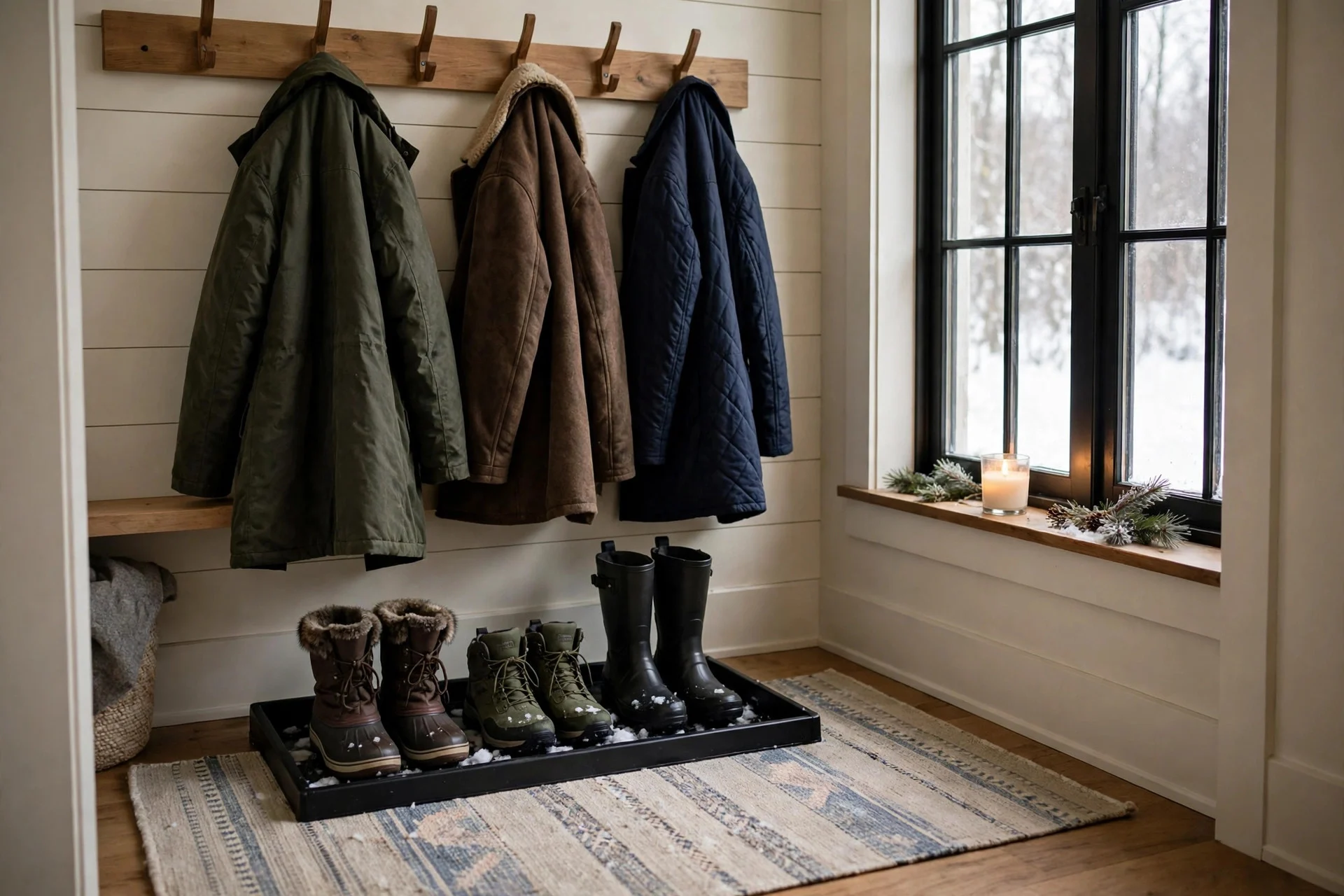
The entryway takes a beating in winter — wet boots, heavy coats, grit on the floor — and a beautiful-but-impractical setup just gets destroyed. Lay a washable runner, put a proper boot tray by the door (the kind with a lip, not a flat mat), and make sure every household member has one hook they actually use. Add one warm element: a small lamp on a console or a candle-style LED in the window. Practical first, pretty second — but there’s no reason it can’t be both. This is the room guests see first, and in winter it sets the tone for the whole house.
12. Switch to Flannel Sheets and a Heavier Duvet

Winter decor isn’t only visual — the bedroom should feel different when you climb in. Flannel sheets (brushed cotton, not the thin novelty kind) and a duvet one tog-rating heavier than your autumn one change your actual experience of the room. Layer a quilt or coverlet folded across the foot of the bed for looks and for 3am temperature negotiations. Keep the palette warm-neutral: oat, warm grey, soft terracotta. You’ll feel the difference on the first night, which is more than most decor promises can say.
13. Turn the Bathroom Into a Warm Retreat

Cold tile and a January morning are a miserable combination, but a few warm touches change the whole feeling. Roll thick towels instead of folding them and stack them on a wooden tray or stool — it reads as spa, not storage. Add a small candle or LED lantern on the vanity, swap the hand soap for something with a warm scent, and if you have the budget, a small washable bath mat in a deep tone beats a thin white one instantly. These are five-minute changes. The bathroom is the smallest room in the house, which means it’s the cheapest to transform.
14. Keep a Bowl of Citrus in the Kitchen

January is citrus season, and a big bowl of oranges, clementines, or blood oranges is winter decor you can eat. The colour — deep orange against a neutral kitchen — is exactly the warmth the season needs, with zero holiday baggage. Put the bowl where you’ll see it while making tea, and actually eat from it; a bowl of slowly shrivelling fruit is worse than no bowl at all. Add a small wooden cutting board leaning against the splashback and a sprig of dried eucalyptus in a jar, and the kitchen feels styled without a single decoration that needs storing in March.
15. Dress Window Sills With Simple Winter Shapes
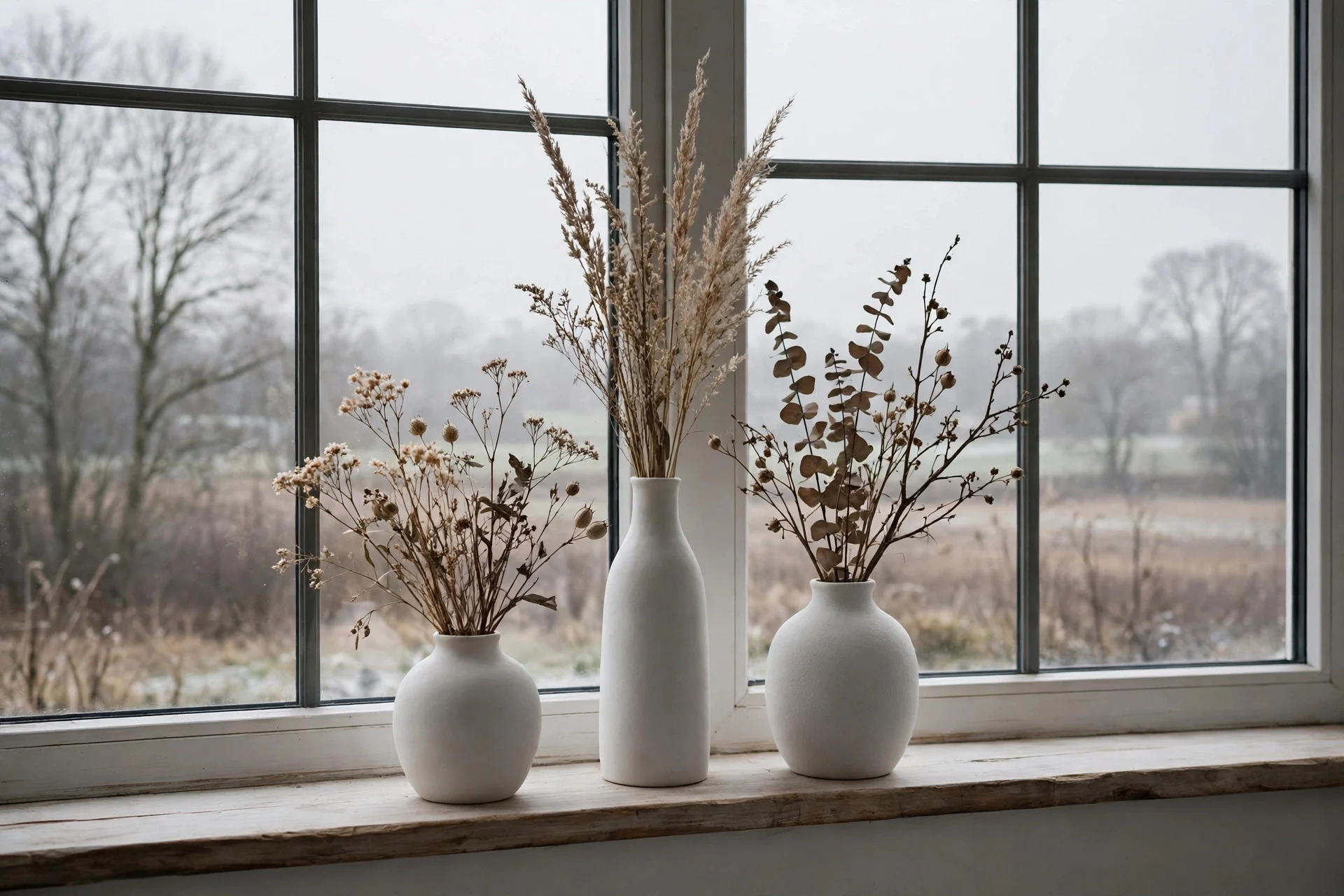
After the Christmas window candles come down, sills look stark — especially against grey January daylight. Restyle them with simple shapes: two or three white or cream ceramic vases in different heights, a few dried stems, maybe a small stack of books on a deep sill. Keep it minimal and tonal; the pale ceramics catch what little daylight there is and bounce it back into the room. This works in every room of the house and takes ten minutes per window. When the light finally returns in March, the same vases work with fresh stems.
16. Fake the Fireplace Glow (Even Without a Fireplace)

A flickering warm glow is the fastest shortcut to winter cosiness, and you don’t need a chimney for it. An electric fireplace insert or even a good LED log set gives you the light and movement of fire without the installation. No room for one? Cluster a dozen LED pillar candles of varying heights inside your actual (unused) fireplace, or on the hearth. The warm, uneven light does something to a room that no overhead bulb can — it makes people sit down and stay. Run it on a timer so it greets you when you come home in the dark.
17. Carve Out a Proper Reading Nook
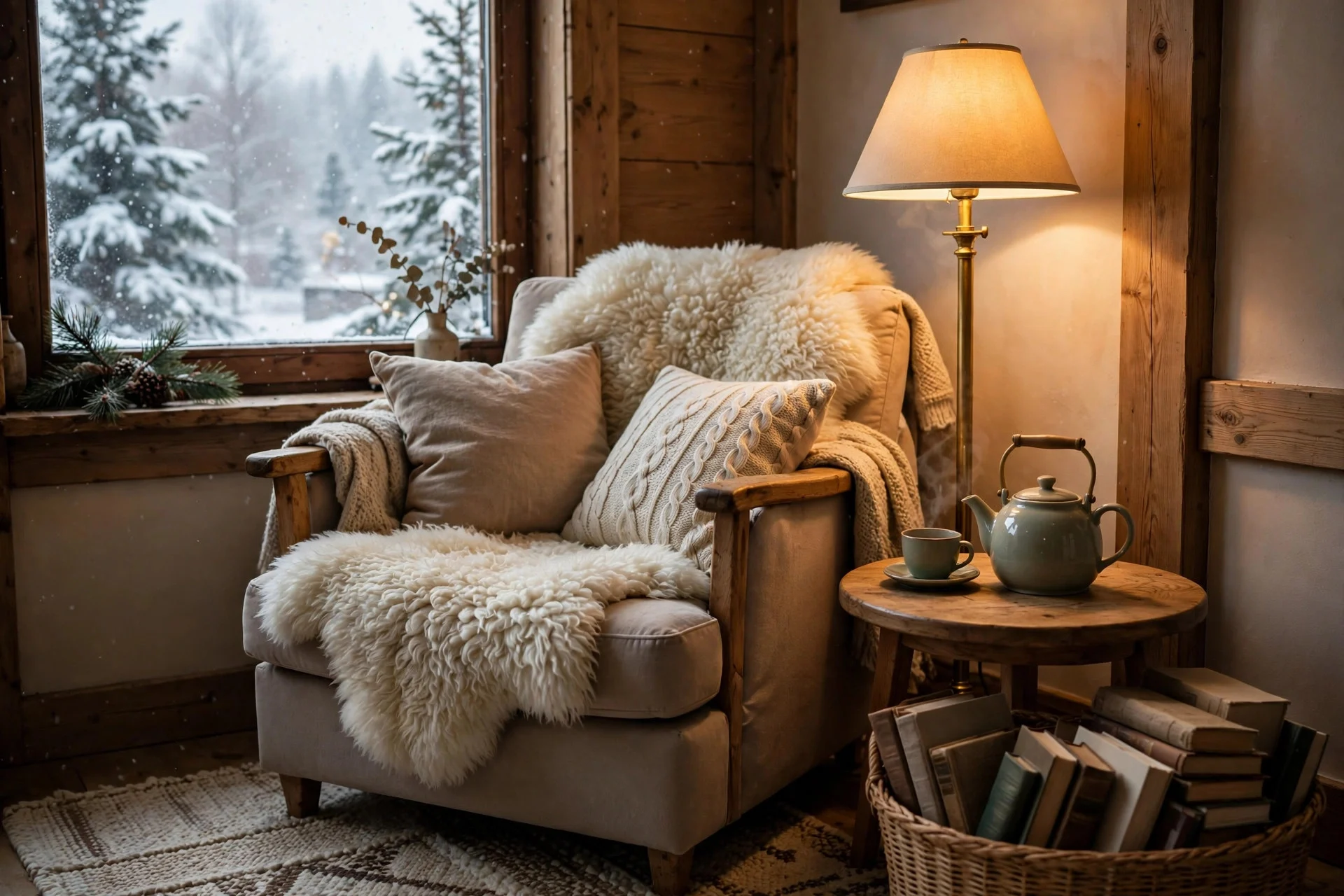
Long winter evenings need a destination — somewhere that isn’t the sofa in front of the television. Find an underused corner, add the most comfortable chair you own, a floor lamp with a warm bulb, a small table for tea, and a basket for the books you’re actually reading. The sheepskin from idea #8 lives here. A reading nook doesn’t require square footage you don’t have; it requires intention. Once it exists, you’ll use it daily, and it becomes the spot guests gravitate toward too.
18. Add Living Greenery (The Non-Christmas Kind)
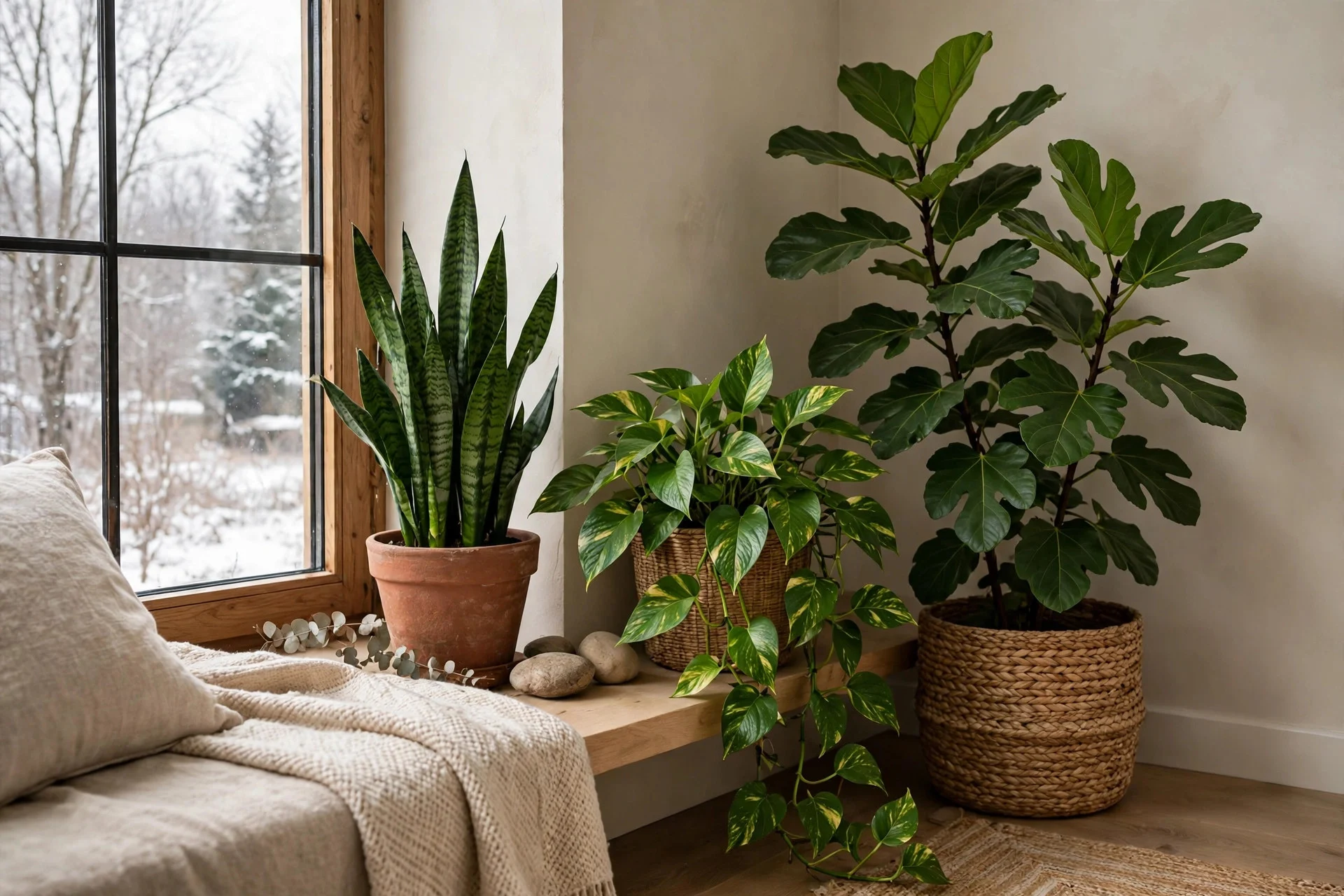
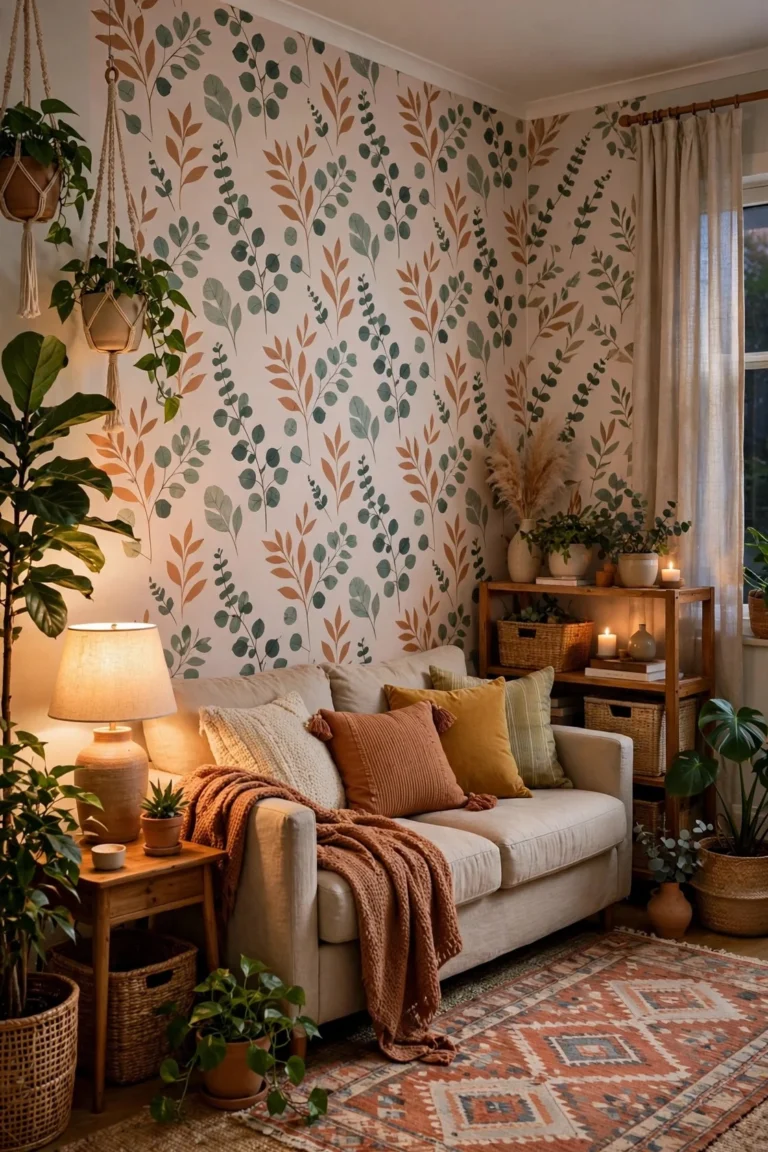
After weeks of cut evergreen, living green plants feel like a relief. A few houseplants — a snake plant, a pothos trailing off a shelf, something leafy in a big pot — bring life into rooms that have gone dormant. They also give you something to tend, which is quietly good for morale in February. Choose pots in warm materials: terracotta, wood, woven baskets. If you’ve killed every plant you’ve ever owned, start with a ZZ plant; it survives neglect the way the rest of us survive January.
19. Hang One Neutral Winter Wreath on the Door
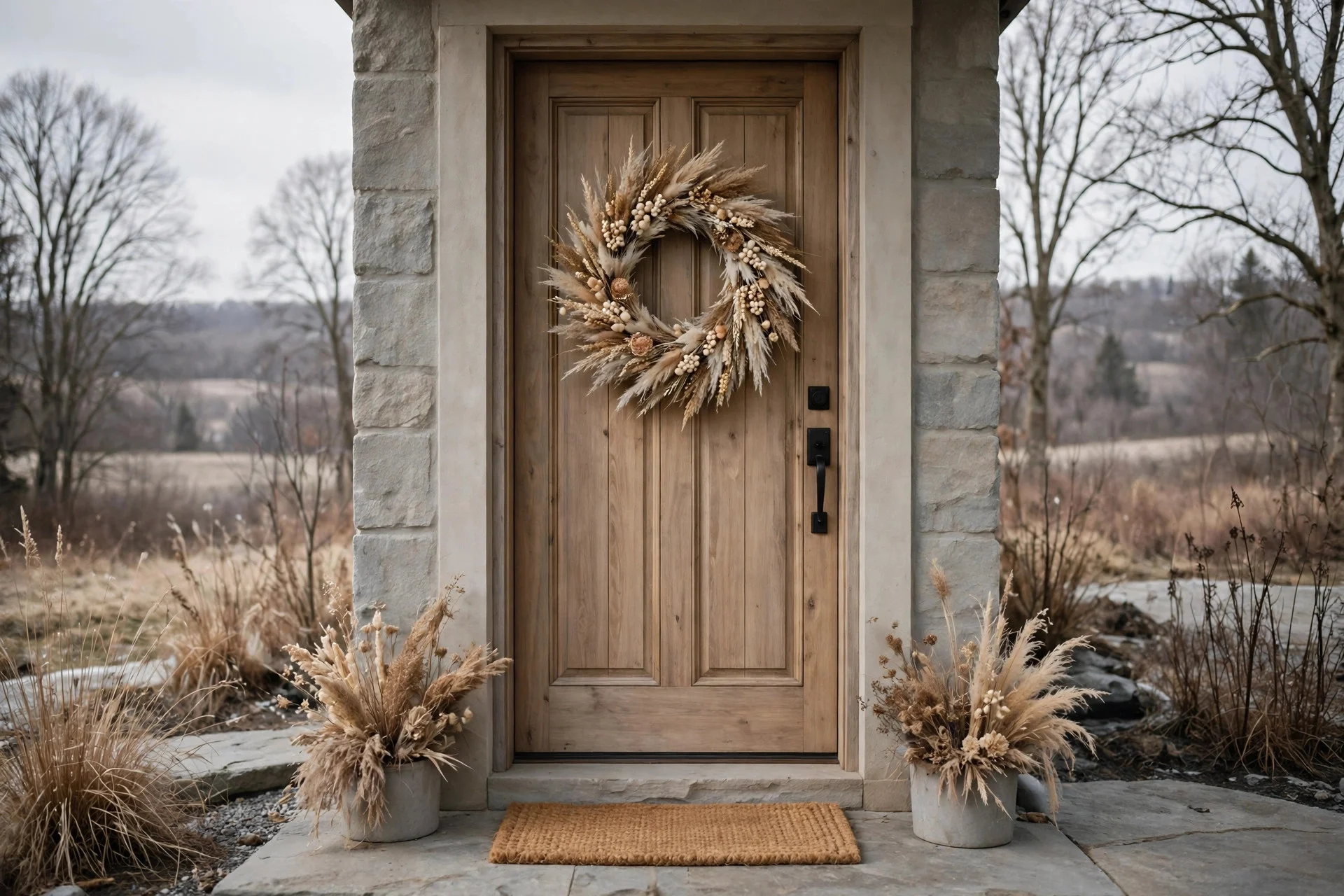
Taking the Christmas wreath down leaves the front door looking abandoned, and a bare door in February feels like giving up. Replace it with a winter wreath in neutral tones: dried grasses, wheat, preserved berries in brown and cream, maybe some bleached pinecones. No red, no green, no bow. It says “someone lives here and cares” all the way through March. Hang it on the inside of the door too if you want the view from your hallway to feel finished. One wreath, zero holiday references, three months of use.
FAQ
How do I decorate for winter without it looking like Christmas?
The rule is simple: no red-green palettes, no tree or ornament shapes, no pine or cinnamon-bark scents, no fairy-light overload. Build winter style from texture instead — wool, wood, stone, candlelight — in neutral and warm tones. If an object only reads as festive when it’s December, it stays in the Christmas box.
When should I take Christmas decorations down?
Most people aim for the first or second weekend of January. Don’t rush it on New Year’s Day if you’re still enjoying them, but don’t let them drift into February either — that’s when they start making the house feel tired rather than festive. Take them down in one focused session and restyle key spots (mantel, door, coffee table) with winter pieces the same day, so the house never sits bare.
What’s the cheapest way to make my home feel cosy in winter?
Light and textiles. Warm-white bulbs, a few candles you already own, and throws layered three-deep on the seating you use most. Those three changes cost under £50 total and transform how a room feels after dark — which, in January, is most of the time you’re home.
Can I keep my fairy lights up after Christmas?
Yes, with conditions. Warm-white fairy lights in a glass jar, along a bookshelf, or in a bedroom read as winter ambience, not Christmas leftovers. Multicolour or flashing lights have to go, and anything shaped like a star or snowflake goes back in the box. The test: if a guest in February would call it festive, it stays packed.
The house feeling bare after Christmas isn’t a decorating failure — it’s just the contrast. You went from maximum stimulus to nothing overnight, and of course the rooms feel flat. The fix isn’t more stuff; it’s winter stuff: warmth you can feel, textures you can touch, light that flatters a grey afternoon. Start with the bulbs and the throws this weekend, build the candle corner when you have an evening free, and by February your home won’t feel like it’s missing Christmas. It’ll just feel like winter, done well.