

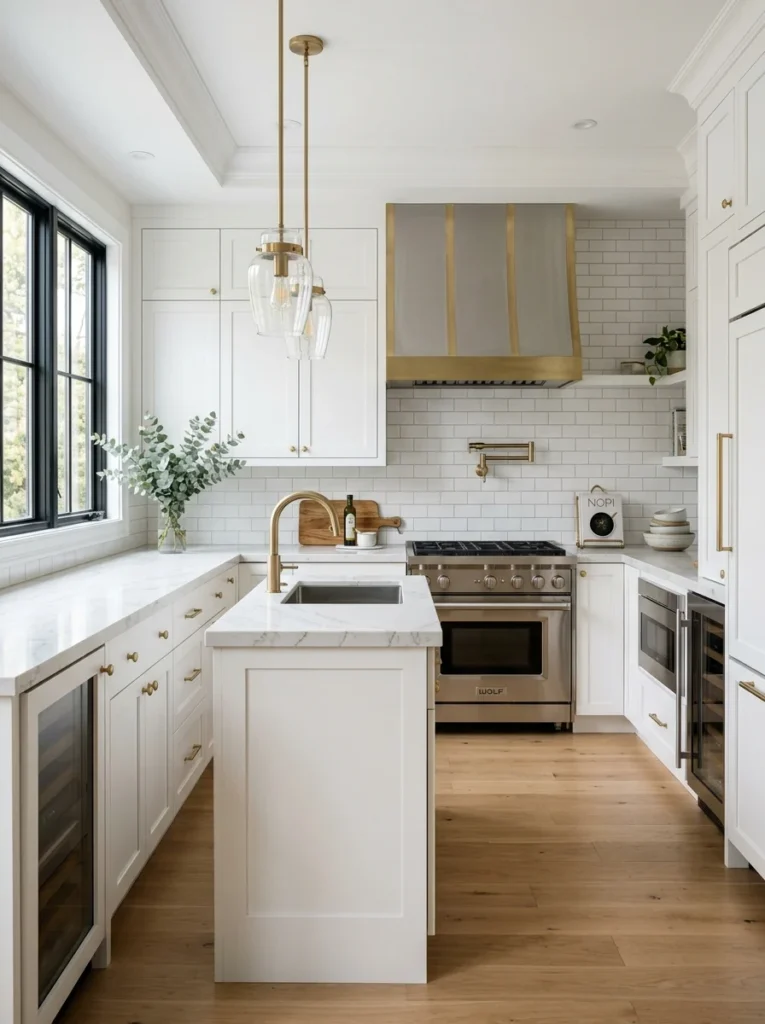
Full cabinet replacement is one of the most expensive kitchen decisions you can make — and in most cases, unnecessary. Here’s what actually changes how cabinets look and what each option costs.Replacing kitchen cabinets is among the most expensive decisions in any home renovation. In most markets, a full replacement runs between ten and thirty thousand dollars depending on kitchen size, cabinet quality, and the complexity of the installation. Quotes in that range reliably produce a long pause.
What most people don’t realize until after those quotes arrive is that the cabinet boxes — the actual structural frames bolted to the wall — are almost always structurally sound. Cabinet boxes are simple, sturdy constructions that last for decades without functional failure. What looks dated, tired, or wrong is almost never the box. It’s the door faces, the hardware, the finish, and sometimes the layout of what surrounds them.
This distinction is what makes updating without replacing possible — and in the majority of kitchen situations, it’s what makes it the smarter choice. You’re not compromising. You’re correctly identifying which part of the cabinet is actually the problem and addressing that part specifically.
Understanding What “The Cabinet” Actually Is
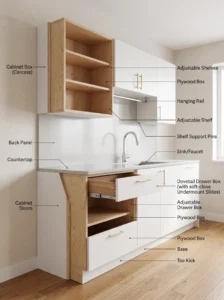
Before deciding how to update them, it helps to understand what cabinets are physically made of, because this determines what can be changed and what can’t.
A kitchen cabinet consists of two main components: the box (also called the carcass) — the four sides, top, bottom, and back that form the actual storage space and are mounted to the wall — and the face — the door, drawer front, and any applied molding or trim that is seen when the cabinet is closed.
In most kitchens, the box is invisible when the doors are closed. The only surfaces you actually see are the face components — and face components are replaceable without touching the box.
This is the structural basis for every non-replacement update available: the box stays, everything visible changes.
Option One: Repainting — The Lowest Cost, Highest Return Starting Point
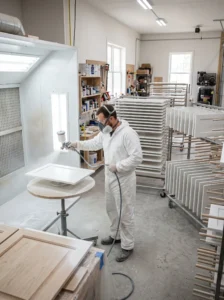
A properly executed cabinet repaint is one of the most return-efficient updates in any kitchen. For a fraction of the cost of replacement, the cabinets go from whatever color and finish they currently are to a fresh, chosen color in a durable finish appropriate for kitchen use.
The key word is properly executed. Cabinet repainting done poorly — with the wrong primer, the wrong paint type, or without adequate surface preparation — produces a finish that chips and peels within months and ends up looking worse than the original. Done correctly, a quality cabinet repaint lasts five to ten years under normal use.
What Proper Cabinet Repainting Involves
- All doors and drawer fronts removed and painted separately from the boxes, either flat or hung for spray application
- Thorough cleaning of all surfaces to remove grease — grease prevents paint adhesion, and kitchen cabinets accumulate it even in areas that appear clean
- Light sanding of all surfaces to create adhesion for primer
- A bonding primer appropriate for the existing cabinet surface (wood, thermofoil, laminate each have different requirements)
- Two coats of a cabinet-specific paint — not wall paint, which won’t hold up to kitchen conditions
- Reassembly after full cure, not just dry — rushing this step produces marks and chips before the kitchen is even used
The result, when done correctly, is a cabinet that reads as new from any normal viewing distance and holds up through years of daily kitchen use.
DIY vs Professional for Cabinet Repainting
This is one of the updates where the DIY vs professional gap in result quality is genuinely significant. A professional with spray equipment and the right products can achieve a factory-smooth finish that brushes and rollers can’t replicate at home. For visible cabinet fronts in a kitchen you care about, a professional cabinet painter is worth the cost — which is typically a fraction of what refacing or replacement would cost.
For cabinets in a utility area, a pantry, or a location where the finish quality is less critical, careful DIY with a quality foam roller and cabinet-specific paint produces an acceptable result.
Option Two: Refacing — New Faces on Existing Boxes
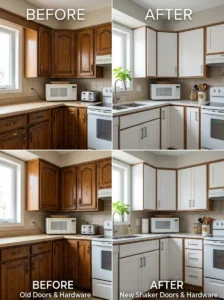
Cabinet refacing goes further than repainting: instead of painting the existing door faces, they’re replaced entirely with new doors and drawer fronts. The box stays. Everything visible is new.
This produces a result visually indistinguishable from cabinet replacement for most observers — new doors, new hardware, often new veneer applied over the box sides that show — at typically 40 to 60 percent of the cost of full replacement.
When Refacing Makes More Sense Than Repainting
- The existing cabinet doors are damaged, warped, or have a surface (thermofoil peeling, melamine chipping) that paint won’t adhere to well or conceal adequately
- A style change is wanted that goes beyond color — from flat-front to shaker, from shaker to inset, from one door profile to another — which requires new door geometry, not just new paint
- The existing door material is in poor enough condition that a painted finish would highlight rather than hide the damage
Refacing is also the option that allows a kitchen to go from one cabinet style to a completely different one — changing the visual character of the room, not just the color.
The Limitation of Refacing
The box layout doesn’t change with refacing. If the existing cabinets are in positions that don’t work — a cabinet that’s too wide here, a gap where a cabinet should be — refacing can’t address this. It changes the face, not the footprint.
Option Three: Hardware Replacement — The Fastest Visible Change Available
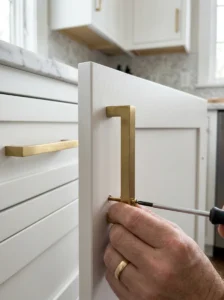
Of every update possible without touching the cabinet structure, hardware replacement has the fastest visible impact and the lowest cost per unit of change.
Builder-grade or original hardware on existing cabinets often reads as the most obviously dated element of the kitchen — more dated, in many cases, than the cabinet color or style itself. Brass pulls that were standard twenty years ago, or the particular profile of a knob that screams a specific renovation era, visually date the kitchen before anything else.
New hardware in a current finish — brushed nickel, matte black, aged brass, unlacquered brass — changes how the entire cabinet face reads without touching the cabinet itself. It’s also the update that most accurately demonstrates the “signal” principle from any design consultation: small details at touch points communicate the quality level of the whole room.
The only caution with hardware replacement is ensuring the new hardware is the right scale for the cabinet doors and drawers it’s going onto. Hardware that’s too small for a large door, or too large for a small upper cabinet, creates a proportion problem that undermines the update. Measure the existing holes to confirm the mounting distance, or fill and re-drill if the new hardware uses a different configuration.
Option Four: Replacing the Countertop and Backsplash Without Touching Cabinets
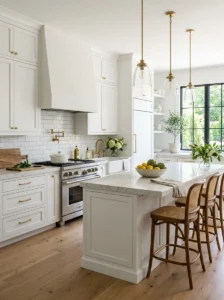
Cabinets don’t exist in isolation. They’re perceived in the context of what surrounds them, and changing what surrounds them changes how the cabinets read — even if the cabinets themselves are unchanged.
A kitchen where the countertop is updated from a dated laminate or worn tile to a fresh quartz or stone surface looks dramatically more current even if the cabinet color and doors are identical to what they were before. The cabinet is now in the context of a higher-quality surface, and the cabinet’s own quality reads higher as a result of that context.
The same principle applies to the backsplash. An updated backsplash — particularly one with more visual character than a standard builder-grade tile — changes the visual environment around the cabinets and updates the kitchen’s aesthetic level without touching the cabinets at all.
This approach is particularly worth considering when the cabinets are in acceptable condition but the overall kitchen feels dated. If the cabinet boxes and doors are structurally sound and the style is neutral enough to work with a fresher surrounding, updating the context costs less than updating the cabinets and produces a similarly significant result.
Option Five: Lighting — The Update That Changes How Cabinets Are Seen
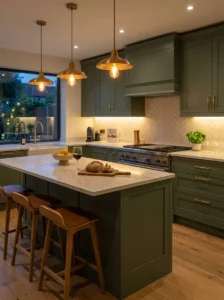
A cabinet painted in a dated color under poor overhead lighting looks dated. The same cabinet in fresh paint under good, layered lighting reads as an upgrade.
This isn’t an illusion. Lighting genuinely affects how surfaces read — their color, their finish quality, their texture. Under-cabinet lighting illuminates the countertop rather than leaving it in the shadow the overhead light can’t reach. A new pendant fixture over the island introduces a design element at a different height and warms the overall light environment. Replacing old fluorescent tubes with LED panels in a better color temperature makes every surface in the kitchen read differently.
Lighting updates as part of a cabinet-update project are consistently undervalued because they’re invisible in the “before” photo — nobody photographs the bad lighting. They’re consistently felt in daily use, because every hour spent in the kitchen is spent in the light environment.
What Can’t Be Fixed Without Replacement
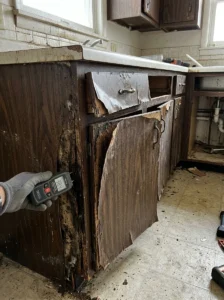
There are situations where updating without replacement genuinely won’t solve the problem, and being honest about these prevents investing in the wrong solution.
Structural damage to the box: If cabinet boxes have water damage, soft spots, warped sides, or frames that are no longer square, painting or refacing applies a new surface to a damaged structure. This always shows eventually and is never worth doing.
A layout that doesn’t work: As with the renovation disappointment article’s insight — if the cabinets are in positions that create daily friction, no surface update fixes the layout. Updates address appearance. Layout problems require moving things.
Cabinets that are genuinely too few: If there isn’t enough storage, adding a fresh paint color doesn’t create more cabinets. This is the scenario where adding a specific cabinet rather than replacing existing ones — a pantry tower, a wall of upper cabinets in a currently bare spot — addresses the actual problem.
Thermofoil or laminate in advanced deterioration: When thermofoil (the plastic-wrapped finish on many builder-grade cabinets) has peeled significantly at edges and corners, it cannot be reglued effectively in most cases and won’t accept paint adhesion well. Refacing with new doors is the right solution here rather than attempting to paint over a deteriorating surface.
A Practical Order of Operations
For most kitchens where cabinet replacement has been considered, a sensible sequence for evaluating alternatives:
- Inspect the boxes — open every cabinet and look at the structure. Any soft spots, water damage, or significant warping indicates a structural issue. If the boxes are solid, proceed.
- Assess the door condition — are the doors warped, peeling, or chipped beyond what paint would conceal? If yes, refacing with new doors is the path. If the doors are in good physical shape, repainting is viable.
- Replace the hardware first, before committing to any larger update — hardware is cheap and reversible. Seeing the cabinets with new hardware often changes the evaluation of whether a paint or reface is needed, or whether the hardware alone moved the needle enough.
- Get a quote for professional cabinet painting before assuming repainting is a DIY project — the gap in quality between professional spray finish and DIY brush/roll finish is significant for visible surfaces.
- Consider the countertop and backsplash in the same planning conversation — updating these in conjunction with cabinet work, rather than separately, usually produces a more coherent result for less total cost than addressing each independently.
Key Takeaways
- Cabinet boxes are structurally durable and rarely need replacement — what looks dated is almost always the face, finish, and hardware
- A professionally executed cabinet repaint costs a fraction of replacement and produces a comparable visual result when done correctly
- Cabinet refacing replaces door faces on existing boxes — appropriate when style change is needed or existing surfaces won’t accept paint well
- Hardware replacement is the fastest, cheapest single change with significant visible impact
- Updating the countertop and backsplash changes how existing cabinets read without touching the cabinets
- Lighting affects how every surface in the kitchen reads and is consistently undervalued in update planning
- Replacement is genuinely necessary for structural damage, fundamentally wrong layouts, insufficient cabinet count, and severely deteriorated surfaces
Frequently Asked Questions
How long does a professional cabinet repaint actually last? With proper preparation and cabinet-specific paint applied to a well-prepped surface, a professional repaint typically lasts five to ten years under normal kitchen use. The main variables are the quality of the prep work (cleaning and sanding), the primer choice for the specific surface type, and how hard the kitchen is used. High-traffic areas — around handles and at the edges of cabinet doors — show wear first and may need touch-ups before the overall finish needs renewal.
Can any cabinet door style be painted, or are some surfaces not suitable? Solid wood doors accept paint well with proper preparation. MDF (medium-density fiberboard) cabinet doors — very common in modern cabinetry — also accept paint well and produce a smooth finish. Thermofoil or vinyl-wrapped doors are more problematic: the plastic surface requires specific adhesion primer and doesn’t always accept paint as durably. Severely peeling thermofoil should be refaced rather than painted. When in doubt, a professional cabinet painter can assess the existing surface and advise on what’s viable.
Is cabinet refacing worth it, or should I just save for full replacement? Refacing makes sense when the cabinet layout works, the boxes are structurally sound, and a style change beyond just color is wanted. It delivers a result visually close to full replacement at significantly lower cost. If the layout doesn’t work, refacing is the wrong investment — no face change fixes a spatial problem. If the boxes have structural issues, the same applies. But for kitchens where the structure and layout are fine and the aesthetic is dated, refacing is a genuinely good investment rather than a compromise.
What’s the most common mistake people make when trying to update cabinets themselves? Using the wrong paint. Wall paint on cabinets chips and wears quickly because it’s not formulated for the frequent wiping, grease exposure, and physical contact that cabinet surfaces experience. Cabinet-specific paints and finishes — products formulated for trim, furniture, or specifically marketed for cabinets — cure harder and hold up considerably better. The second most common mistake is insufficient surface prep, particularly not degreasing thoroughly before priming, which causes adhesion failure.
How do I know if my kitchen would benefit more from a cabinet update or a countertop update first? Look at where the visual age of the kitchen is most concentrated. In kitchens where the cabinet color or style is the obvious source of the dated feeling, updating the cabinets changes more. In kitchens where the cabinets are a neutral or acceptable color but the countertop is worn, stained, or in a material that reads as old, the countertop update produces a larger visible change per dollar. When both are dated, addressing them together — even in stages — produces a more coherent result than updating either in isolation.