

Most houseplant deaths trace back to one of a small number of predictable, fixable mistakes, not a lack of a “green thumb.” Here’s how to actually keep plants alive, room by room.
“I don’t have a green thumb” is one of the most common explanations for a string of dead houseplants, and it’s usually the wrong diagnosis. Plant death overwhelmingly traces back to a small number of specific, identifiable, fixable mismatches — the wrong plant for the room’s actual light, watering that doesn’t match the specific plant’s actual needs, or a species chosen because it looked appealing in a store rather than because it suited the home it was going into. A household that’s killed several plants in a row usually has a pattern in how those deaths happened, and identifying that pattern is more useful than concluding that plant care generally isn’t something they’re capable of.
Overwatering Kills More Houseplants Than Underwatering
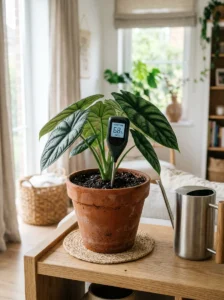
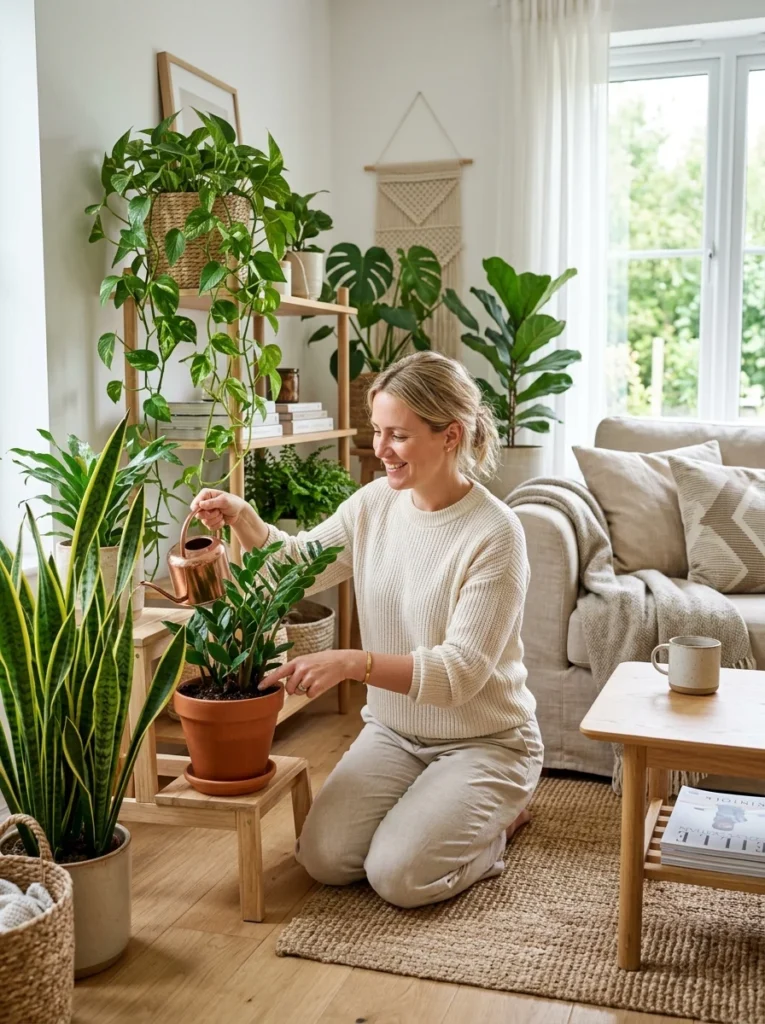
The single most common cause of houseplant death is overwatering, not neglect — a genuinely counterintuitive fact given that most people, worried about underwatering, err toward watering more frequently than a plant actually needs, which leads to root rot, a condition where the roots literally suffocate and decay in consistently saturated soil. This is worth internalizing directly, since it runs against most people’s instinct: a plant showing yellowing, wilting leaves is more often suffering from too much water than too little, even though the visual symptoms can look similar to underwatering at a glance.
Checking actual soil moisture before watering — inserting a finger an inch or two into the soil, or using a simple, inexpensive moisture meter — is a more reliable method than watering on a fixed schedule, since a plant’s actual water needs vary with light, temperature, humidity, and season in ways a fixed weekly schedule doesn’t account for. Most common houseplants do better with soil allowed to dry out to some degree between waterings than with soil kept consistently damp, which is the opposite of what many people’s watering instinct defaults to.
Drainage matters as much as watering frequency — a pot without a drainage hole, or a plant sitting in standing water that’s collected in a decorative outer pot or saucer, creates the same waterlogged root conditions that overwatering does, even if the actual watering frequency itself was reasonable.
Matching a Plant to the Room’s Actual Light, Not the Light You Wish It Had
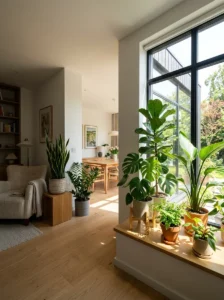
A plant purchased because it looked appealing in a store, without checking whether the specific room it’s intended for actually provides the light that species needs, is set up to fail regardless of how carefully it’s watered afterward. This is a common and avoidable mismatch: a plant requiring bright, direct light placed in a dim interior room, or a low-light-tolerant plant placed in intense direct sun it wasn’t suited for, will struggle regardless of watering care, since light is the more fundamental requirement.
Assessing a room’s actual light honestly — not how bright it feels to the eye, which adapts and can be misleading, but the room’s actual proximity to windows, the direction those windows face, and how much is blocked by nearby buildings or trees — before choosing a plant species avoids this mismatch from the outset. A north-facing room with modest window coverage, for instance, genuinely doesn’t support the same plant species that a bright, south-facing room does, regardless of how much either room might subjectively feel adequately lit to a person standing in it.
Choosing Genuinely Low-Maintenance Species for a Household With a Track Record of Plant Death
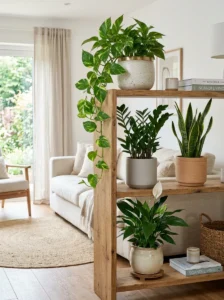
Certain houseplant species are specifically and consistently more forgiving of imperfect care than others, and a household that’s killed several plants in a row is better served starting with these species rather than attempting a more demanding plant and hoping the outcome will be different this time.
Snake plants, ZZ plants, and pothos are among the most commonly recommended low-maintenance options, tolerating a wide range of light conditions, infrequent watering, and general inconsistency in care better than most other common houseplant species — the same species covered in more detail elsewhere in this series in the context of low-light bathrooms specifically, and genuinely useful as a starting point in any room of the home for a household building confidence with plant care.
Succulents, popularly recommended as low-maintenance, are actually a common trap for households prone to overwatering specifically, since succulents are particularly sensitive to overwatering and root rot despite their reputation for being easy — a household with an overwatering tendency is often better served by a different low-maintenance category, like the species listed above, than by succulents specifically, despite succulents’ general marketing as beginner-friendly.
Starting Small and Building Confidence Rather Than Overcommitting
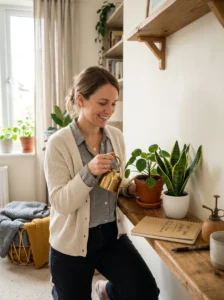
A household with a track record of killing plants is generally better served starting with one or two low-maintenance plants and genuinely learning their specific care pattern — how quickly their soil dries out in that home’s specific conditions, how they respond to the available light — before expanding to a larger collection or more demanding species. This mirrors a reasonable approach to any new skill: building direct, specific experience with a forgiving starting point rather than attempting a large, ambitious collection immediately and risking repeated failure that reinforces the belief that plant care isn’t something the household is capable of.
Observing a plant’s specific responses over the first few weeks — how it looks after watering, how the soil feels at different points between waterings, whether it’s producing new growth — builds the kind of direct, plant-specific knowledge that’s more useful than following a generic care guide’s fixed schedule, since actual conditions in a specific home will always vary somewhat from generic guidance.
Tools That Reduce the Guesswork
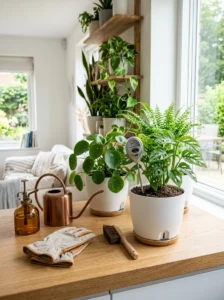
A simple moisture meter, inserted into the soil, removes much of the guesswork around watering timing and is a low-cost tool that directly addresses the overwatering tendency that kills more plants than any other single cause.
Self-watering pots, which hold a water reservoir the plant draws from as needed, reduce the risk of both overwatering and underwatering for a household that struggles with watering consistency in either direction, and are a reasonable investment for a household that’s identified watering timing specifically as their recurring failure point.
A phone reminder or a simple recurring calendar note, checked rather than blindly followed — a reminder to check soil moisture rather than a reminder to water regardless of actual need — supports the moisture-checking habit without reverting to the fixed-schedule watering approach that tends to lead to overwatering in the first place.
Faux Plants Are a Legitimate Option, Not a Failure
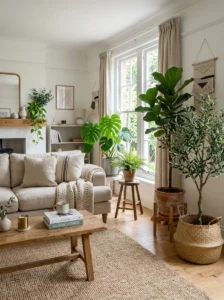
For a household that’s genuinely tried the above and still struggles, or for a specific location in the home with light too poor for any living plant to reasonably thrive, a high-quality faux plant is a legitimate design choice rather than an admission of failure. Faux plant quality has improved considerably, and a well-chosen faux plant in a suitable pot contributes real visual softness and life to a room, addressing the same texture and warmth considerations covered elsewhere in this series regarding what separates a calm room from a cold one, without the ongoing care burden a household has genuine reason to avoid.
A reasonable, practical approach for many households is a mix: genuine low-maintenance plants in the home’s better-lit locations, where they’ll actually thrive with reasonable care, and quality faux plants in poorly lit spots or rooms where a household has already established a pattern of plant death despite reasonable effort.
Room-Specific Considerations Worth Checking
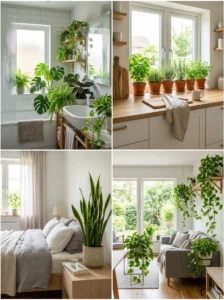
As covered in more detail elsewhere in this series regarding windowless bathrooms specifically, a room with no natural light at all requires either a dedicated grow bulb, a genuinely shade-tolerant species accepting that growth will be slow and modest, or a rotation strategy bringing plants in from better-lit spaces temporarily rather than expecting permanent healthy growth in a space that fundamentally can’t support it.
A kitchen with variable humidity and temperature from cooking, and a bedroom with more consistent, controlled conditions, each suit somewhat different species — checking a specific plant’s stated humidity and temperature tolerance against the specific room’s actual conditions, rather than assuming any low-maintenance plant works equally well anywhere in the home, avoids a room-specific mismatch that a generally hardy species might still struggle against.
Key Takeaways
- Overwatering, not neglect, is the most common cause of houseplant death — checking actual soil moisture before watering is more reliable than watering on a fixed schedule
- Matching a plant species to a room’s actual, honestly assessed light conditions before purchasing avoids a fundamental mismatch that no amount of careful watering afterward can fix
- Snake plants, ZZ plants, and pothos are genuinely forgiving starting points for a household with a track record of plant death; succulents, despite their easy reputation, are actually a common overwatering trap
- Starting with one or two plants and learning their specific care pattern in a specific home’s actual conditions builds more useful knowledge than following a generic care schedule from the outset
- Moisture meters and self-watering pots are low-cost tools that directly address the watering-timing guesswork responsible for most plant deaths
- A high-quality faux plant is a legitimate choice for poorly lit spaces or for a household that’s made a genuine effort and still struggles, not an admission of failure
Frequently Asked Questions
Is overwatering really more common than underwatering as a cause of plant death? Yes, and it’s a genuinely counterintuitive fact given that most people worry more about forgetting to water than about watering too much. The visual symptoms of overwatering — yellowing, wilting leaves — can look similar to underwatering at a glance, which leads many people to respond to an overwatering problem by watering even more, compounding the actual issue.
Are succulents actually a good choice for someone who keeps killing plants? Not necessarily, despite their popular reputation as easy and low-maintenance — succulents are particularly sensitive to overwatering specifically, which makes them a common trap for a household whose plant-killing pattern involves overwatering. Snake plants, ZZ plants, and pothos are generally more forgiving choices for this specific tendency.
How do I know if my home actually has enough light for a houseplant, or if I’m fooling myself? Assess the room’s actual proximity to windows, which direction those windows face, and how much light is blocked by nearby buildings or trees, rather than relying on how bright the room feels to your eye, which adapts to ambient light in a way that can be misleading. A north-facing room with modest window coverage genuinely supports different plant species than a bright, south-facing room, regardless of subjective impression.
Is it worth buying a moisture meter, or is checking with a finger good enough? Checking with a finger works reasonably well for many people and is free, but a moisture meter provides a more precise, less subjective reading, which is particularly useful for a household specifically trying to correct an overwatering tendency. It’s a low-cost tool that directly addresses the most common cause of plant death, and worth considering for anyone who’s struggled with watering timing repeatedly.
Is it okay to use fake plants instead of trying again with real ones? Completely legitimate, particularly for poorly lit spaces where no real plant would reasonably thrive, or for a household that’s made a genuine, informed effort and still struggles. A high-quality faux plant provides real visual texture and softness to a room without the ongoing care burden, and many households reasonably use a mix of real plants where conditions support them and faux plants elsewhere.