

Balayage, highlights, and ombre get used almost interchangeably in casual conversation, and they’re genuinely different techniques with different results, maintenance needs, and costs. Here’s the actual distinction.
Balayage, highlights, and ombre are frequently used as if they’re interchangeable descriptions of “lighter pieces in your hair,” which creates real confusion during a color consultation, since these are genuinely distinct techniques with different application methods, different visual results, and — as covered in more detail elsewhere in this series regarding coloring frequency and damage — different maintenance and grow-out implications. Understanding the actual distinction, rather than using these terms loosely, produces a considerably more accurate conversation with a colorist and a result that actually matches what was pictured going in.
Highlights Are Applied With Foil for Precision and Uniformity
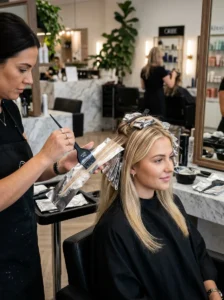
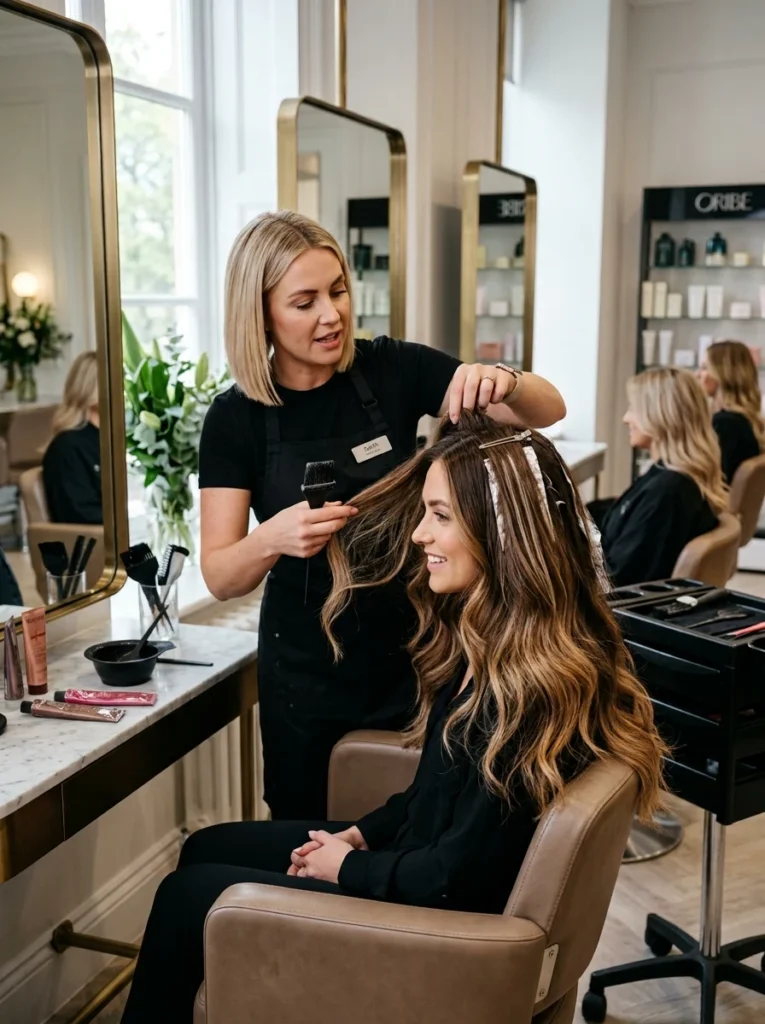
Highlights refer to individual sections of hair lightened using foil, where the colorist sections off specific pieces, applies lightener, and wraps them in foil to isolate that section from the rest of the hair during processing. This foil isolation allows for precise control over exactly which sections are lightened and to what degree, producing a more uniform, evenly distributed pattern of lighter pieces throughout the hair compared to freehand techniques.
Because foil highlights are applied close to the root and processed with direct heat and isolation, they tend to lighten more quickly and can achieve a more dramatic degree of lift in a single session compared to freehand techniques, which is part of why foil highlights remain the standard choice for someone wanting a significant, uniform lightening throughout their hair rather than a softer, more graduated effect.
Balayage Is a Freehand, Hand-Painted Technique
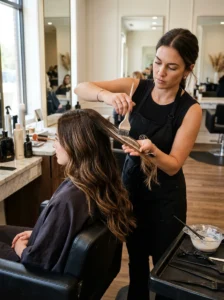
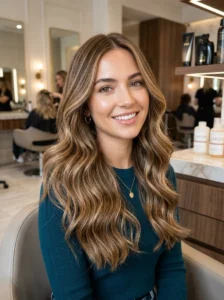
Balayage — from the French term meaning “to sweep” — is applied by hand-painting lightener directly onto the hair’s surface without foil isolation, typically with a lighter application near the mid-lengths and ends and less or no product applied close to the root, creating a soft, graduated, sun-kissed effect rather than the more uniform, precisely sectioned pattern foil highlights produce.
Because balayage is applied freehand without the heat-trapping isolation foil provides, it processes more gradually and generally achieves a softer, less dramatic degree of lift in a single session compared to foil highlights, which is part of why balayage tends to look more subtle and blended rather than producing the more distinctly separated, uniform lightened pieces foil highlights create.
The Root Application Difference Is the Most Consequential Distinction for Maintenance
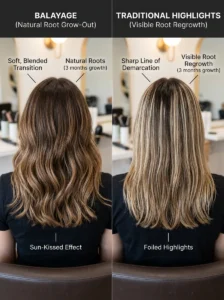
The single most consequential practical difference between these techniques is where the color is applied relative to the root: foil highlights are typically applied close to or at the root, which means as hair grows, the contrast between the newly grown, unlightened root and the previously lightened hair becomes visible relatively quickly, requiring more frequent salon visits to maintain a seamless look.
Balayage’s characteristic technique of leaving the root area natural or minimally processed, with lightening concentrated at the mid-lengths and ends, means new root growth blends in far more naturally over time, since the root area was never dramatically different in color from what’s growing in — this is the primary reason balayage is frequently marketed and chosen specifically for its lower-maintenance grow-out compared to traditional foil highlights.
Ombre Is a Distinct, More Dramatic Gradient Technique
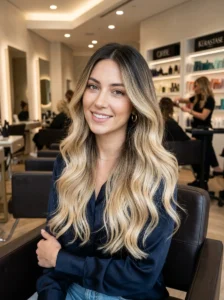
Ombre refers to a deliberate, often fairly distinct color transition from a darker base at the roots to a noticeably lighter color at the ends, typically with a more pronounced, visible transition point between the two color zones compared to the soft, gradual blending balayage aims for. While balayage and ombre both involve lighter ends and darker roots in a general sense, ombre’s transition is generally more graphic and deliberate, sometimes spanning only the lower portion of the hair’s length, while balayage aims for a softer, more dispersed, less clearly zoned effect throughout more of the hair’s length.
Ombre, like balayage, generally has a more forgiving grow-out than foil highlights, since the root area is largely undisturbed, though a very high-contrast ombre with a sharply defined transition point can still show some visible change as hair grows and that transition point shifts relative to the head, even if it’s less noticeable than foil highlight root growth.
Babylights Are a Specific, Finer Variation of Foil Highlighting
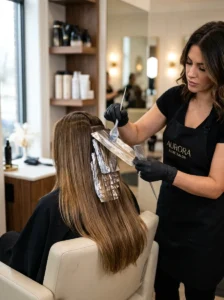
Babylights, referenced briefly elsewhere in this series regarding reducing color-related structural damage, are a foil highlighting technique using much finer, more numerous sections than traditional foil highlights, producing a subtler, more naturally dispersed lightening effect that mimics the fine, delicate lightening children’s hair often develops naturally from sun exposure.
Because babylights use finer sections and often less dramatic lightening per section, they tend to be gentler on the hair per session than traditional, larger-section foil highlights, though the foil-based root application still means babylights show root growth more noticeably than balayage does, positioning babylights as something of a middle ground between the precision of traditional foil highlights and the low-maintenance grow-out of balayage.
Choosing Between Techniques Based on Actual Priorities
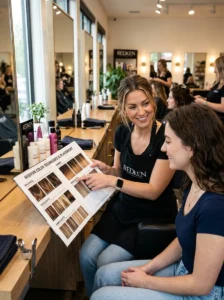
A client prioritizing dramatic, uniform, high-contrast lightening throughout the hair, and willing to maintain more frequent salon visits to manage root growth, is generally better served by traditional foil highlights, since this technique achieves that specific uniform, high-lift result more reliably than freehand techniques do.
A client prioritizing a lower-maintenance grow-out, a softer and more natural-looking result, and fewer required salon visits is generally better served by balayage, accepting that the overall lightening effect will typically be softer and less uniformly dramatic than foil highlights would produce in the same number of sessions.
A client wanting a specific, deliberate color transition — often for a bolder, more graphic look rather than a subtle, naturalistic one — is better served by ombre specifically, understanding that this technique is aiming for a visible, intentional transition rather than the soft blending balayage prioritizes.
Techniques Can Be Combined Rather Than Treated as Mutually Exclusive
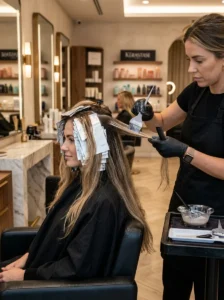
Many colorists combine techniques within a single service — using balayage for the overall dimensional base while adding a few foil-highlighted pieces for extra brightness around the face, for instance — which means the choice isn’t always a strict either-or decision, and discussing the actual desired outcome (brightness, maintenance tolerance, overall look) with a colorist often produces a combined recommendation rather than a single named technique applied in isolation.
This is worth raising directly during a consultation — describing the actual priorities (low maintenance, maximum brightness, a natural versus a bold look) rather than requesting a specific named technique in isolation, since a skilled colorist can often achieve the actual desired outcome more effectively through a combination of techniques than through a single, rigidly applied method.
Key Takeaways
- Foil highlights are applied with precise sectioning and foil isolation, producing a uniform, evenly distributed, often more dramatic lightening effect, typically applied close to the root
- Balayage is a hand-painted, freehand technique with lightening concentrated at the mid-lengths and ends, producing a softer, more graduated effect with a naturally low-maintenance grow-out
- The root application difference is the most consequential practical distinction — foil highlights show root growth relatively quickly, while balayage’s natural root area blends in gradually over time
- Ombre is a more deliberate, often more graphic color transition from darker roots to lighter ends, generally more pronounced and zoned than balayage’s soft, dispersed blending
- Babylights are a fine-sectioned foil technique offering a middle ground — gentler and subtler than traditional foil highlights, but still showing more visible root growth than balayage
- Techniques can be combined within a single service, and describing actual priorities (maintenance tolerance, desired brightness, natural versus bold look) to a colorist often produces a better result than requesting one named technique in isolation
Frequently Asked Questions
Which technique requires the least frequent salon visits? Balayage generally requires the least frequent maintenance visits, since its characteristic natural root area blends in gradually as hair grows, rather than creating the visible contrast that foil highlights’ root-close application produces relatively quickly. Ombre also tends to have a fairly forgiving grow-out, though a high-contrast transition point can still become somewhat noticeable over time.
Is balayage always more gentle on hair than foil highlights? Generally yes on a per-session basis, since balayage typically achieves a softer degree of lift without foil’s heat-trapping isolation, though the actual damage-related factors covered in more detail elsewhere in this series — like how much lightening is involved and how the hair’s cuticle and protein structure respond — matter more than the technique name alone. A very intensive balayage service can still involve significant lightening, just distributed differently than foil highlights would apply it.
What’s the actual difference between balayage and ombre if they both have darker roots and lighter ends? Balayage aims for a soft, gradually blended, naturalistic dispersion of lighter pieces throughout more of the hair’s length, while ombre creates a more deliberate, often more visually distinct transition point between a darker zone and a lighter zone, generally reading as more graphic and intentional rather than softly blended.
Are babylights a good compromise between highlights and balayage? They can be, particularly for someone wanting a subtler, more naturally dispersed lightening effect than traditional foil highlights provide, without going as low-maintenance or as soft as balayage. Babylights still use foil and root-close application, so they show root growth more noticeably than balayage, positioning them as a genuine middle ground between the two other techniques rather than a direct substitute for either.
Can I combine balayage and highlights in one appointment? Yes, and many colorists do this regularly — using balayage for overall dimensional softness while adding a few foil-highlighted pieces for extra brightness, particularly around the face, is a common combined approach. Describing your actual priorities and desired look to a colorist, rather than requesting one named technique in isolation, often leads to this kind of more tailored, combined recommendation.