


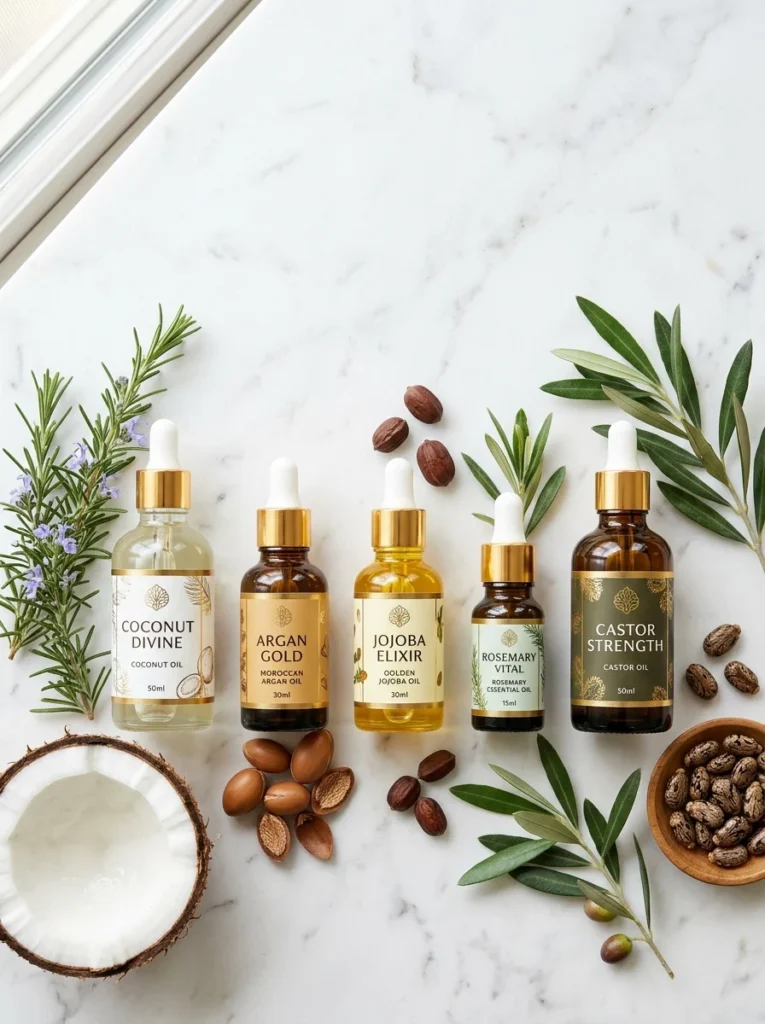
Hair oils are marketed almost interchangeably despite working through genuinely different mechanisms, and knowing which type you’re actually using changes both when and how to apply it. Here’s the real breakdown.
Hair oils are frequently marketed with similar language — “nourishing,” “repairing,” “restorative” — that obscures the fact that different oils work through genuinely different mechanisms, are absorbed by hair very differently, and are suited to different application timing and hair types. Understanding this distinction, rather than treating “hair oil” as a single interchangeable category, is what determines whether a specific oil actually helps a specific hair concern or simply sits on the surface adding shine without addressing whatever the underlying issue actually is.
Penetrating Oils Actually Enter the Hair Shaft; Sealing Oils Sit on the Surface
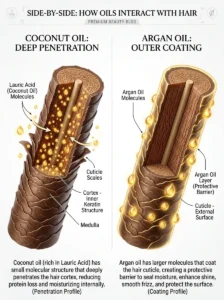
The most fundamentally important distinction among hair oils is whether they’re capable of penetrating into the hair shaft itself, or whether their molecular structure keeps them sitting on the hair’s surface, coating rather than entering it — this single distinction determines much of what a given oil can and can’t actually accomplish, regardless of how it’s marketed.
Coconut oil is the most commonly cited penetrating oil, due to its specific molecular structure (a high proportion of lauric acid, which has a particular affinity for hair’s protein structure) that allows it to actually enter the hair shaft, where it can help reduce protein loss during washing and reduce the amount of water hair absorbs and then loses during wet styling and manipulation — this is a genuinely different function than surface-coating oils provide, and it’s part of why coconut oil has research specifically supporting its use as a pre-wash treatment to reduce styling and washing-related damage.
Olive oil has some similar penetrating capacity, though generally considered somewhat less effective at this specific function than coconut oil, while oils like argan, jojoba, and sweet almond oil are generally classified as sealing oils — their molecular structure is too large to meaningfully penetrate the hair shaft, which means they primarily coat the hair’s surface, adding shine, reducing frizz by smoothing the cuticle, and providing some protection against moisture loss, without the internal, protein-protective function penetrating oils offer.
Jojoba Oil’s Structural Similarity to Sebum Makes It Particularly Compatible With Scalp Use

Jojoba oil is structurally closer to human sebum (the natural oil produced by the scalp) than most other commonly used hair oils, which makes it generally well tolerated for scalp application specifically and less likely to feel heavy or clog pores compared to oils with a more different molecular structure from the scalp’s own natural oil.
This makes jojoba oil a reasonable choice specifically for scalp-focused application — massaged into the scalp rather than applied primarily to the hair’s length — for someone wanting to add moisture or manage a dry scalp without the heavier, more occlusive feeling some other oils can produce when applied close to the scalp.
Pre-Wash Application Serves a Different Purpose Than Post-Wash Application

Applying a penetrating oil like coconut oil before washing, left on for a period of time (commonly anywhere from thirty minutes to overnight) before shampooing it out, allows the oil to enter the hair shaft and provide the protein-loss-reduction benefit covered above during the subsequent wash, which is a specifically preventive, pre-emptive use of the oil rather than a finishing or styling application.
Post-wash or post-styling application of a sealing oil, by contrast, is primarily about the surface-level cosmetic benefits — added shine, reduced frizz, and a smoother-feeling finish — applied to already-dry or nearly dry hair as one of the final steps in a styling routine, serving a genuinely different function than the pre-wash protective application, and this is why understanding which category an oil falls into changes not just which oil to choose but when and how to actually use it.
Applying Oil to Fine Hair Roots Commonly Causes the Same Weight Problem Covered Elsewhere in This Series
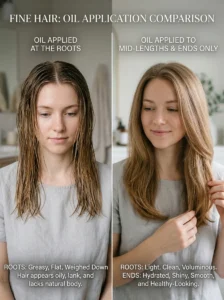
As covered in more detail elsewhere in this series regarding fine hair’s volume challenges, fine hair strands have limited structural capacity to carry weight without appearing flat or greasy, and oil — regardless of which specific type — adds weight, which means applying oil at or near the roots of fine hair is a common and avoidable cause of the flat, weighed-down appearance fine hair is already prone to.
Concentrating oil application on the mid-lengths and ends specifically, while avoiding the root and scalp area unless the goal is specifically scalp treatment rather than length styling, allows fine hair to receive an oil’s benefits (frizz reduction, shine, protein protection from penetrating oils) without compounding the weight-related flatness that root-area oil application would cause.
Oil Does Not “Repair” Structural Damage, Despite Common Marketing Language
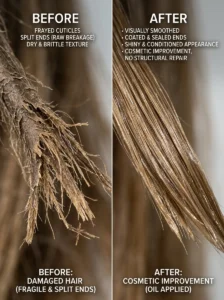
As covered in more detail elsewhere in this series regarding coloring damage and hair growth, genuine structural damage — broken protein bonds, a compromised cuticle, split ends — is not actually reversible through topical oil application, regardless of marketing language suggesting “repair” or “restoration,” since oil, whether penetrating or sealing, doesn’t rebuild broken internal protein structures or reattach split ends.
What oil genuinely does accomplish — smoothing the cuticle’s appearance, reducing further protein loss during washing, adding shine, reducing frizz, providing a protective barrier against some future damage — are real and valuable functions, but they’re fundamentally cosmetic and preventive rather than restorative, and understanding this distinction helps set realistic expectations rather than assuming a specific oil will reverse damage that’s already occurred.
Castor Oil and the Hair Growth Claim Specifically
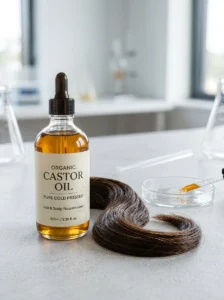
Castor oil is heavily marketed for hair growth specifically, though the direct evidence supporting a genuine growth-rate increase from topical castor oil application is considerably weaker than the marketing suggests — castor oil’s thick, occlusive texture can create the appearance of thicker, glossier hair through its coating effect, and can support scalp health in a general sense, but this is a different claim than actually accelerating the rate of new hair growth from the follicle, which the current evidence doesn’t strongly support.
This is worth understanding clearly given how persistently castor oil is marketed specifically around hair growth claims — it’s a reasonable oil for general hair and scalp conditioning, similar to other oils covered in this piece, but it shouldn’t be relied upon as a primary strategy for someone dealing with an actual growth rate concern, which, as covered in more detail elsewhere in this series, is more effectively addressed by identifying and addressing the actual underlying cause.
Rosemary Oil Has More Emerging Evidence, Though Still Limited, for Scalp-Related Benefits
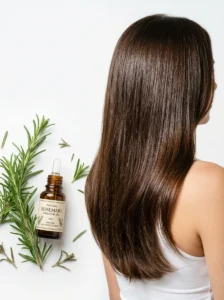
Rosemary oil has received considerable recent attention, with some preliminary research suggesting it may have a genuine, measurable effect on hair growth comparable to some established topical treatments in specific studies, though the overall body of research remains considerably smaller than what supports established, medically-recognized growth treatments, and rosemary oil’s mechanism is generally understood to relate to improved scalp circulation rather than a direct effect on the hair shaft itself.
Someone interested in trying rosemary oil for scalp health can reasonably do so as a low-risk addition to a broader hair care routine, understanding that the current evidence, while more promising than castor oil’s growth claims specifically, is still preliminary relative to established medical treatments for genuine hair loss or growth concerns.
Choosing an Oil Based on the Actual Goal, Not the Marketing Category

A useful practical framework: choosing a penetrating oil like coconut oil for pre-wash, protein-protective treatment; choosing a sealing oil like argan or jojoba for post-styling shine and frizz reduction; concentrating any oil application away from fine hair roots specifically; using jojoba for scalp-focused moisture given its sebum-like compatibility; and treating growth-specific marketing claims, particularly around castor oil, with appropriate skepticism relative to the actual supporting evidence.
Key Takeaways

- Penetrating oils like coconut oil actually enter the hair shaft and can reduce protein loss during washing, while sealing oils like argan and jojoba primarily coat the hair’s surface, providing shine and frizz reduction without the same internal protective function
- Jojoba oil’s structural similarity to natural sebum makes it particularly well suited to scalp-focused application specifically, compared to oils with a more different molecular structure
- Pre-wash oil application serves a preventive, protein-protective purpose, while post-wash or post-styling application is primarily about surface-level cosmetic benefits — these are genuinely different uses requiring different timing
- Oil applied at fine hair’s roots commonly causes the same weight-related flatness covered elsewhere in this series regarding fine hair, making mid-length and end-focused application generally more appropriate for fine hair specifically
- No hair oil genuinely repairs structural damage like broken protein bonds or split ends, despite common marketing language — oils provide real but fundamentally cosmetic and preventive benefits rather than restorative ones
- Castor oil’s hair growth marketing claims are considerably stronger than the current supporting evidence, while rosemary oil has more promising, though still preliminary, research specifically related to scalp circulation and growth

Frequently Asked Questions
What’s the actual difference between coconut oil and argan oil for hair? Coconut oil is a penetrating oil that can actually enter the hair shaft, providing protein-loss reduction during washing when used as a pre-wash treatment, while argan oil is a sealing oil that primarily coats the hair’s surface, providing shine and frizz reduction without the same internal protective function. They serve genuinely different purposes and are best used at different points in a hair care routine.
Can hair oil actually repair split ends or damaged hair? No — no topical oil, regardless of type, rebuilds broken internal protein structures or reattaches split ends, despite marketing language suggesting “repair” or “restoration.” Oils provide real cosmetic and preventive benefits, like smoothing the cuticle’s appearance and reducing further protein loss, but they don’t reverse damage that’s already occurred.
Is castor oil actually good for hair growth? The direct evidence supporting a genuine growth-rate increase from topical castor oil is considerably weaker than its marketing suggests. It can create the appearance of thicker, glossier hair through its coating effect and support general scalp conditioning, but it shouldn’t be relied upon as a primary strategy for an actual growth rate concern.
Should I put hair oil on my scalp or just the ends of my hair? This depends on your hair type and the oil’s purpose — jojoba oil, given its similarity to natural sebum, works well applied to the scalp specifically, while for fine hair in particular, concentrating oil on the mid-lengths and ends rather than the roots avoids the weight-related flatness that root-area oil application commonly causes.
Is rosemary oil worth trying for hair growth? It has more promising preliminary evidence than many other oils marketed for growth, particularly castor oil, with some research suggesting a measurable effect potentially related to improved scalp circulation. The overall evidence is still limited compared to established medical treatments, but it’s a reasonably low-risk addition to try as part of a broader hair care routine.