

Chlorine, sweat, and humidity each affect hair through different mechanisms and need different management strategies, even though they often get lumped together as one general “active lifestyle” hair problem. Here’s how to actually address each one.
Swimming, regular sweating from exercise, and living in a humid climate get grouped together informally as one general category of “hair stress,” but they affect hair through genuinely different mechanisms and require different management strategies — chlorine’s chemical impact on hair structure and color, sweat’s effect on scalp buildup and washing frequency, and humidity’s effect on frizz through moisture absorption are three distinct problems that happen to share a general theme of environmental hair stress without sharing the same underlying cause or solution.
Swimming: Chlorine and Salt Water Require Different Protective Approaches
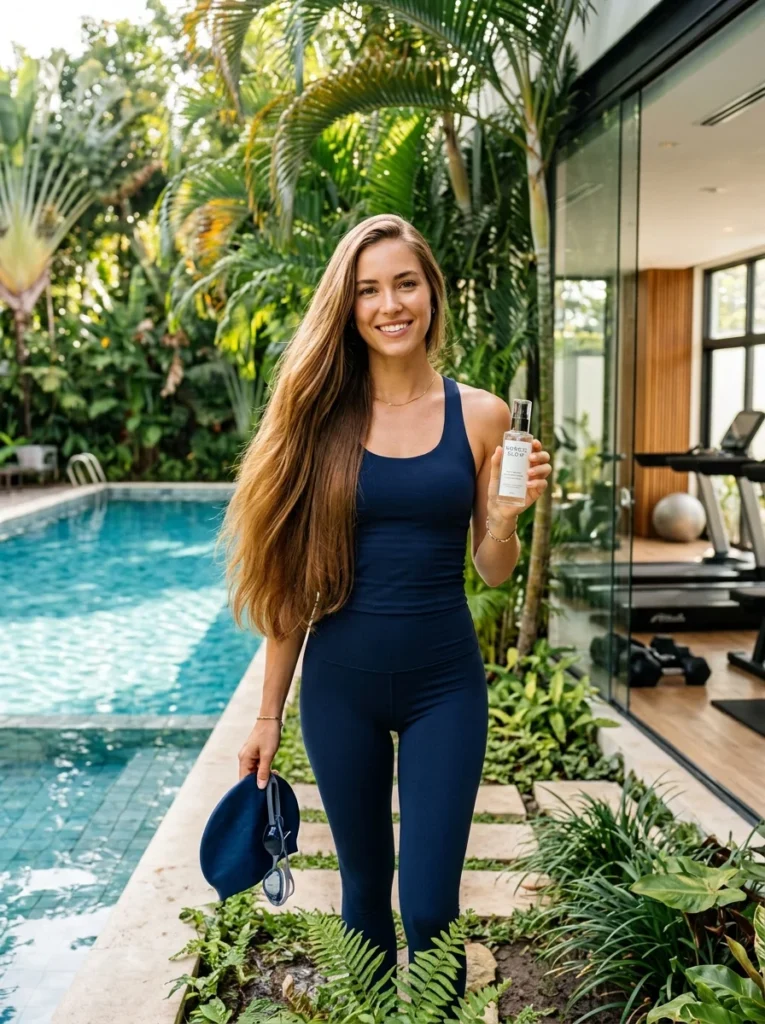
As covered in more detail elsewhere in this series regarding color fading specifically, chlorinated pool water affects hair through direct chemical interaction with the cuticle and can cause color shifts on lightened hair, and the core protective strategy — wetting hair thoroughly with clean water before swimming so it absorbs less chlorinated water, applying a leave-in conditioner or specific pre-swim protective product, and rinsing thoroughly immediately after swimming — addresses both the structural and color-related impact of regular pool exposure.
Salt water affects hair somewhat differently than chlorine, primarily through its drying effect (salt draws moisture out of hair, similar to its effect on skin) rather than chlorine’s more direct chemical and oxidative impact, which means the same pre-wetting and rinsing strategy helps, but ocean swimmers should prioritize a deeper conditioning treatment after swimming specifically to counteract salt’s moisture-depleting effect, rather than focusing primarily on the chemical protection more relevant to chlorine exposure.
A swim cap provides the most complete protection against both chlorine and salt water exposure, and while it’s not always practical or desired for casual or recreational swimming, it’s worth genuine consideration for anyone swimming very frequently (competitive swimmers, daily lap swimmers) where the cumulative exposure risk is considerably higher than occasional recreational swimming.
Sweat Affects the Scalp Differently Than It Affects the Hair Shaft

Regular sweating, particularly from frequent exercise, primarily affects the scalp rather than causing the same kind of structural hair shaft damage chlorine or sun exposure cause — sweat left on the scalp can contribute to buildup, odor, and for some people, irritation or an increase in oil production as the scalp’s natural balance is disrupted by frequent sweat exposure without adequate cleansing.
This means the primary strategy for managing sweat’s effect on hair is scalp-focused, rather than a hair-shaft protective strategy the way chlorine and sun exposure require — regular washing (with a genuinely appropriate frequency for an active lifestyle, which is often more frequent than someone with a low-sweat lifestyle would need) and using a clarifying shampoo periodically to address any accumulated buildup specifically at the scalp are the more relevant interventions.
Dry shampoo, while useful for managing appearance between washes generally, is not an adequate substitute for actual washing when sweat and scalp buildup are the primary concern, since dry shampoo absorbs surface oil but doesn’t address the accumulated sweat residue and potential scalp irritation that frequent, unwashed sweat exposure can cause over time.
Determining an Appropriate Washing Frequency for an Active Lifestyle

Someone exercising intensely and sweating heavily on a daily or near-daily basis generally needs a different washing frequency than general hair care guidance (which is often calibrated around a more moderate, non-daily-exercise lifestyle) would suggest, and rinsing with water alone, or a gentle, less stripping cleanser, on the days between full shampoo washes is a reasonable middle-ground approach for someone needing more frequent cleansing than a standard schedule but wanting to avoid the stripping effect of daily full shampoo use, which, as covered in more detail elsewhere in this series regarding overwashing, can create its own rebound oil-production problem.
A workout-specific approach — rinsing thoroughly with water immediately after a sweaty workout, even without full shampoo, and reserving full shampoo washes for a somewhat less frequent but still regular schedule — balances the genuine need for more frequent cleansing that an active, heavily sweating lifestyle creates against the stripping and rebound-effect risks of washing with full shampoo every single day.
Humidity’s Effect on Hair Is a Moisture-Absorption Problem, Distinct From Chlorine or Sweat

Humidity affects hair through a different mechanism entirely than chlorine or sweat — hair, particularly hair with any texture or porosity, absorbs moisture from humid air, which causes the hair shaft to swell and the cuticle to lift slightly, disrupting a smooth, sleek style and creating the frizz commonly associated with humid conditions, a process that has nothing to do with chemical exposure or scalp buildup and everything to do with hair’s inherent tendency to absorb ambient moisture.
Higher porosity hair — hair with a more open, raised cuticle structure, often resulting from previous chemical processing like coloring or heat damage, covered in more detail elsewhere in this series — tends to be more reactive to humidity specifically, absorbing ambient moisture more readily and frizzing more dramatically than lower porosity, healthier hair with a more tightly sealed cuticle.
Managing Frizz in Humid Conditions Requires Sealing the Cuticle, Not Just Adding More Product

Anti-humidity hair products generally work by creating a barrier on the hair’s surface — often silicone-based — that reduces how readily the hair shaft can absorb ambient moisture from humid air, which is a genuinely different function than a general smoothing or styling product not specifically formulated for humidity resistance.
Keeping the hair’s cuticle in as healthy and sealed a state as possible through the general damage-reduction strategies covered throughout this series (reduced heat styling, gentler washing, adequate conditioning) provides a more durable, structural defense against humidity’s frizzing effect than relying purely on anti-humidity styling products applied on top of already-compromised, high-porosity hair, which will still be more reactive to humidity regardless of the product layered on top.
Protective styles — braids, buns, styles that keep hair contained rather than loose and exposed to ambient humidity — are a practical, low-effort strategy for managing humid conditions specifically, since contained hair has less exposed surface area actively absorbing moisture from the surrounding air compared to hair worn loose and fully exposed.
Distinguishing Which Environmental Factor Is Actually Driving a Specific Problem
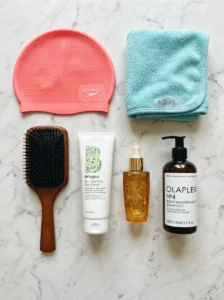
Someone experiencing multiple environmental exposures simultaneously — an active person who swims, sweats regularly from exercise, and lives in a humid climate — benefits from identifying which specific factor is driving which specific symptom, since chlorine-related color fading, sweat-related scalp buildup, and humidity-related frizz each require a distinct intervention, and addressing the wrong one (using a stronger anti-humidity product for what’s actually chlorine-related structural damage, for instance) won’t resolve a problem whose actual cause lies elsewhere.
Key Takeaways

- Chlorine and salt water both require pre-wetting hair with clean water and thorough post-swim rinsing, though salt water’s primary effect is drying rather than the more direct chemical impact chlorine has, meaning ocean swimmers should prioritize deeper conditioning afterward
- Sweat primarily affects the scalp through buildup and potential irritation rather than causing hair shaft structural damage, making scalp-focused washing frequency the more relevant strategy than hair-shaft protective products
- An active, heavily sweating lifestyle often warrants more frequent cleansing than standard hair care guidance suggests, though daily full shampoo can create its own rebound oil-production issue — rinsing with water between full washes is a reasonable middle ground
- Humidity affects hair through moisture absorption into the hair shaft itself, causing swelling and cuticle lift that creates frizz, a mechanism entirely distinct from chlorine’s chemical impact or sweat’s scalp buildup
- Higher porosity hair, often resulting from previous chemical processing, reacts more dramatically to humidity than healthier, lower porosity hair with a more tightly sealed cuticle
- Identifying which specific environmental factor is driving a specific symptom — fading, scalp buildup, or frizz — matters, since each requires a genuinely different intervention rather than one general “active lifestyle” product or approach addressing all three

Frequently Asked Questions
Do I need to treat my hair the same way for pool swimming and ocean swimming? The core pre-wetting and post-swim rinsing strategy helps with both, but the underlying concern differs — chlorine’s impact is more directly chemical and can affect color, while salt water’s primary effect is drying. Ocean swimmers should prioritize a deeper conditioning treatment afterward specifically to address salt’s moisture-depleting effect.
How often should I wash my hair if I work out and sweat every day? More frequently than someone with a low-sweat lifestyle typically needs, but not necessarily with full shampoo every single day, since daily stripping shampoo use can create its own rebound oil-production problem. Rinsing thoroughly with water immediately after a sweaty workout, combined with a somewhat less frequent but still regular full shampoo schedule, is a reasonable middle-ground approach.
Is dry shampoo enough to manage sweat between workouts? Not really as a substitute for actual washing — dry shampoo absorbs surface oil but doesn’t address accumulated sweat residue and potential scalp irritation the way genuine washing does. It’s useful for general between-wash appearance management, but sweat and scalp buildup specifically call for actual cleansing rather than dry shampoo alone.
Why does my hair frizz more in humid weather than other people’s hair seems to? This is often related to hair porosity — higher porosity hair, frequently resulting from previous chemical processing like coloring or heat damage, has a more open cuticle structure that absorbs ambient moisture more readily than lower porosity, healthier hair with a more tightly sealed cuticle. Improving overall hair health through reduced heat styling and gentler processing can provide a more durable defense against humidity than anti-humidity products alone.
Do anti-humidity hair products actually work, or is that mostly marketing? They generally do provide a genuine function — most work by creating a surface barrier, often silicone-based, that reduces how readily hair absorbs ambient moisture. That said, they work better as a complement to genuinely healthy, lower-porosity hair than as a fix applied on top of already significantly damaged, high-porosity hair, which will remain more humidity-reactive regardless of the product used.