

Decluttering is genuinely useful, and it’s also frequently oversold as a complete solution. Here’s what it actually accomplishes, and what it leaves entirely untouched.
Decluttering has become the default first answer to almost any complaint about a home not feeling right — too busy, too stressful, not restful enough, somehow off. And decluttering does genuinely help with a specific, real problem: too much stuff, poorly organized, creating visual and functional noise. But it’s frequently oversold as a complete solution to a much broader category of complaints it was never actually equipped to solve, and a household that declutters thoroughly and still feels like something’s missing isn’t failing at decluttering — they’ve usually just decluttered a problem that was never primarily about volume in the first place.
Decluttering Removes; It Doesn’t Add Anything a Home Actually Needs
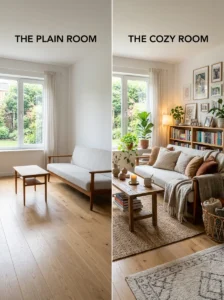
Decluttering is fundamentally a subtraction process — it removes excess, and in doing so it can genuinely improve a space that was suffering specifically from too much stuff. But subtraction alone cannot supply anything a space is missing, and many of the qualities that make a home feel warm, considered, and comfortable are additive, not the byproduct of removal.
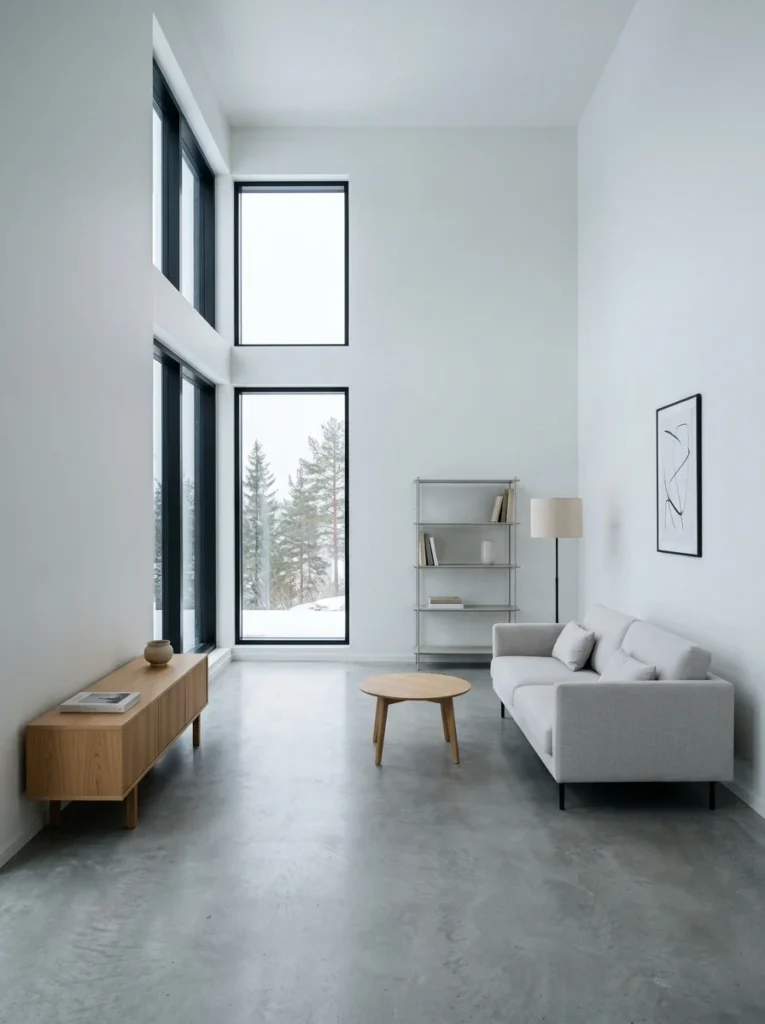
A room can be decluttered to the point of genuine minimalism and still lack layered texture, warm lighting, comfortable seating, or personal objects with real meaning — all qualities covered in more detail elsewhere in this series regarding what separates a calm bedroom from a merely empty one, and none of which decluttering, as a process, is capable of providing. A household expecting decluttering alone to produce warmth and comfort is asking a subtraction process to deliver an additive result, which is a mismatch between the tool and the goal, not a failure of execution.
The “Before and After” Decluttering Photo Obscures What Actually Changed
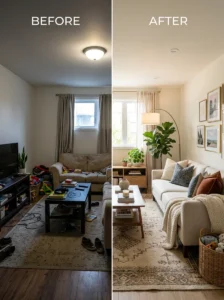
Popular decluttering media typically presents a dramatic before-and-after transformation, and it’s worth looking closely at what actually changed between those two images, because it’s rarely decluttering alone. The “after” photo is usually also better lit, often features new or refreshed textiles, frequently includes newly purchased storage solutions and organizing systems, and is typically staged with the same care covered elsewhere in this series regarding photography versus lived experience — meaning the transformation being credited entirely to decluttering was actually accomplished by several additive changes happening simultaneously with the subtraction.
This matters because it sets an unrealistic expectation: a household that removes excess belongings but doesn’t also address lighting, texture, and genuine functional organization is comparing their own result to a transformation that was never produced by decluttering alone in the first place, which sets up disappointment that gets misattributed to a failure of the decluttering process rather than to an incomplete comparison.
Decluttering Doesn’t Fix a Space That Was Never Functionally Designed
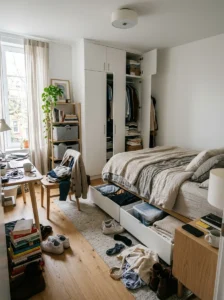
A significant portion of what reads as “clutter” in a home is actually a symptom of inadequate storage or a poor functional layout, not simply too many possessions — items accumulate on visible surfaces because there’s no designated, accessible place for them to go, a problem covered in more detail elsewhere in this series regarding bedrooms without adequate closets or built-in storage. In this scenario, decluttering — reducing the volume of items — treats a symptom rather than the underlying cause, and the same clutter tends to reaccumulate over time because the structural storage problem that originally produced it was never actually addressed.
A household with a genuine storage deficit needs a storage solution, not simply less stuff, and conflating these two different problems — too much stuff, versus not enough storage for a reasonable amount of stuff — leads to households repeatedly decluttering the same categories of item without ever resolving why those items kept accumulating in visible, disorganized piles in the first place.
Decluttering Removes Evidence of Life Along With Genuine Excess

As covered in more detail elsewhere in this series regarding the difference between a decorated house and one that feels like a genuine home, some visible evidence of a household’s actual daily rhythms and routines contributes to a space feeling lived-in rather than staged. An overly aggressive decluttering process, applied without discrimination, risks removing this evidence along with genuine excess — clearing away not just unnecessary accumulation, but also the meaningful, personal objects and visible signs of routine that were actually contributing to the home feeling like an actual home rather than a showroom.
This is a specific risk of decluttering methodologies that emphasize minimal object counts as an end goal in themselves, rather than as a means toward a more functional, comfortable space — a household that declutters toward an arbitrary minimalism target, rather than toward genuine function and personal meaning, can end up with a home that’s technically less cluttered and also somehow less like home than it was before.
What Decluttering Needs to Be Paired With to Actually Improve How a Home Feels
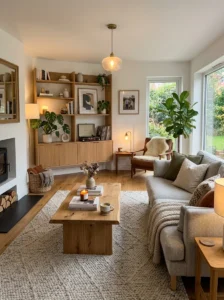
Decluttering paired with a genuine storage plan — addressing why items were accumulating on visible surfaces in the first place, using the containment and vertical storage principles covered throughout this series — produces a lasting result, rather than a temporary reduction that gradually refills as the underlying structural issue reasserts itself.
Decluttering paired with attention to lighting, texture, and warmth — the additive qualities decluttering itself cannot provide — addresses the sensory and emotional dimensions of a home feeling genuinely comfortable, rather than simply less visually busy.
Decluttering paired with intentional retention of genuinely meaningful objects, rather than an indiscriminate minimalism target, preserves the personal, accumulated qualities that distinguish a lived-in home from a merely empty one, covered in more detail elsewhere in this series regarding both bedroom calm and the decorated-versus-home distinction.
When Decluttering Genuinely Is the Right, Sufficient Answer
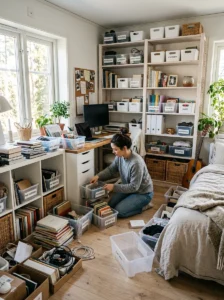
None of this means decluttering is unnecessary or ineffective — a home genuinely suffering from excess accumulation, where the volume of belongings itself is the primary problem rather than a symptom of inadequate storage or a stand-in for a different underlying issue, benefits directly and substantially from decluttering, and this is a real, common, and worthwhile situation to address through exactly this process.
The distinction worth making before starting is diagnostic: is the problem genuinely too much stuff, or is it too little storage for a reasonable amount of stuff, inadequate lighting, a lack of texture and warmth, or an absence of personal meaning that decluttering was never going to address regardless of how thoroughly it’s executed? Identifying which of these is actually the underlying issue determines whether decluttering alone will resolve the complaint, or whether it needs to be paired with — or in some cases replaced by — a different kind of change entirely.
Key Takeaways
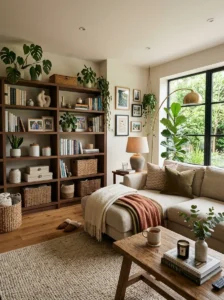
- Decluttering is a subtraction process and cannot supply qualities a home is missing — warmth, texture, comfortable lighting, personal meaning — since these require addition, not removal
- Popular before-and-after decluttering transformations typically involve simultaneous lighting, textile, and storage improvements, not decluttering alone, which sets an unrealistic expectation for what subtraction by itself can accomplish
- Clutter is frequently a symptom of inadequate storage or a poor functional layout rather than simply too many possessions, and decluttering alone doesn’t resolve the underlying structural cause, which is why the same clutter often reaccumulates over time
- Overly aggressive or indiscriminate decluttering risks removing genuine evidence of a household’s daily life and meaningful personal objects alongside actual excess, which can leave a home feeling less like a home despite having fewer possessions
- Decluttering paired with genuine storage solutions, attention to sensory qualities like lighting and texture, and intentional retention of meaningful objects produces a lasting, genuinely improved result
- Decluttering is the right, sufficient answer specifically when excess volume is the actual underlying problem — worth diagnosing directly rather than assuming it applies to every complaint about a home not feeling right

Frequently Asked Questions
If decluttering doesn’t fully fix a home’s feel, is it still worth doing? Yes, when excess volume is genuinely the underlying problem — decluttering remains a real, effective solution to that specific issue. The point isn’t that decluttering is ineffective, but that it’s frequently applied to problems it was never designed to solve, like inadequate storage, poor lighting, or a lack of personal meaning, which require different kinds of change.
Why does clutter keep coming back even after I declutter thoroughly? This usually indicates the clutter was a symptom of inadequate storage or a poor functional layout rather than simply excess volume — if there’s no designated, accessible place for a category of item to go, it will keep accumulating on visible surfaces regardless of how many times the surface is cleared. Addressing the underlying storage deficit, not just removing the current accumulation, is what actually resolves this pattern.
Can decluttering too aggressively actually make a home feel worse? Yes, in some cases — decluttering applied indiscriminately, toward an arbitrary minimalism target rather than toward genuine function and meaning, risks removing personal, meaningful objects and visible evidence of daily life alongside actual excess. This can leave a technically less cluttered home that somehow feels less like an actual home than it did before.
What should I address alongside decluttering to actually make my home feel better? Genuine storage solutions for items that were accumulating due to inadequate storage rather than simple excess, attention to lighting and texture, which decluttering as a process cannot provide, and intentional retention of meaningful personal objects rather than an indiscriminate minimum-object-count goal. Decluttering paired with these additive changes produces a more complete and lasting result than decluttering alone.
How do I know if my home’s problem is really about too much stuff, or something else? A useful diagnostic question: after imagining the space with meaningfully fewer possessions, does it feel warm and complete, or does it still feel like something’s missing — light, texture, comfort, personal meaning? If the imagined decluttered version still feels lacking, the underlying issue likely isn’t volume, and decluttering alone won’t resolve it regardless of how thoroughly it’s executed.