

Every home has at least one corner that never quite got a function — too small for real furniture, too visible to ignore. Here’s a practical way to actually resolve it.Nearly every home has at least one corner that never received a genuine function — not quite large enough for a full furniture arrangement, not quite hidden enough to ignore, occupying just enough visual space that its emptiness registers every time someone walks past it. This is a different problem than the large blank wall covered elsewhere in this series, since a corner’s awkwardness comes from its specific geometry — two intersecting walls, often an odd, non-rectangular footprint — rather than simply an absence of decor on a flat surface. A corner needs a solution shaped by that specific geometry, not a generic decorating approach applied to whatever the closest flat wall happens to offer.
Give the Corner One Clear, Single Function Rather Than Treating It as Leftover Space
A purposeless corner typically became that way because it was never assigned an actual function — it’s simply the space left over after the room’s main furniture was arranged elsewhere, which is precisely why it feels unresolved: there’s no functional reason for anything to happen there, so nothing does, and the emptiness reads as an oversight rather than a deliberate choice.
The most reliable fix is deciding on one specific, genuine function for the corner and furnishing it accordingly, rather than attempting a purely decorative solution that doesn’t actually give anyone a reason to use or engage with that part of the room. A corner with an actual purpose — even a modest one — reads as resolved in a way that a corner with only decorative objects placed in it, without any functional reason for a person to be there, often doesn’t.
A Reading Nook Turns an Awkward Corner Into a Destination
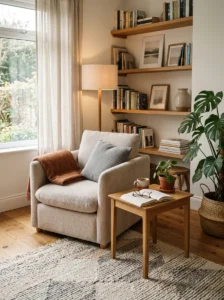
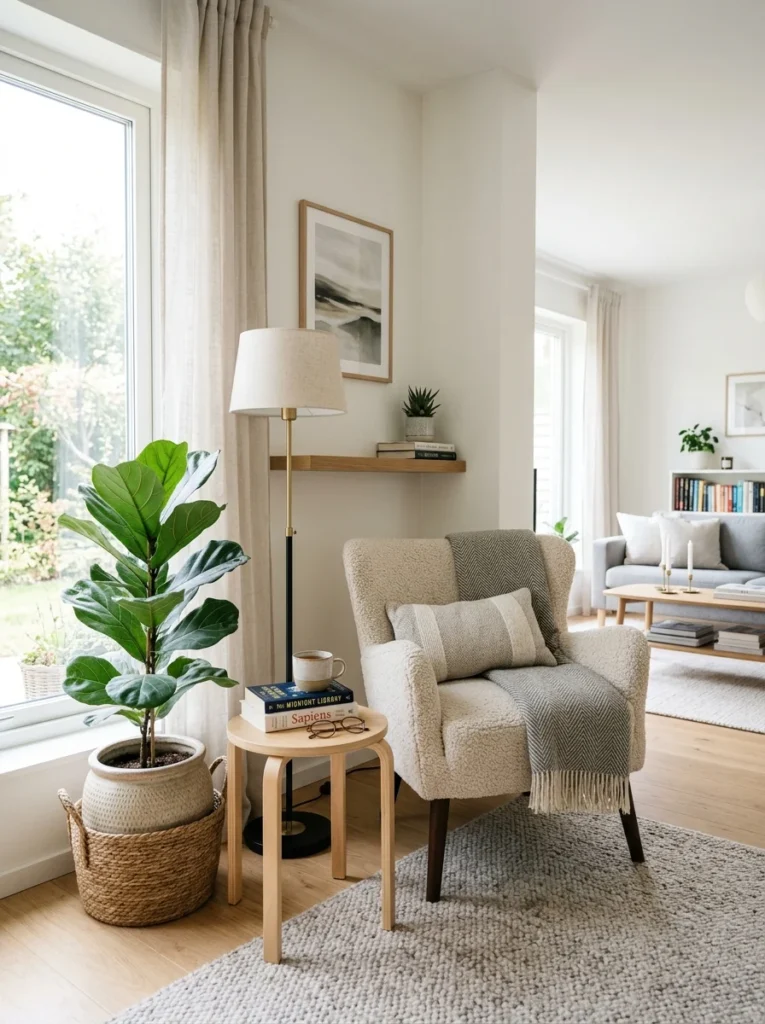
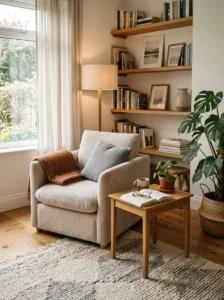
A single comfortable chair, angled to face into the room or toward whatever light the corner receives, paired with a small side table and a floor lamp, is one of the most reliable ways to convert a purposeless corner into a genuine destination within the room — somewhere a person actually wants to sit, rather than simply a space that’s been filled to avoid looking empty.
This works particularly well in a corner that receives natural light from an adjacent window, since the light itself provides a functional reason to place a chair specifically there, but it’s also achievable in a dimmer corner with the addition of a genuinely adequate floor lamp, applying the same lighting-distribution principle covered elsewhere in this series regarding why a living room can feel dark — an underused corner is very often also an underlit one, and addressing the lighting is frequently part of what makes the corner usable in the first place.
A Small Desk or Work Surface Uses an Awkward Corner Efficiently
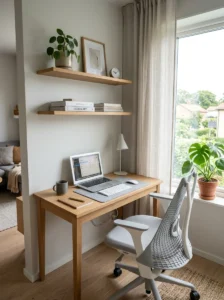
A corner’s geometry — two walls meeting at an angle — is naturally well suited to a small desk or work surface, since a corner desk uses wall space on both intersecting walls simultaneously, which is a genuinely efficient use of a footprint that’s often too small or too oddly shaped for larger furniture arrangements to work well.
This is a particularly practical solution for a household needing a small home office or work nook without dedicating an entire room to it, and it turns a specifically awkward, hard-to-furnish space into one of the more space-efficient furniture placements available in the whole home, precisely because the corner’s shape works with a desk’s typical footprint rather than against it.
Plants Fill a Corner’s Volume Without Requiring a Functional Justification
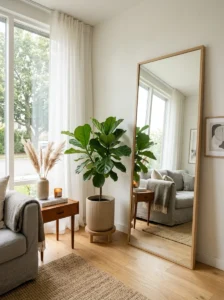
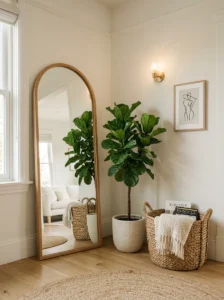
A large plant, or a grouped arrangement of a few plants at varying heights, fills a corner’s vertical and spatial volume without needing the same functional justification a chair or desk requires — it’s a legitimate, complete solution on its own, particularly for a corner too small or oddly shaped to comfortably fit seating or work furniture.
As covered in more detail elsewhere in this series regarding houseplants generally, matching the plant to the corner’s actual available light is essential here — a dim corner without adequate natural or supplemental light needs either a genuinely shade-tolerant species or a grow bulb, rather than an ambitious light-hungry plant that will inevitably decline given the corner’s real conditions.
Floating Shelves Use a Corner’s Vertical Space Without Consuming Floor Area
A set of floating shelves, mounted to follow a corner’s angle or simply placed on the two intersecting walls, uses the corner’s vertical space for display or storage without requiring any floor footprint at all, which is a particularly effective solution for a corner too small or too awkwardly shaped to comfortably fit any freestanding furniture.
Styled using the same volume and containment principles covered throughout this series regarding shelving generally, a corner shelving arrangement can hold books, display objects, or plants, and benefits from the same height-variation and restraint principles that apply to shelving anywhere else in the home.
A Mirror Addresses an Awkward Corner While Contributing Real Function
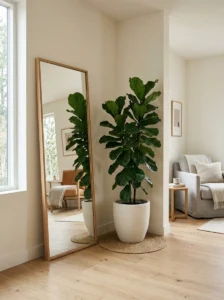
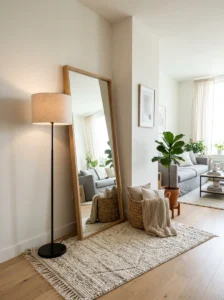
As covered in more detail elsewhere in this series regarding mirrors and spaciousness, a mirror placed in a corner — particularly a corner lacking natural light — contributes genuine function beyond filling the empty space, bouncing available light further into the room and creating a sense of depth that a corner’s often-constrained geometry can otherwise emphasize rather than disguise.
A floor mirror leaning into the corner at an angle, following the corner’s own geometry rather than mounted flush to a single wall, is a particularly natural fit for this specific kind of space, since it works with the corner’s shape rather than requiring the mirror to be squeezed onto just one of the two intersecting walls.
Diagonal Furniture Placement Sometimes Resolves the Awkwardness Directly
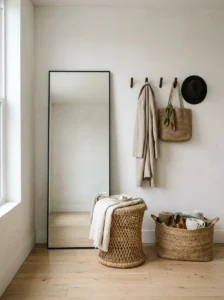
Rather than treating a corner as two separate walls each needing their own solution, placing a single piece of furniture diagonally across the corner itself — a corner chair, a diagonal bookshelf, a triangular or corner-specific table — directly addresses the geometry that made the space awkward in the first place, rather than working around it. This approach is particularly effective for a corner that’s genuinely too small for a standard rectangular furniture footprint to fit comfortably against either individual wall, since diagonal placement often makes better use of the actual available floor area than furniture oriented to either single wall alone.
Matching the Solution to the Corner’s Actual Size and the Room’s Real Needs
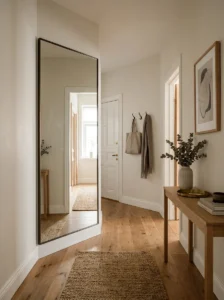
A very small corner is generally better served by a wall-mounted or vertical solution — shelving, a mirror, a single plant — that doesn’t require floor footprint, while a more generous corner can support a genuine seating or work-surface solution that requires more space to function comfortably. The right choice also depends on what the household actually needs more of — a home lacking a small workspace benefits most from a corner desk, while a home already well-provided with workspace but lacking a quiet reading spot benefits more from a reading nook — rather than defaulting to whichever solution seems most visually appealing without considering the room’s actual functional gaps.
Key Takeaways
- A purposeless corner usually became that way because it was never assigned an actual function, and giving it one specific, genuine purpose resolves the awkwardness more reliably than a purely decorative fix
- A single comfortable chair with a side table and adequate lighting converts an awkward corner into a genuine reading destination, particularly effective in a corner with natural light
- A corner’s two-wall geometry is naturally well suited to a small desk, using wall space efficiently in a way that larger, single-wall furniture often can’t in the same footprint
- Plants and floating shelves are strong solutions for corners too small or oddly shaped for furniture, filling the space’s volume or vertical area without requiring floor footprint or a functional justification
- A mirror placed in a corner, particularly a dim one, contributes genuine light-amplifying function beyond simply filling the empty visual space
- Diagonal furniture placement, working with the corner’s actual geometry rather than treating it as two separate walls, often makes better use of the available space than furniture oriented to a single wall alone
Frequently Asked Questions
What’s the easiest, lowest-cost way to fix an awkward empty corner? A large plant or a set of floating shelves are generally the lowest-cost, lowest-effort options, since neither requires significant furniture investment and both work well in corners too small or oddly shaped for seating or desk furniture. Matching either solution to the corner’s actual light conditions is important for the plant option specifically.
Is it worth adding a reading chair to a corner that doesn’t get much natural light? Yes, with an adequate floor lamp added specifically to that corner — an underused corner is frequently also underlit, and addressing the lighting is often what actually makes the corner usable and inviting, rather than the chair alone being sufficient to resolve the space.
How do I decide between a desk, seating, or plants for an awkward corner? Consider what the household’s home genuinely lacks — a small workspace, a quiet reading spot, or simply visual warmth and greenery — rather than choosing based purely on which option looks most appealing. The right solution depends as much on the room’s actual functional gaps as on the corner’s specific size and shape.
Does furniture really need to be placed diagonally in a corner, or is that unnecessary? It’s not always necessary, but it’s particularly effective for a corner too small for a standard rectangular furniture footprint to fit comfortably against either individual wall — diagonal placement often makes better use of the actual available floor space than furniture oriented to just one of the two intersecting walls.
Can a mirror alone resolve an awkward corner, or does it need to be paired with something else? A mirror alone is a legitimate, complete solution for many corners, particularly dim ones where its light-amplifying function is genuinely useful, though it can also be paired with a small plant or shelf for additional visual interest if the corner has enough size to support more than one element without feeling crowded.