



A stuffy bedroom isn’t usually about temperature — it’s about air that’s been recirculating all night with nowhere to go. Here’s what’s actually causing it and what fixes it.
A bedroom that feels stuffy in the morning — heavy, close, slightly stale even when the temperature itself is fine — has a specific cause that’s easy to overlook because it doesn’t feel like an air quality problem in the moment. It feels like the room is just warm, or the covers are too heavy, or the household needs a fan. Often, what’s actually happening is that a closed bedroom door and windows overnight, combined with one or two adults breathing in a relatively small enclosed volume of air for seven or eight hours, produces a real, measurable buildup of carbon dioxide and moisture that a fan alone doesn’t fully resolve, and that a fresh coat of paint or new bedding does nothing for.
Overnight CO2 Buildup Is the Primary, Least-Discussed Cause
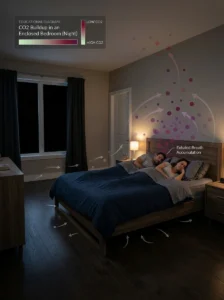
A closed bedroom, occupied by one or two sleeping adults for seven to eight hours, sees a genuine rise in carbon dioxide concentration over the course of the night, since a closed room with no air exchange has nowhere for the CO2 produced by normal breathing to go. This isn’t a dangerous level of CO2 in most typical bedrooms, but elevated CO2 concentration is associated with the groggy, heavy, “stuffy” feeling many people notice on waking, independent of the room’s actual temperature.
This effect compounds specifically in smaller bedrooms with the door fully closed and windows sealed, since the total air volume available to dilute the CO2 produced overnight is smaller, and a smaller volume reaches a higher concentration faster than a larger room or a room with even minimal air exchange would.
The practical fix is straightforward: some air exchange during the night, even a small amount, meaningfully reduces this buildup. A door cracked open rather than fully closed, a window opened slightly (temperature and season permitting), or mechanical ventilation running overnight all provide the air exchange a fully sealed room doesn’t have, and this single change is often the most effective fix available for the specific “heavy, stale” version of stuffiness.
Humidity From Breathing and Body Heat Adds to the Same Problem

Normal breathing and body heat release moisture into a bedroom’s air over the course of a night, in a smaller-scale version of the same humidity-generation process covered elsewhere in this series regarding bathroom moisture. A bedroom without adequate air exchange retains this moisture the same way a poorly ventilated bathroom retains shower humidity, and elevated humidity contributes to a heavy, close feeling in the air, separate from the CO2 issue but compounding it.
This is worth checking directly with a simple hygrometer, a low-cost tool that measures indoor humidity, if a household suspects humidity is contributing to bedroom stuffiness beyond what temperature control alone is addressing. Bedroom humidity above roughly 50-60% is generally the range where a room starts to feel noticeably close and heavy, and where the specific stuffy feeling many people wake up with becomes more pronounced.
Airflow, Not Just Temperature, Determines How a Room Actually Feels

A bedroom can be at a perfectly reasonable temperature and still feel stuffy if the air within it is essentially stagnant, since airflow itself — independent of temperature — affects how fresh or stale a room feels to be in. This is why a fan, even without changing the room’s actual temperature, often makes a stuffy bedroom feel noticeably better: it’s not cooling the air meaningfully, it’s moving stagnant air and providing the sensation of freshness that pure temperature control doesn’t provide on its own.
A ceiling fan or a floor fan running quietly overnight keeps air moving continuously, which reduces the localized buildup of both CO2 and humidity around the sleeping area specifically, in addition to the general comfort benefit of moving air. This is a genuinely useful addition even in a bedroom where the underlying temperature is already comfortable, since it’s addressing a different variable than temperature control does.
Blocked or closed HVAC vents are a commonly overlooked contributor to bedroom stuffiness. A vent blocked by furniture — a bed frame, a dresser positioned in front of it — or a vent that’s been manually closed to redirect airflow elsewhere in the home reduces the mechanical air exchange a bedroom would otherwise get from the home’s central system, and checking that bedroom vents are genuinely unobstructed is a simple, often-overlooked diagnostic step.
Mattress and Bedding Materials Can Trap Heat and Moisture

Certain mattress materials, particularly memory foam and other dense synthetic foams, retain body heat more than more breathable materials do, which contributes to a bed that feels warm and close regardless of the room’s ambient temperature. This is a specific, material-based contributor to the general stuffy feeling that’s separate from the room’s air quality, but often experienced as part of the same overall sensation.
Breathable bedding materials — cotton, linen, and other natural fibers — allow more airflow through the bedding itself than synthetic materials do, which affects how warm and close the immediate sleep environment feels independent of the room’s broader air quality. A household with a stuffy-feeling bedroom that’s already addressed ventilation and humidity is sometimes still experiencing a bedding-specific version of the same underlying heat-and-moisture-retention problem.
Washing bedding regularly addresses a related but distinct issue: accumulated skin cells, oils, and dust mites in bedding contribute to both an actual and a perceived staleness in the immediate sleep environment, and this is worth addressing as a genuinely separate maintenance task from the room’s broader ventilation, even though both contribute to a similar overall sense of a close, unfresh bedroom.
Houseplants Have a Modest, Real Effect but Aren’t a Substitute for Air Exchange

Certain houseplants do measurably improve indoor air quality to some degree, and a bedroom with a few well-chosen plants can see a modest benefit, but the effect is generally smaller than popular claims suggest, and plants are not an adequate substitute for genuine air exchange in a room with an actual ventilation problem. A stuffy bedroom relying primarily on houseplants to solve the underlying air exchange issue is likely to remain stuffy regardless of how many plants are added, since the scale of a typical bedroom’s overnight CO2 and moisture generation exceeds what a reasonable number of houseplants can meaningfully offset.
Plants are a reasonable complementary addition to a bedroom that’s also addressing ventilation directly — a cracked window or door, a fan, adequate HVAC airflow — rather than a primary solution on their own.
A Simple Diagnostic Approach

If the room feels stuffy specifically upon waking, and improves noticeably once the door or window is opened, overnight air exchange — or the lack of it — is the most likely primary cause, and the fix is straightforward: crack a window or door, or run a fan or the HVAC system’s fan setting overnight.
If the room feels stuffy and also noticeably humid — condensation on windows, a slightly damp feeling to the air — humidity is a likely contributing factor beyond CO2 alone, and a small dehumidifier, in addition to improved ventilation, is worth considering.
If the bed itself feels hot and close even when the room’s general air feels reasonably fresh, mattress and bedding materials are the more likely primary cause, and addressing this may mean a bedding material change rather than a broader ventilation fix.
Key Takeaways

- A closed bedroom occupied overnight sees a real buildup of CO2 from normal breathing, which is associated with the groggy, heavy, stuffy feeling many people notice on waking, independent of the room’s temperature
- Cracking a door or window slightly overnight, or running mechanical ventilation, provides the air exchange that a fully sealed bedroom doesn’t have and is often the single most effective fix
- Humidity from breathing and body heat compounds the same stuffiness, and can be checked directly with a low-cost hygrometer if suspected
- A fan improves how stuffy a room feels by moving stagnant air, independent of any actual change in temperature, and is a genuinely useful addition even in an already-comfortable-temperature bedroom
- Blocked HVAC vents, often obstructed by furniture, are a commonly overlooked and easily fixed contributor to inadequate bedroom air exchange
- Mattress and bedding material choice affects how warm and close the immediate sleep environment feels, as a separate but related issue from the room’s broader air quality

Frequently Asked Questions
Is it actually safe to crack a window at night for air exchange? For most households and climates, yes, and it’s one of the most effective single changes for reducing overnight CO2 and humidity buildup in a bedroom. Households in extreme climates, with security concerns about open windows, or with significant outdoor allergens may prefer mechanical ventilation — an HVAC fan setting, a bedroom door cracked open to the rest of the home — as an alternative way to achieve similar air exchange without an open window specifically.
Can a fan really make a room feel less stuffy without changing the temperature? Yes — a fan’s effect on how fresh a room feels comes largely from moving stagnant air, which is a separate variable from temperature. A room fan running overnight reduces localized buildup around the sleeping area and provides a sensation of freshness that pure temperature control, on its own, doesn’t achieve.
How much does mattress material actually matter for feeling stuffy at night? It’s a real, measurable contributor for some people, particularly with memory foam and dense synthetic foam mattresses that retain body heat more than more breathable materials. This is worth considering as a separate issue from room ventilation — a household with excellent bedroom air exchange can still experience heat-and-moisture-related stuffiness specifically from mattress or bedding materials that trap heat close to the body.
Do houseplants actually help with bedroom stuffiness? To a modest degree, but the effect is smaller than commonly claimed, and plants alone are not an adequate substitute for genuine air exchange in a bedroom with an actual ventilation problem. They’re a reasonable complementary addition alongside direct ventilation fixes rather than a standalone solution.
How do I know if my bedroom’s stuffiness is a CO2 problem versus a humidity problem? A hygrometer, a low-cost tool measuring indoor humidity, can confirm whether humidity is elevated — generally above roughly 50-60% is the range where a room starts to feel noticeably close. If humidity reads normal but the room still feels stuffy specifically on waking and improves once aired out, CO2 buildup from overnight breathing in a closed room is the more likely primary cause, since consumer CO2 monitors are less commonly available than hygrometers but the symptom pattern — heavy on waking, better once aired — is a reasonably reliable indicator on its own.