

A minimal bedroom can feel restful, or it can feel cold and unfinished — and the difference isn’t how much is in the room, it’s what kind of absence and presence the room actually has. Here’s the real distinction.
A bedroom pared down in pursuit of a calm, minimal feeling sometimes achieves exactly that, and sometimes ends up feeling cold, unfinished, and vaguely uninviting instead — sparse in a way that reads as absence rather than restraint. These two outcomes can look similar in a photo and feel completely different to actually be in, and the difference isn’t really about how much is in the room. A bedroom with relatively few objects can feel deeply calm, and a bedroom with relatively few objects can feel like a hotel room nobody has checked into yet. What separates them is a specific set of qualities that have more to do with warmth, texture, and intention than with object count.
Calm Is a Sensory Quality, Not Just a Visual One
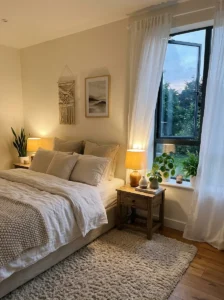
Most advice about creating a calm bedroom focuses entirely on visual elements — color, clutter, what’s on display — but calm is a genuinely multi-sensory experience, and a visually minimal room that ignores sound, scent, and tactile quality often ends up feeling sterile rather than restful, regardless of how well the visual elements are handled.
Hard surfaces — bare floors, minimal textiles, large expanses of glass or hard flooring without softening elements — create more sound reflection and a colder tactile environment than a room layered with soft materials, even when both rooms look similarly uncluttered. A rug, substantial curtains, and adequate soft furnishing dampen sound and add a warmth to the room’s actual physical feel that a purely visual approach to minimalism doesn’t address.
Scent, though less commonly discussed in design contexts, contributes meaningfully to whether a room registers as calm or simply empty — a room with no scent at all reads as unused or unlived-in in a way that’s hard to name but easy to sense, while a room with a genuine, subtle, well-chosen scent reads as cared for and present, in the same way a home that’s actively lived in has a different quality than one that’s been vacant.
Texture Is What Separates Calm From Cold

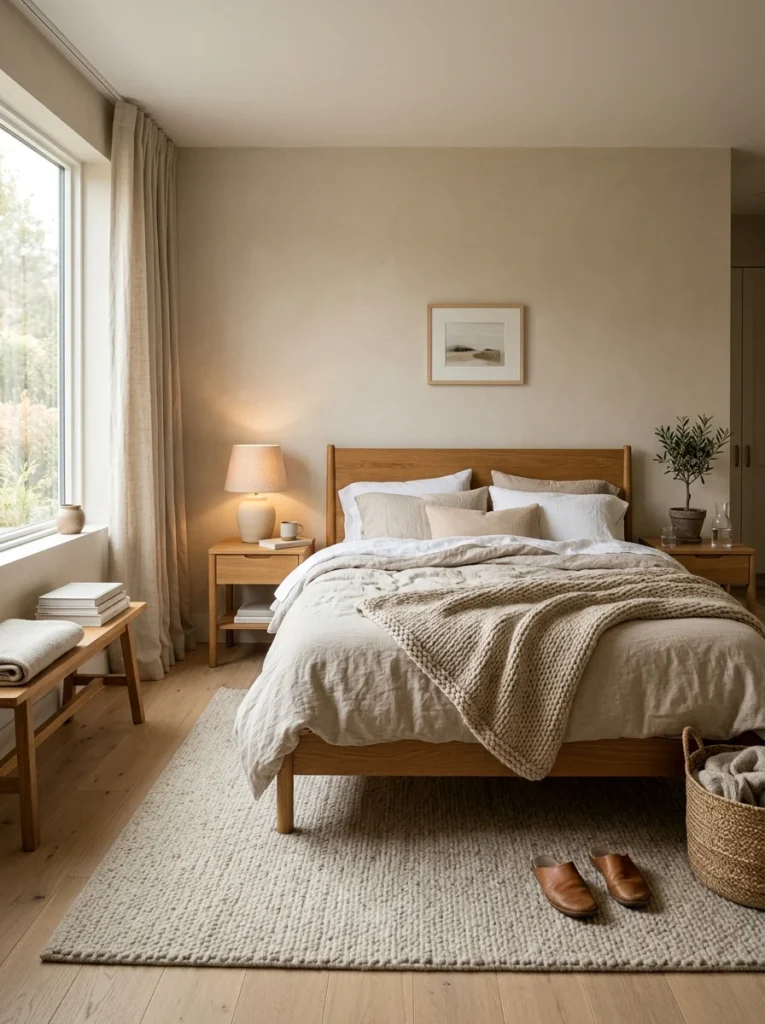
A room built entirely from smooth, hard, uniform surfaces — even in a genuinely calming color palette — tends to read as cold and clinical rather than restful, because texture is a major part of what the eye and body register as warmth, independent of color choice. This is why a genuinely minimal room with abundant texture — a substantial knit throw, a nubby wool rug, linen bedding, a wood-grain surface with visible character — reads as calm, while an equally minimal room built from smooth, flat, uniform materials reads as sparse and unfinished, even in an identical color palette.
Layering multiple textures within the same overall calm palette — rather than choosing texture and color as separate, competing decisions — produces a result that feels rich and restful without adding visual clutter or busyness, since texture variation registers as depth rather than as additional visual “stuff” the way pattern or object count does.
Genuine Absence Reads Differently Than Curated Restraint
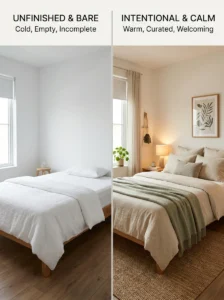
This is the core distinction between calm and empty: calm minimalism is the result of a deliberate editing process — choosing which few things matter and displaying them with intention — while empty minimalism is often simply the absence of that process, a room that hasn’t yet had personal objects, texture, or warmth added to it, mistaken for a finished aesthetic because it resembles one on the surface.
A genuinely calm bedroom usually contains a small number of objects that are clearly chosen rather than simply present — a single meaningful piece of art rather than a bare wall, a considered lamp rather than the builder-provided fixture left as the room’s only light source, bedding chosen for its texture and quality rather than whatever happened to be available. The room isn’t empty because these choices have actually been made; it’s restrained because a smaller number of considered choices were selected over a larger number of arbitrary ones.
A room that’s simply empty, by contrast, often reflects decisions that haven’t been made yet rather than decisions that were made toward restraint — nothing on the walls not because bare walls were chosen deliberately, but because nothing has been hung; minimal furniture not because a considered minimal plan was executed, but because furniture hasn’t been fully acquired or arranged.
Personal Objects Prevent Calm From Tipping Into Sterile
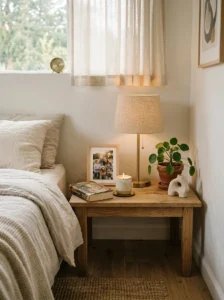
A small number of genuinely personal objects — a meaningful photograph, an object with real history or significance, something that couldn’t be purchased identically by someone else — does more to keep a minimal bedroom from reading as a hotel room than almost any other single addition, since it signals that the room belongs to someone specific rather than reading as a generic, replicable minimal aesthetic.
This is the same principle covered elsewhere in this series regarding making a rental feel like home, applied here specifically to the calm-versus-empty distinction: personal objects, displayed with the same restraint and containment used for the room’s other elements, add genuine warmth and specificity without requiring the room to become visually busy or cluttered.
Lighting Quality Affects Calm as Much as Any Visual Choice
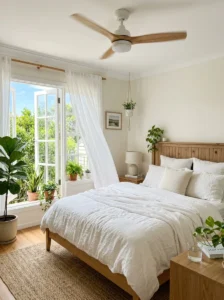
As covered in more detail elsewhere in this series regarding bedroom lighting generally, harsh, bright, cool-toned lighting undermines a calm atmosphere regardless of how well the room’s other visual elements are handled, while warm, layered, appropriately dim evening lighting supports it directly. A visually minimal, well-textured, thoughtfully curated bedroom lit by a single harsh overhead fixture will still feel less calm than the same room under warm, layered lighting, since light quality affects the room’s actual felt atmosphere more directly than almost any other single variable.
Temperature and Air Quality Are Part of the Same Equation
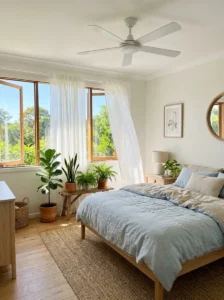
A room that’s too cold, too warm, or stuffy — covered in more detail elsewhere in this series regarding bedroom air quality — undermines a sense of calm regardless of how well the visual and material elements are handled, since physical discomfort registers before any aesthetic quality does. A beautifully calm-looking bedroom that’s uncomfortably warm or has stale, heavy air will not actually feel calm to be in, which is worth remembering given how much of the calm-bedroom conversation tends to focus purely on visual and material choices.
What This Looks Like in Practice
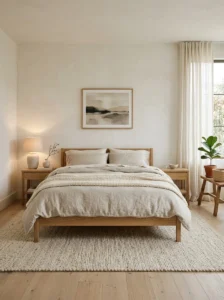
A genuinely calm bedroom, built around these principles rather than around object count alone, typically has: a restrained color palette in muted, warm tones; layered texture across bedding, rug, and textiles rather than uniform hard surfaces; warm, dimmable, well-considered lighting rather than a single harsh overhead source; adequate ventilation and temperature control; and a small number of personal, meaningful objects displayed with intention rather than either a dense collection of decor or a genuinely bare room.
None of this requires a large budget or an extensively furnished room — in fact, a smaller number of well-chosen, textural, personally meaningful elements generally produces a calmer result than a larger number of purely decorative, impersonal ones. The goal isn’t adding more or removing more; it’s being deliberate about what stays, in a way that a purely minimal or purely maximal approach, pursued without this specific intention, doesn’t reliably achieve on its own.
Key Takeaways
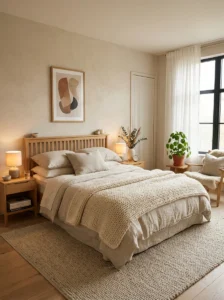
- Calm is a multi-sensory quality — sound dampening from soft materials, scent, and tactile warmth all matter alongside visual choices, and a purely visual approach to minimalism often produces a sterile rather than restful result
- Texture is what separates calm from cold — a room built entirely from smooth, hard, uniform surfaces reads as clinical even in a genuinely calming color palette
- Genuine calm comes from a deliberate editing process, choosing a small number of considered elements, while genuine emptiness is often simply the absence of that process, mistaken for a finished aesthetic
- A small number of personal, meaningful objects prevents a minimal bedroom from reading as generic or hotel-like, without requiring the room to become visually busy
- Lighting quality affects a room’s felt calm as directly as any visual choice — harsh, bright, cool light undermines an otherwise well-designed calm bedroom
- Physical comfort — temperature, air quality, ventilation — is part of the same equation as visual and material choices, and discomfort undermines calm regardless of how well the aesthetic elements are handled
Frequently Asked Questions
Is a minimalist bedroom automatically a calm one? Not automatically — minimalism pursued purely as an aesthetic, without attention to texture, warmth, lighting quality, and a small number of genuinely personal objects, often produces a room that feels sparse and unfinished rather than calm. The calming effect comes from a deliberate editing process and attention to sensory qualities beyond visual simplicity alone, not from object count by itself.
How many personal objects should a calm bedroom actually have? There’s no fixed number, but a small, carefully chosen set — a few meaningful pieces displayed with intention, rather than either a dense collection or none at all — tends to work best. The goal is signaling that the room belongs to someone specific without tipping into visual clutter, which is a matter of restraint and curation rather than a specific count.
Can a bedroom with a lot of furniture and decor still feel calm? Yes, though it requires more careful attention to keep the visual environment from tipping into busy or cluttered — layering texture thoughtfully, maintaining a restrained color palette, and using the same containment and grouping principles covered elsewhere in this series for shelving and surfaces. Calm is more strongly determined by the qualities of what’s present — texture, warmth, lighting, intention — than by a strict minimum or maximum object count.
Why does my minimalist bedroom feel cold instead of calm? This is usually a texture and lighting issue rather than a color or object-count issue — smooth, hard, uniform surfaces without adequate soft furnishing, and harsh or cool-toned lighting, both read as clinical regardless of how restrained and well-chosen the room’s color palette is. Adding layered texture (a substantial rug, textured bedding, a soft throw) and warmer, dimmable lighting often resolves this without requiring more objects or a different color scheme.
Does room temperature actually affect how calm a bedroom feels? Yes, directly — physical discomfort from a room that’s too warm, too cold, or stuffy undermines a sense of calm regardless of how well the visual and material elements are handled, since the body registers physical discomfort before any aesthetic quality. A visually beautiful, well-textured bedroom with poor temperature or air quality will not feel genuinely calm to actually spend time in.