



Making a rental feel like home is one goal; getting the full deposit back is another, and they don’t have to be in conflict. Here’s a practical, room-by-room approach to both.
The living-room-specific discussion elsewhere in this series covers why layering and personal objects matter more than permanent changes for making a rental feel genuinely lived-in. This is a more practical companion to that idea, focused specifically on the whole home and on the financial and legal reality every renter has to navigate: a security deposit is real money, lease terms have real consequences, and the difference between a change that’s genuinely reversible and one that only seems reversible is worth understanding precisely, room by room, before making any change at all.
Document Everything Before Making Any Change
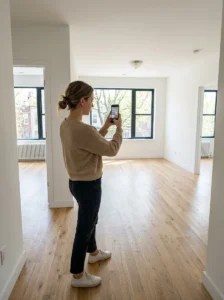
The single most protective habit a renter can establish, before any decorating decision, is thoroughly documenting the unit’s condition at move-in — photos and video of every room, every wall, every fixture, with particular attention to any existing damage or wear that predates the tenancy. This isn’t directly related to decorating, but it’s the foundation that makes every decorating decision safer: a renter with clear, dated documentation of pre-existing conditions has a much stronger position if a landlord later disputes what damage was already present versus what occurred during the tenancy.
This same documentation habit is worth repeating after any reversible change is removed at move-out — a photo of a wall after removable hardware or wallpaper has been taken down provides direct evidence that the surface was restored to its original condition, which is considerably more useful in a deposit dispute than simply asserting that it was.
Reading the Lease Before Assuming What’s Allowed

Lease terms vary considerably between properties and jurisdictions, and assumptions based on a previous rental or general internet advice aren’t a reliable substitute for actually reading the current lease’s specific language on alterations, painting, and fixtures. Some leases explicitly permit minor cosmetic changes; others prohibit even small nail holes; many are silent on specific techniques like removable wallpaper or command hooks, which leaves genuine ambiguity worth clarifying directly with a landlord or property manager before proceeding, rather than assuming a technique marketed as “renter-friendly” is automatically compliant with a specific lease’s actual terms.
A brief written request — an email asking permission for a specific, described change — creates a paper trail that protects a renter more effectively than a verbal conversation does, and many landlords are considerably more receptive to a specific, modest, clearly reversible request than a general question about what’s allowed, since a specific request is easier to evaluate and approve.
Testing Removability Before Committing to a Full Room
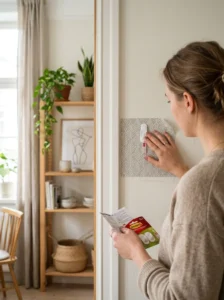
Every “removable” product — wallpaper, hooks, hanging strips, tape-based solutions — has some risk of not performing exactly as advertised, whether due to wall texture, paint type, humidity, or simple product variation, and testing a small, inconspicuous section before committing to full-room or highly visible application is a genuinely protective habit. A small test patch behind furniture or in a closet, left in place for a representative period of time and then removed, confirms whether a specific product will actually behave as expected on that specific wall’s surface and paint type before it’s used somewhere highly visible or load-bearing.
This is particularly important for older homes and rentals, where wall surfaces, paint quality, and prior treatments vary considerably and aren’t always predictable from a product’s general marketing claims — a removable product that works cleanly on a newly painted, smooth wall may behave differently on an older, more textured, or more porous surface.
Weight Limits and Load-Bearing Considerations Protect Both the Deposit and the Renter

Command-style hooks and strips are rated for specific weight limits, and exceeding those limits risks both damage to the wall — a genuine deposit concern — and the practical failure of whatever’s being hung, which is a safety concern for heavier or higher-mounted items. Checking the specific weight rating against the actual item being hung, rather than assuming a general “heavy-duty” label covers a specific piece, avoids both categories of risk simultaneously.
For genuinely heavy items — a substantial mirror, dense shelving with contents — a landlord conversation about a small, professionally patched nail hole is often the more sensible path than pushing a removable product beyond its realistic capacity, since a single small, well-patched hole is typically a minor and expected part of normal wear, while a failed removable hanging solution risks both property damage and personal injury.
Room-by-Room Techniques That Reliably Protect a Deposit

In the kitchen, peel-and-stick backsplash tile and cabinet contact paper are widely used, reversible techniques for updating a dated kitchen without any permanent alteration, though it’s worth confirming the specific product is designed for full removal rather than assuming all peel-and-stick products perform identically.
In the bathroom, a shower curtain, bath mat, and updated hardware — where hardware can be swapped and the original pieces retained for reinstallation at move-out — refresh the space entirely without any risk to the deposit, since none of these changes touch the unit’s fixed surfaces at all.
In the living room and bedroom, the layering approach covered in more detail elsewhere in this series — rugs, textiles, art on removable hardware, furniture — remains the lowest-risk, highest-impact category of change, since none of it requires any alteration to the unit itself.
For flooring throughout the home, large area rugs address unappealing or worn flooring without any alteration, and peel-and-stick floor tile, where a landlord permits it, is a reversible option for a small area — though flooring alterations warrant a landlord conversation more clearly than most other categories, given how visible and consequential flooring damage claims tend to be in a deposit dispute.
What to Avoid Regardless of How “Renter-Friendly” It’s Marketed
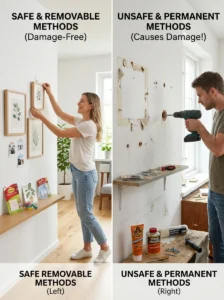
Any product or technique that involves drilling, adhesive not explicitly rated for full removal, or permanent alteration to fixed surfaces — countertops, built-in cabinetry, flooring beyond a small test area — carries real deposit risk regardless of marketing language, and is worth avoiding without explicit landlord permission, even when a specific product is marketed toward renters generally.
Painting without explicit permission is one of the highest-risk categories, even though it’s also one of the most commonly attempted unauthorized rental change — many leases specifically address paint, and repainting an entire wall or room back to its original color at move-out is more difficult to execute perfectly than most renters expect, which creates real deposit risk even for a renter who fully intends to repaint before moving out.
Getting Written Permission Expands What’s Actually Possible

A renter who wants a change beyond what’s clearly and universally reversible — an accent wall color, for instance — is often better served by requesting written permission directly than by either avoiding the change entirely or attempting it without authorization. Landlords vary considerably in their willingness to permit modest, well-described changes, and many are more flexible than renters assume, particularly for a change the renter offers to reverse at move-out or that the landlord recognizes as a genuine improvement to the unit’s appeal for future tenants.
Getting this permission in writing — even a simple text or email confirmation — protects the renter directly if any dispute arises later about whether a specific change was authorized, and it’s a low-effort step relative to the protection it provides.
Key Takeaways

- Thorough photo and video documentation of the unit’s condition at move-in, and again after any reversible change is removed, is the single most protective habit a renter can establish before any decorating decision
- Reading the actual lease’s specific language on alterations, rather than relying on general assumptions or internet advice, avoids risk from techniques that may not be covered by a specific lease’s terms
- Testing a removable product on a small, inconspicuous section before full-room application confirms it will actually perform as expected on that specific wall’s surface and paint type
- Checking a hanging product’s actual weight rating against the specific item being hung protects against both deposit risk and the practical failure of the installation itself
- Layering — rugs, textiles, removable-hardware art, furniture — remains the lowest-risk, highest-impact category of rental customization across every room in the home
- Requesting written permission for changes beyond clearly reversible techniques, such as an accent wall, is often more productive than either avoiding the change or attempting it without authorization

Frequently Asked Questions
What’s the single most important thing to do before decorating a new rental? Thoroughly document the unit’s condition with photos and video at move-in, before any decorating begins. This protects a renter in any future dispute about what damage or wear predates the tenancy versus what occurred during it, and it’s the foundation that makes every subsequent decorating decision meaningfully safer.
Are removable wallpaper and command hooks actually safe for a deposit, or is that just marketing? Generally safe when used as directed and tested first, but not guaranteed in every case — wall texture, paint type, and product variation can all affect how cleanly a removable product actually comes off. Testing a small section in an inconspicuous area before full application, and confirming lease terms explicitly permit the technique, meaningfully reduces the risk beyond simply trusting the product’s marketing claims.
Should I ever paint a rental without asking permission first? Not recommended — painting is one of the most commonly attempted unauthorized rental changes and one of the higher-risk categories, since many leases specifically address it and restoring a wall to its exact original color at move-out is more difficult than most renters expect. Requesting written permission first, or using removable wallpaper as an alternative, is a safer path to the same visual result.
Is it worth asking my landlord for permission to make changes, or will they just say no? Many landlords are more flexible than renters assume, particularly for modest, clearly described, reversible changes, or changes the landlord recognizes as improving the unit’s appeal. Getting this permission in writing, even informally through text or email, protects the renter in any later dispute and is a low-effort step relative to the protection it provides.
What should I do if I’m not sure whether a specific product is actually removable without damage? Test it first on a small, inconspicuous section of wall — behind furniture or inside a closet — and leave it in place for a representative period before removing it, to confirm how it actually behaves on that specific wall’s surface and paint type before using it somewhere highly visible. This is more reliable than trusting general product marketing claims alone, given how much wall surface and paint quality can vary between different rental units.