

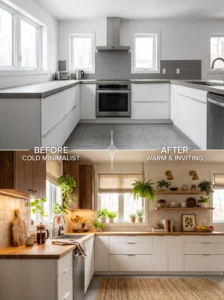
A cold modern kitchen doesn’t need a renovation to feel warmer. These layered, practical changes work with the existing design instead of fighting against it.
You know the feeling. You walk into a kitchen that cost a fortune — every surface deliberate, every line clean, every appliance flush-mounted and silent — and somehow you don’t want to sit in it. It’s impressive. It’s just not comfortable. It looks like somewhere important things happen, not somewhere you’d linger with a second cup of coffee.
This is the quiet failure mode of a lot of modern kitchen design, and it has nothing to do with budget or build quality. It’s a warmth problem. And the good news is, it’s almost always fixable without touching a single cabinet or countertop.
What “Cold” Actually Means in a Kitchen
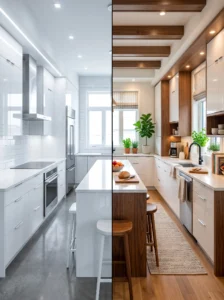
Before anything gets added or changed, it’s worth understanding exactly what creates that cold feeling in the first place. Because warmth and coldness in a room aren’t really about temperature — they’re about what your nervous system does when it processes the space.
Cold modern kitchens tend to share a specific set of characteristics:
- Hard, flat, reflective surfaces everywhere — glossy stone, lacquered cabinets, stainless steel, glass
- A single cool-toned light source — usually recessed LEDs, often too blue or too uniform
- No organic or natural materials — nothing that grew, was woven, or was made by hand
- Perfect uniformity — everything matching so precisely that the eye has nothing to rest on, no variation to find interesting
None of these things are bad design choices on their own. Together, though, they produce a room that signals “sterile” to the brain before any conscious thought happens. Adding warmth means introducing the opposite of these qualities — softness, variation, natural material, and light that behaves less like a lab.
Texture Is the Fastest Fix Nobody Reaches For First
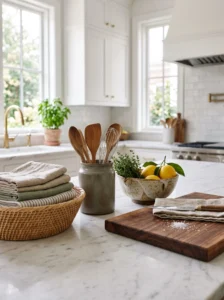
Most people trying to warm up a cold kitchen reach for color immediately. A warm paint color on the wall, a colored appliance, something brighter. Color helps, but it’s actually the slower fix.
Texture works faster because it changes how surfaces interact with light. A flat, glossy cabinet reflects light in one direction — hard and direct. A linen Roman shade, a woven basket, a matte ceramic bowl — these scatter light softly, creating tiny shadows and highlights that make a surface feel alive rather than manufactured.
You can add meaningful texture to a modern kitchen without changing a single fixed element:
- A simple linen or cotton runner rug under the kitchen table or along the main walkway
- Woven or rattan baskets for bread, fruit, or loose pantry items
- A chunky ceramic utensil holder instead of a smooth stainless steel one
- Linen dish towels hanging on the oven handle instead of synthetic ones
- A textured table runner or placemats if there’s a table nearby
None of these items are expensive. Together, they shift how light behaves across the room, and that shift is felt before it’s consciously noticed.
The Wood Rule: At Least One Surface, Minimum
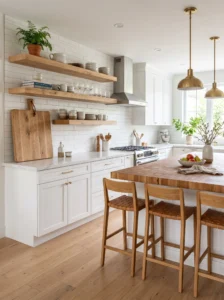
This is the single most reliable piece of advice I give anyone with a cold modern kitchen, and it works almost without exception.
Wood is warm by definition — literally in color tone, and perceptually because the brain reads natural materials differently than manufactured ones. A kitchen with no wood anywhere, regardless of how beautifully it’s designed, will struggle to feel fully comfortable because something fundamental is missing from the material palette.
You don’t need much. You need some.
Where Wood Makes the Most Impact
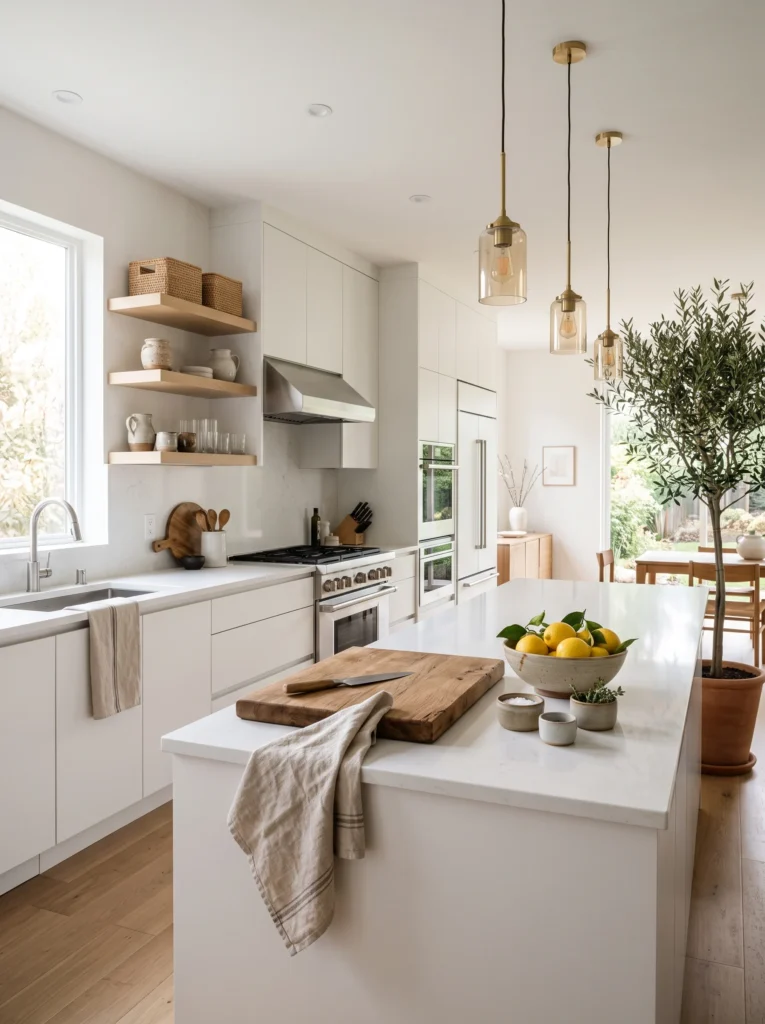
A wooden cutting board left on the counter — not stored away, but treated as a visual element as much as a tool. A large end-grain board on a white or gray counter adds more warmth than most people expect from a single object.
Open shelving in a natural wood tone — even one shelf in an otherwise all-white or all-gray kitchen brings the room’s temperature up noticeably.
Bar stools or chairs with wood elements — if there’s an island or a counter with seating, wooden stools or chairs with wood legs bring the natural material right to the center of the room.
A butcher block section on the island — more of a commitment, but a counter-level wood surface is one of the most transformative warmth additions possible in a cold modern kitchen.
Lighting Is Doing More Damage Than You Think
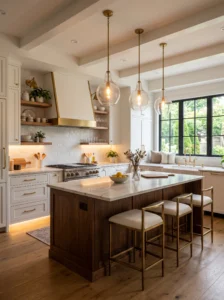
Cold modern kitchens almost always have cold modern lighting — recessed LEDs set to a bright, neutral-to-cool white that’s practical for cooking and miserable for everything else. This lighting choice, more than almost anything else in the room, is responsible for the “clinical” feeling.
The fix doesn’t require rewiring. It requires two things:
Switch to warmer-toned bulbs in at least part of the room. Not yellow and dim — just slightly warmer. Even moving from a cold white to a neutral white in the under-cabinet strips changes how the whole room reads.
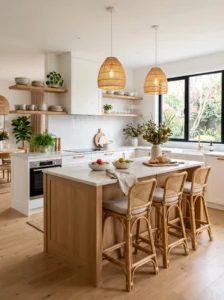
Add a pendant light over the island or table. A single pendant, especially one with a warm-toned shade — rattan, linen, smoked glass, aged brass — introduces both warmer light and a visual anchor that softens the room’s geometry. A pendant light does double duty: it lights the space and it looks warm, which is its own contribution even before it’s switched on.
Bring in Something Living
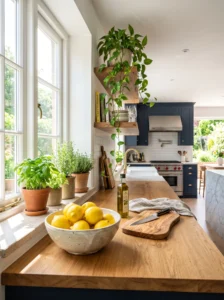
This sounds simple because it is. A single plant in a cold modern kitchen does something no material or lighting change can fully replicate — it introduces something that’s visibly alive, slightly imperfect, and growing. The brain responds to this differently than it does to even the most beautiful inanimate object.
The choice of plant matters less than people make it. A potted herb on the windowsill, a trailing plant on an open shelf, a small succulent on the counter — what matters is that it’s real, tended, and present. A fake plant, however convincing, doesn’t produce the same effect because some part of the brain registers the difference between living and not.
Fresh produce in a bowl achieves something similar on a smaller scale. A bowl of lemons, a pile of tomatoes, a few peaches in season — color, imperfect shapes, and the quiet signal that this is a kitchen where real cooking happens.
Color Without Repainting: Smarter Than It Sounds
Most people assume adding color to a modern kitchen means repainting walls or getting new cabinets — a major, disruptive commitment. In reality, small accents of color do more work per square inch than wall color does, and they’re reversible.
A single warm-toned element reads against a neutral modern kitchen the way a colored cushion reads against a gray sofa — immediately noticeable, immediately warmth-producing.
Good candidates:
- A ceramic or earthenware bowl or vase in terracotta, warm rust, olive, or deep amber
- A colored rug with warm earth tones — something that couldn’t be mistaken for cold
- Cookbooks with warm-colored spines on an open shelf, arranged loosely rather than by height
- A wooden or colorful fruit bowl placed where it’s visible from the main entry point into the kitchen
Two or three of these together produce a visual warmth level that many people assume requires far more significant changes.
Layering Small Things Deliberately
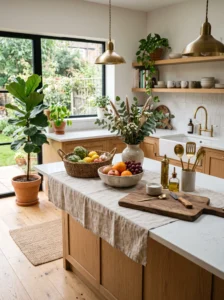
One thing experienced decorators do that most homeowners don’t is layer — adding multiple small elements that work together rather than one statement piece that works alone.
A cold kitchen warmed by one element still feels mostly cold. A cold kitchen warmed by five small elements that reinforce each other — a rug, a wooden board, a linen towel, a pendant light, a bowl of fruit — crosses a threshold where the room genuinely shifts in character.
Think of it like seasoning food. One spice doesn’t transform a dish. Three or four, added thoughtfully, do. The same logic applies to rooms.
The goal isn’t to clutter the kitchen. It’s to be deliberate about the two or three categories that matter most — texture, natural material, lighting — and address each one with at least one small, quality choice rather than leaving any of them completely absent.
A Practical Starting Point if You’re Not Sure Where to Begin
Rather than changing everything at once, start with what I’d call the fastest warmth test:
- Put one wooden cutting board on the counter — large enough to be a visual element
- Add a linen dish towel draped visibly near the stove
- Place a small bowl of fresh fruit somewhere visible from the kitchen entrance
- Switch one bulb in the room — ideally a pendant or under-cabinet strip — to a slightly warmer tone
Do these four things in an afternoon and look at the kitchen the next morning. If it still feels cold after that small investment, then you have a clearer picture of what needs a bigger change. In most cases, the shift is immediate enough to show you exactly which direction to keep going.
Key Takeaways
- Cold kitchens share specific traits — hard surfaces, cool light, no natural materials, uniform everything
- Texture changes how light behaves in a room and adds warmth faster than color alone
- Wood is almost always the missing ingredient — even one surface or element makes a difference
- Lighting tone matters more than lighting brightness in how warm or cold a kitchen feels
- Something living — a plant, fresh produce — creates warmth no manufactured material fully replicates
- Layering several small warm elements together crosses a threshold that one change alone rarely does
Frequently Asked Questions
Can I add warmth to a rented kitchen without making permanent changes? Almost everything in this article is renter-friendly. Rugs, wooden boards, linen textiles, plants, baskets, and bowl choices require no installation and nothing permanent. Even lighting can be partly addressed with plug-in pendant lights or adhesive under-cabinet LED strips in a warmer color temperature.
How do I add wood to a kitchen that has no open shelving or visible surfaces? Start with objects rather than furniture: a large cutting board, a wooden fruit bowl, a wooden utensil holder, bar stools or dining chairs with wood elements. Objects bring natural material into the room without touching any fixed surface. Wooden serving boards, especially left visible on the counter, make a surprisingly large visual impact.
My kitchen has dark cabinets but still feels cold. Is warmth about color, or something else? It’s almost always about material and texture, not color. Dark cabinets can still feel cold if they’re high-gloss, flat-front, and surrounded by similarly smooth, hard surfaces. A dark kitchen that feels warm usually has textured or matte finishes, warm-toned hardware, wood somewhere in the room, and layered lighting that doesn’t come from a single flat overhead source.
Will adding a rug to the kitchen actually make a visible difference? More than most people expect, yes. A rug softens sound, which affects how a room feels even before you’ve consciously noticed the rug visually. It also introduces pattern, texture, and color to the floor — typically the largest single surface in a kitchen that’s usually completely ignored as a warmth opportunity.
What’s the one single change that makes the biggest difference in a cold modern kitchen? Based on what I’ve seen work consistently, it’s the pendant light over the island or table — particularly one with a warm-toned shade material like rattan, linen, or smoked glass. It adds warm-toned light exactly where people sit, and it reads as warm visually even when off. One pendant often does more than a dozen smaller changes combined.