

Somewhere around 2019, white kitchens became the thing people loved to mock. Too sterile. Too Pinterest. Too “every renovation show from 2014.” The internet moved on to dark cabinetry, sage green, navy, warm wood tones — and the white kitchen quietly became shorthand for someone who hadn’t updated their taste yet.
And then, slowly, something shifted.
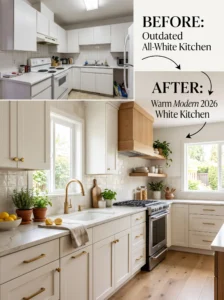
If you’ve been paying attention to what’s actually being built and renovated in 2025 and into 2026, white is coming back — not as a default, not because people ran out of ideas, but because a specific kind of white kitchen has emerged that looks almost nothing like the version everyone got tired of. The coldness is gone. The sterility is gone. What’s left is something that feels calmer, warmer, and more considered than the glossy all-white kitchens that dominated a decade ago.
Here’s what actually changed, and how to get it right if you’re thinking about going this direction.
What People Actually Got Tired Of (It Wasn’t the White)
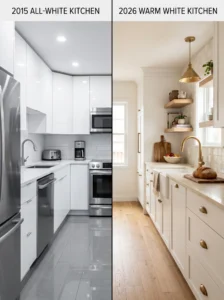
Before explaining the comeback, it’s worth being honest about what the backlash was really against.
The white kitchens that fell out of fashion had a specific look: bright white flat-front cabinets, stark white quartz counters with no movement, glossy subway tile in perfectly uniform grids, stainless steel appliances, and absolutely no warmth anywhere in the room. They photographed beautifully. They felt, in person, like a showroom nobody actually cooked in.
The problem was never white as a color. The problem was white as a shortcut — a way to make a kitchen look “clean and modern” without thinking about texture, material depth, or how the space would actually feel to live in.
That specific formula is what died. White itself is doing just fine.
What the 2026 Version Looks Like Instead
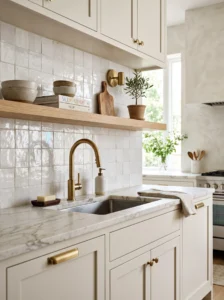
The white kitchens getting built and praised right now share a completely different set of characteristics than their 2014 predecessors.
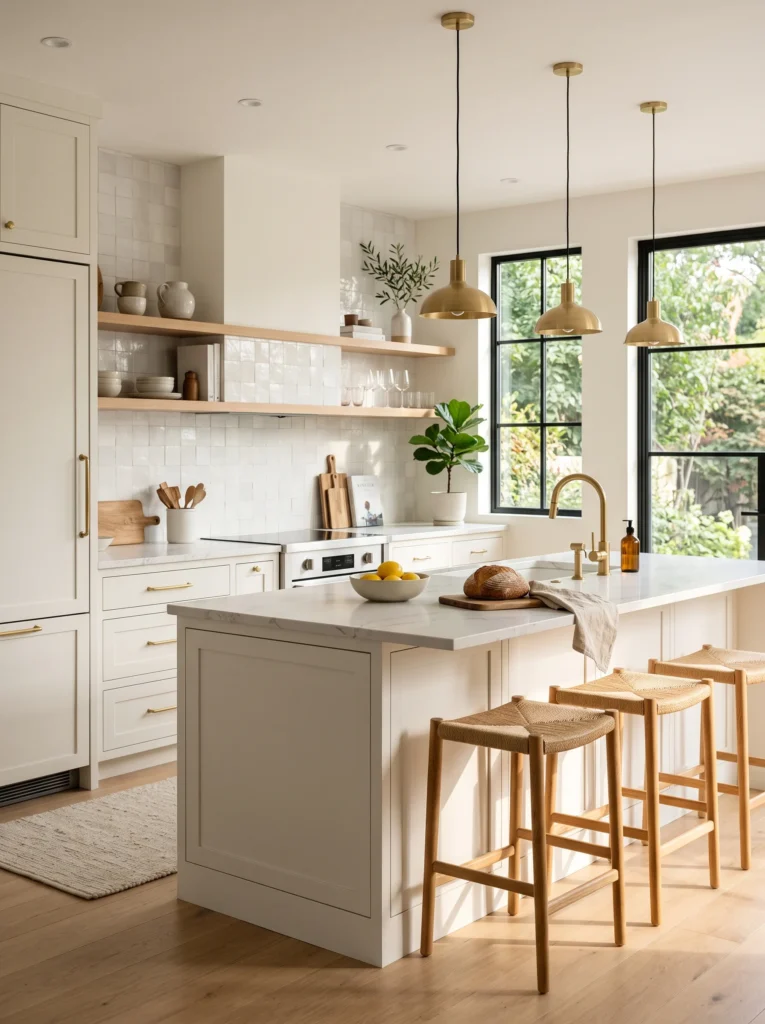
Texture is everywhere. Shaker cabinets instead of flat-front. Zellige or handmade tile instead of perfect grid subway. Honed countertops instead of mirror-polished quartz. The room still reads white, but the surfaces catch light differently, create shadow, and feel tactile in a way flat finishes never did.
The white is warmer. Not cream, not yellow — just white with the faintest warmth in its undertone. This single shift changes how a room feels from clinical to livable. True cold white under certain light can read almost blue. A warm white reads as clean and calm without the morgue undertone.
Wood is back in the mix. Open shelves in a natural wood tone, a butcher block section on the island, wooden bar stools — a white kitchen in 2026 almost always has at least one honest wood element breaking the all-white monotony.
Hardware is doing more work. Aged brass, matte black, unlacquered brass that develops a patina — visible, intentional hardware on white cabinetry adds character the way jewelry adds character to a plain outfit.
The Materials That Make White Work Right Now
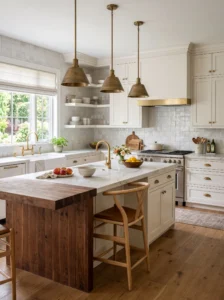
This is where most people make their first mistake — focusing on cabinet color while underestimating how much the supporting materials matter.
Countertops
Cold white kitchens often paired white cabinets with bright white quartz. The 2026 version reaches for something with more visual interest:
- Marble or marble-look quartz with soft gray veining — enough movement to make the counter feel rich without competing with the cabinets
- Honed rather than polished finish — matte or satin-finished stone reads warmer and less “showroom” than high-gloss
- Butcher block sections — particularly on an island, where a wood counter breaks the all-white palette and adds warmth directly at eye level
Backsplash
The single biggest visual difference between the old white kitchen and the new one is often the backsplash.
Zellige tile — the slightly irregular, handmade Moroccan clay tile with a glossy glaze — has become the material most associated with the revived white kitchen. Its imperfect surface catches light in multiple directions, creating a subtle shimmer and visual depth that mass-produced subway tile simply can’t replicate. Even in plain white, it reads as intentional and textured rather than default.
For those who prefer a more budget-conscious option, a vertical stacked brick pattern or a handcrafted-edge subway tile in an off-white achieves a similar effect without the full cost of zellige.
Cabinets
Flat-front white cabinets belonged to a different era. The ones showing up in 2026 are more likely to be:
- Shaker style, simple but with visible frame detail
- Inset doors, slightly more traditional and substantial-feeling than overlay cabinets
- Painted in warm white, specifically whites like Swiss Coffee, Chantilly Lace, or similar off-whites that avoid blue or gray undertones
The Warmth Problem — and How to Solve It
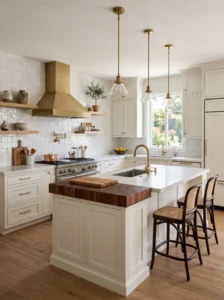
Every white kitchen faces the same fundamental challenge: white doesn’t generate warmth on its own. You have to bring it in deliberately through other elements, or the room stays cold no matter how nicely it’s installed.
The levers for adding warmth in a white kitchen:
- Wood tones — flooring, open shelves, a section of butcher block, bar stools, even a single wooden bowl on the counter
- Warm-toned hardware — aged brass or bronze reads much warmer than chrome or brushed nickel
- Textured linens — dish towels, a runner rug, or a simple cloth on the counter in a natural linen or terracotta tone
- Greenery — a single potted plant, fresh herbs on a windowsill, anything living and organic
- Warmer lighting — a kitchen with warm-white bulbs and a pendant fixture over the island will feel completely different from the same kitchen with cold-white overheads
None of these require major decisions. A white kitchen that feels cold usually just needs two or three of these elements deliberately added.
What to Avoid if You Want This to Look Current, Not Dated
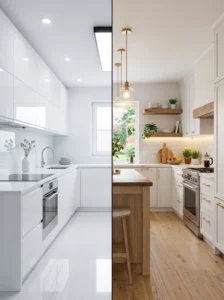
These are the choices that will push a white kitchen back toward the version people stopped responding to:
- All flat-front cabinets with no texture or detail — this reads as 2015 regardless of the color
- Pure bright white everywhere — cabinets, counter, backsplash, and walls all in the same cold white removes depth completely
- No wood or natural materials anywhere — a kitchen with zero organic material, even a small one, tends to feel manufactured rather than livable
- Matching everything too precisely — the new white kitchen has slight variation deliberately built in: warm white cabinets, a counter with veining, a backsplash that’s slightly off-white, hardware in a contrasting metal
- Neglecting the lighting — a white kitchen with poor or cold lighting amplifies every sterile quality rather than the calm, bright qualities white is actually capable of
Is a White Kitchen Practical for Everyday Life?
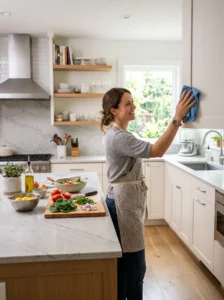
This question comes up constantly, and the honest answer is: more practical than people assume, less effortless than it looks in photos.
White does show certain things immediately — a water splash, a grease mark near the stove, scuff marks on lower cabinet fronts from shoes and bags. But it also shows when it’s clean in a way darker kitchens don’t, which some people genuinely prefer.
Modern cabinet paints are more durable and wipe-clean than they were even five years ago. The practical maintenance of a well-painted white cabinet is manageable with a weekly wipe-down around handles and high-traffic areas.
Where it gets harder is white grout near a stove and white counters with no movement — both show grime quickly and need more regular attention. Choosing slightly off-white grout and a counter with veining or texture solves most of this practically while also looking better than their all-white equivalents.
Summary: Getting a White Kitchen Right in 2026
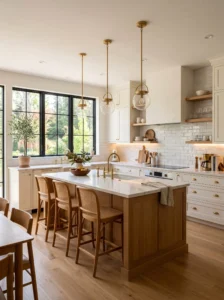
- The backlash was against sterile, flat, all-the-same-tone white — not against white itself
- The current version prioritizes texture, warmth, and material variety over uniformity
- Warm white tones, textured tile, honed counters, and visible hardware are the defining choices
- Wood elements are non-negotiable if you want the room to feel lived-in rather than staged
- Lighting matters more in a white kitchen than almost any other color — it determines whether “bright and calm” or “cold and clinical” is the final reading
- Slight variation between materials is intentional and desirable, not a failure of coordination
Frequently Asked Questions
Is a white kitchen going to look dated again in a few years? Any kitchen can date itself depending on how trend-specific the details are. A white kitchen built around classic materials — natural stone, quality cabinetry, simple hardware — has historically held up longer than kitchens built around more specific color or style trends. The version likely to date fastest is the one with overly trendy tile or hardware choices layered onto the white base.
What’s the best white paint color for kitchen cabinets right now? The specific name matters less than the undertone. Look for whites with a slight warm or neutral undertone rather than a cool or gray-leaning one. Hold samples against your counter and floor in natural light before committing — the same paint color can read differently in different rooms depending on what surrounds it.
Can you do a white kitchen with dark floors without it looking too stark? Yes, and it’s actually one of the stronger combinations available right now. Dark floors ground the white cabinets and prevent the room from reading as all one value. The contrast gives the kitchen visual weight it would otherwise lack, particularly in larger rooms where an all-light palette can feel empty.
How do you keep white grout looking clean near the stove? Sealing grout immediately after installation and resealing annually makes a substantial difference. Choosing a slightly warm gray grout instead of pure white also disguises discoloration without changing the overall look of the backsplash significantly — and saves a lot of cleaning effort over the long run.
Is white the right choice for a kitchen that doesn’t get much natural light? It can be, with the right approach. In a low-light kitchen, white will brighten the room, but the choice of artificial lighting matters more than usual. Warm-to-neutral white bulbs in multiple sources — particularly under-cabinet task lighting — prevent white from reading flat or cold in a naturally darker space.