

A renovation finished just a few years ago can already feel dated, and it’s not because trends move unreasonably fast — it’s because certain choices are more trend-exposed than others. Here’s how to identify them before your next project.
A renovation completed within the last several years already reading as dated is a common and genuinely frustrating experience, since it feels like the reasonable expectation of a recent investment — that it should look current for considerably longer than this — hasn’t been met. This isn’t usually because design trends move unreasonably fast. It’s because certain renovation choices are far more trend-exposed than others, and a renovation that leaned heavily on the specific, identifiable aesthetic markers of its particular renovation era ages faster and more visibly than one that made more restrained, structural choices. Understanding which specific decisions carry this risk is more useful than a general complaint about trends moving quickly, since it identifies exactly what to do differently on the next project.
Certain Renovation Eras Have Extremely Recognizable Aesthetic Signatures
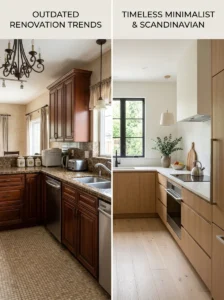
Home renovations completed during a specific multi-year window frequently share a recognizable set of markers — a particular tile pattern, a specific hardware finish, a particular combination of materials — that becomes so closely associated with that era that seeing it immediately dates the renovation to roughly that window, the same way a piece of clothing or a hairstyle can be dated to a specific decade at a glance. This isn’t a coincidence or an accident; it reflects how strongly design media, home improvement television, and retail availability converge during any given period to make certain choices feel like the obvious, current option at the time, and then move on to different obvious, current options a few years later.
A household renovating during any strongly trend-driven period is, to some extent, unavoidably renovating within that period’s aesthetic signature, since the products, materials, and design guidance genuinely available at the time are shaped by the same trend cycle — this isn’t a failure of judgment so much as a structural reality of renovating during any specific window, and it’s worth some self-compassion in recognizing this rather than treating a dated renovation purely as a personal design mistake.
Fixed, Expensive, Structural Choices Carry the Highest Dating Risk
As covered in more detail elsewhere in this series regarding transitioning a bedroom from trendy to lasting, the elements most expensive and disruptive to change later — tile, countertops, cabinetry, flooring — carry the highest risk when they’re chosen based on a strongly trend-associated pattern, color, or material specific to the renovation’s particular moment, since these are precisely the elements a household is stuck with for the longest time and least able to easily update once the trend has passed.
A specific tile pattern strongly associated with a particular renovation era — closely tied to that period’s aesthetic in a way that’s immediately recognizable — carries more dating risk than a simpler, more classic tile choice, even if the trend-associated option felt like the more exciting, current choice at the time of selection. This doesn’t mean every trend-forward material choice is a mistake, but it does mean the stakes are higher for permanent, expensive elements than for elements that are easier and cheaper to update later.
Combining Multiple Trend Markers Compounds the Dating Effect
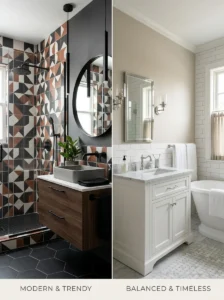
A renovation that incorporates several trend-associated choices simultaneously — a specific era’s characteristic tile, alongside that same era’s characteristic hardware finish, alongside that era’s characteristic fixture style — reads as more strongly and specifically dated than a renovation with only one or two such elements, since the combination creates an unmistakable, cumulative signature rather than a single detail that might otherwise be overlooked or read as a more timeless individual choice.
This compounding effect is worth considering directly during a renovation’s planning stage: even if a household is drawn to several individually trend-forward choices, limiting how many of them appear together in the same renovation — mixing at least some more restrained, classic choices alongside the trend-forward ones — reduces the cumulative dating signature considerably compared to a renovation where every visible choice reflects the same specific trend moment.
Matching or Overly Coordinated Metal Finishes Is a Specific, Recurring Dating Pattern
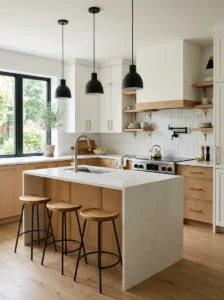
A renovation where every metal finish throughout a space — faucets, cabinet hardware, light fixtures, even door hinges — is identical and drawn from whatever finish was dominant during that renovation’s specific era is a particularly recognizable dating marker, since finish trends move in dominant, sweeping waves (a period where one specific metal tone is used almost universally, followed by a different dominant tone becoming standard a few years later).
A renovation using a more varied, intentionally mixed approach to metal finishes — a deliberate combination rather than wall-to-wall uniformity in whatever finish happened to be dominant at the time — tends to read as more considered and ages somewhat more gracefully, since it wasn’t built entirely around a single trend-driven finish choice that will eventually fall out of favor as a set.
What Ages Well: Simpler, More Classic Choices for the Permanent Elements
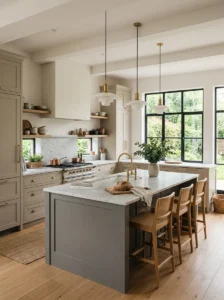
A general, reasonably reliable pattern across renovation history: simpler, more classic material and pattern choices for the most permanent, expensive elements — tile, countertops, flooring, cabinetry — tend to age considerably better than choices strongly tied to a specific, identifiable trend moment, even though the trend-forward choice often feels more exciting and current at the actual time of selection.
This doesn’t mean a renovation needs to be devoid of personality or current style — it means, as covered throughout this series regarding where to concentrate trend-forward choices, that the more permanent and expensive the element, the more a household benefits from erring toward restraint, while more easily and cheaply updated elements — paint, hardware, light fixtures, textiles — are the more appropriate place to incorporate current trends, since these can be refreshed again in a few years without the cost and disruption a full re-renovation requires.
Recognizing the Pattern for Future Renovations

A household that recognizes their recent renovation reflects a strong, identifiable trend signature isn’t necessarily facing a mistake that needs immediate correcting — the refresh strategies covered elsewhere in this series regarding transitioning a dated bedroom toward something more lasting apply at a whole-home renovation scale as well, addressing hardware and finishes first, with full material replacement reserved for cases where it’s genuinely warranted.
For a future renovation, the more valuable lesson is recognizing which specific choices carry high dating risk before committing to them — asking directly whether a specific tile, fixture, or material choice is closely associated with the current design moment specifically, versus being a more classic, less time-bound option — and reserving the more permanent, expensive budget for the choices most likely to hold up, while allowing more trend-forward experimentation in the renovation’s cheaper, more easily updated details.
Key Takeaways
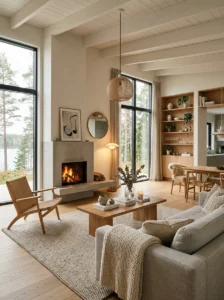
- Renovations completed during any strongly trend-driven period naturally reflect that period’s aesthetic signature, since available materials and design guidance are shaped by the same trend cycle — this is a structural reality of renovating during any specific window, not simply a personal misjudgment
- The most expensive, hardest-to-change elements — tile, countertops, cabinetry, flooring — carry the highest dating risk when chosen based on a strongly trend-associated pattern or material, since these are the elements a household is stuck with longest
- Combining several trend-associated choices within the same renovation compounds the dating effect, creating a more unmistakable, cumulative signature than a renovation with only one or two such elements
- Uniform, wall-to-wall matching of a single trend-dominant metal finish is a particularly recognizable dating marker, since finish trends move in sweeping, era-defining waves
- Simpler, more classic choices for the most permanent and expensive elements tend to age better, while more easily updated elements like hardware, paint, and fixtures are the more appropriate place for current trend experimentation
- Recognizing which specific choices carry high dating risk before a future renovation, and reserving permanent budget for the more classic options, is more useful than treating a currently dated renovation as an unavoidable, unpredictable outcome
Frequently Asked Questions
Is it my fault if my recent renovation already looks dated? Not entirely — renovating during any strongly trend-driven period naturally means working with the materials and design guidance available and dominant at that specific time, which is a structural reality rather than purely a personal misjudgment. That said, the specific choices made about how many trend-associated elements to combine, and how much restraint to apply to the most permanent elements, do meaningfully affect how quickly and how severely a renovation dates.
Which renovation choices are riskiest for aging quickly? The most expensive and hardest-to-change elements — tile, countertops, cabinetry, and flooring — carry the highest risk when they’re chosen based on a strongly trend-associated pattern or material, since these are the elements a household lives with the longest and can’t easily or cheaply update once a trend has passed.
Does using all matching hardware and fixture finishes throughout my home make it look dated faster? It can, particularly if the uniform finish chosen was the dominant trend at the time of renovation, since finish trends tend to move in sweeping waves that later feel closely tied to that specific era. A more intentionally varied approach to metal finishes tends to age somewhat more gracefully than wall-to-wall uniformity built entirely around one trend-dominant choice.
How do I renovate in a way that won’t feel dated so quickly next time? Reserve the most permanent, expensive elements — tile, countertops, cabinetry, flooring — for simpler, more classic choices, and save trend-forward experimentation for elements that are cheaper and easier to update later, like hardware, paint, and light fixtures. This allows the renovation to feel current through smaller, low-cost refreshes over time rather than requiring a full re-renovation once the trend has passed.
If my renovation already feels dated, do I need to redo it entirely? Not necessarily — the same staged refresh approach covered elsewhere in this series for a dated bedroom applies at a whole-home scale: addressing hardware and finishes first, since these are comparatively low-cost and high-impact, and reserving full material replacement for cases where it’s genuinely warranted rather than assuming a complete re-renovation is the only option.